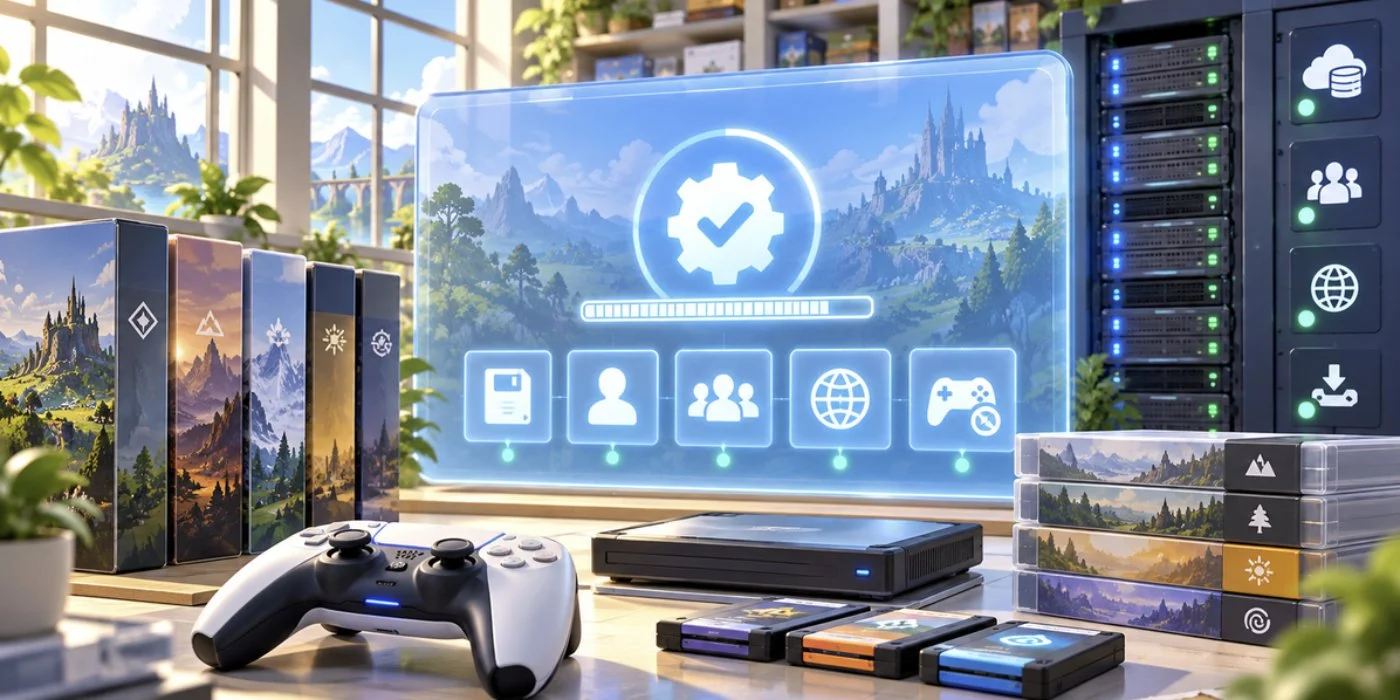
A final update carries more weight than an ordinary patch. It may be the last opportunity to repair broken quests, simplify confusing menus and decide which parts of a game will remain accessible. New content creates a brief reason to return; a reliable end state determines whether returning will still be possible years later.
Preserve the Player Before the World
A game can keep its maps online and still fail returning players if profiles, inventories or entitlements become unreliable. The final build needs a clear account model: what is stored locally, what remains on company servers and what happens when an external login provider changes.
Other online services face a comparable record-keeping problem. At sites offering Australian online pokies, registration and identity checks connect an account to accepted deposits, recorded rounds, bonuses and balance updates. Each completed transaction needs a durable status so that a later login does not recreate or erase it. A final game build likewise depends on dependable records rather than a menu that merely opens.
Developers should identify the information players would be least willing to lose:
save files and campaign progress;
purchased expansions and cosmetic entitlements;
earned achievements, ranks and collectibles;
control settings, accessibility options and loadouts;
clan membership or another usable record of social history.
Not every live system can continue indefinitely. The important part is stating which records will survive and giving players enough time to export anything scheduled for removal.
Destiny 2 Builds a Return Point
Bungie treated Destiny 2: Monument of Triumph as more than a farewell event. Released on June 9, 2026, Update 9.7.0 restored the Director as the main navigation screen, increased vault and loadout capacity, revised rewards and brought back older activities and items. Bungie’s support guide says current content will remain available and future hotfixes may still be issued for stability.
That distinction matters. “Final live-service update” does not mean every server is immediately switched off. In this case, it means that planned content production has ended while the game stays playable. The final patch organizes years of accumulated systems into a version intended to welcome old players back without asking them to reconstruct every previous season.
The approach is imperfect because online availability still relies on Bungie maintaining infrastructure. However, a stable collection, familiar navigation and permanent activities offer a more useful legacy than one last temporary season.
PEAK Chooses a Finished Game
PEAK followed another route. Its Final Ascent update added The Gloom and The Citadel as its last major content release. The developers explained that the game was conceived as a finished experience rather than a “forever game” that continually expands to retain attention. Its Steam announcement also confirmed continued fixes and work on console versions.
The example shows that ending major updates can protect a game from unnecessary complexity. A compact co-op title does not need another currency, progression track or rotating shop simply because its audience remains active. It needs a dependable build, cross-platform planning and enough maintenance to stop technical problems from becoming permanent features.
A Last Patch Needs Practical Priorities
The final development schedule should concentrate on problems that become harder to address once the team moves elsewhere. Those priorities include:
crashes, corrupted saves and progression blockers;
dependencies on launchers or authentication tools;
unavailable rewards required for achievements;
seasonal content that should become permanent;
matchmaking rules for a smaller population;
documentation for server closure or offline play.
Unlocking time-limited items can also reduce dead ends. Riot’s 2026 plan for 2XKO, for example, included unlocking every fighter while online play and an offline mode remained available after active development. That leaves a functional fighting game rather than a shell filled with inaccessible roster slots.
Maintenance Is Part of the Ending
A final update cannot promise perpetual compatibility. Operating systems change, security certificates expire and third-party services close. It can, however, reduce avoidable dependencies and document the ones that remain.
The most respectful ending is therefore not the largest content drop. It is a build that understands how people return: with an old save, a forgotten control layout and friends who may no longer be online. If that player can identify what they own, find a worthwhile activity and complete it without broken systems, the final patch has done its job.