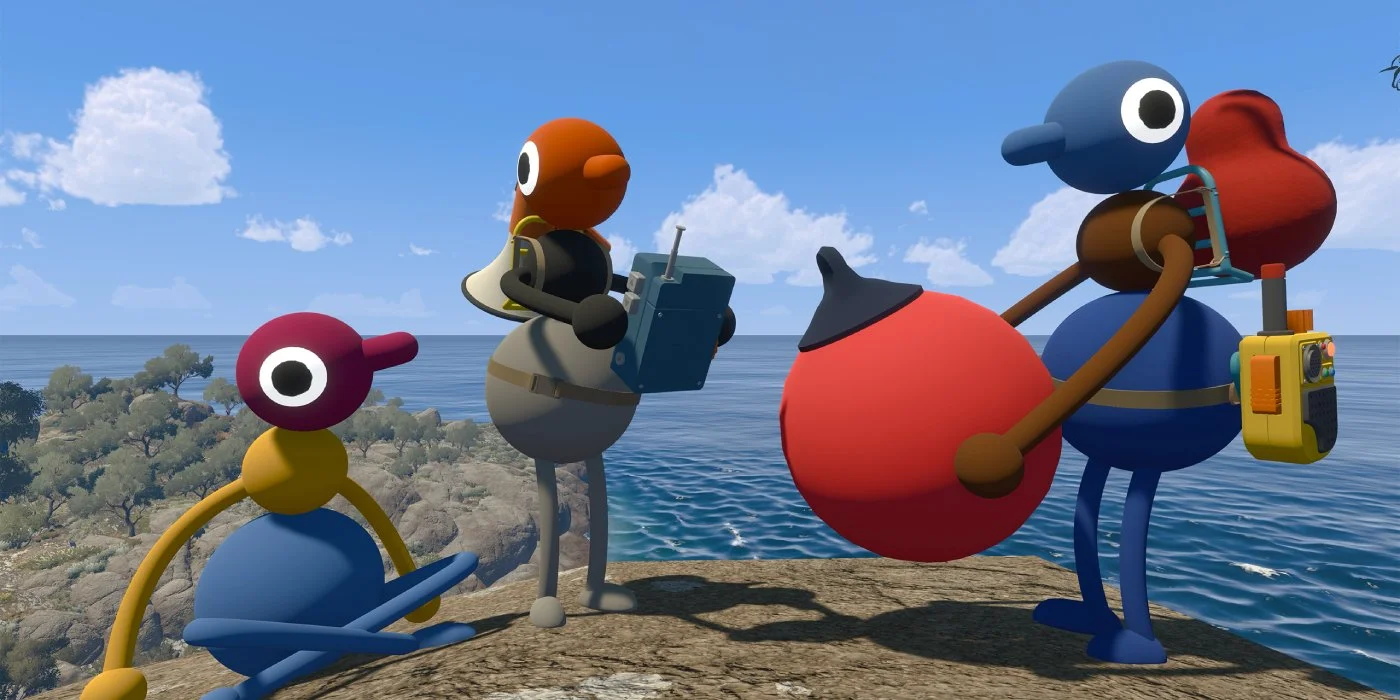
With The Game Awards of 2026 imminent and the reception to make it a contender for Indie Game of the Year, Big Walk, is now on the receiving end of controversy after the discovery that the gamed some LLMs to generate a small amount of code before release, despite the fact that their game has no disclaimer on their Steam page disclosing the fact.
Having been disqualified from the IGF, House House, the indie team responsible for development of the game, went on to make a statement clarifying that only about 10 lines of code was used near the end of the game's development, and that they internally consider the usage of Generative AI to be a failure of their principles.
Quote From House House In the final stretch of Big Walk’s development, LLMs were used sparingly by House House to help work through difficult technical challenges and bugs. In some cases, snippets from LLM responses were copied as a starting point to be modified into game code—we’d estimate that well under 0.1% of Big Walk’s code had anything to do with this usage, and generative AI was not used in any other context when making the game.
The primary use case for House House’s use of LLMs was to research, via chatbots, issues we encountered with third-party code. If you’re technically-minded, and curious, here’s an example. We needed to cull shadow casters by distance from the camera, but Unity URP only allows culling shadow casters by distance in camera forwards, so shadow casters behind the player were being rendered at an infinite distance. This made our game run 50% slower for around 20 seconds at sunrise and sunset. We researched the problem extensively, and we looked at the URP code ourselves, but we couldn’t find a way. Then, we were able to speak directly to an engineer at Unity, who asked around and ultimately concluded that what we wanted wasn’t possible. Finally, we posed the question to an LLM chatbot. After a few dead ends, it suggested a possible fix, and while we had to modify the suggestion extensively, it worked. This fix represented about 10 lines of code inside URP.
We originally wrote a version of the above disclosure as it was a suggested part of our IGF submission. We have not made any disclosure on Steam as the platform does not request disclosure of code or chatbot usage. We are posting this disclosure as it has become a matter of public interest.
This is not an endorsement of, or argument for, the use of AI tools, however minimal. We have some concern that voluntary disclosures like this might contribute to the normalisation of this technology, or its treatment as “inevitable”. We support the work of those who are trying to limit the harm generative AI is doing to videogames and our world, and apologise that Big Walk’s LLM usage may not meet their standards.
Big Walk was developed without an internal AI usage policy in place, and we consider that lack of policy a failure. We will work to have a more comprehensive policy going forwards.
Naturally, there has been quite a bit of controversy over the usage of Generative AI in the game and the developers having not written a disclosure in the first place that there was AI usage.
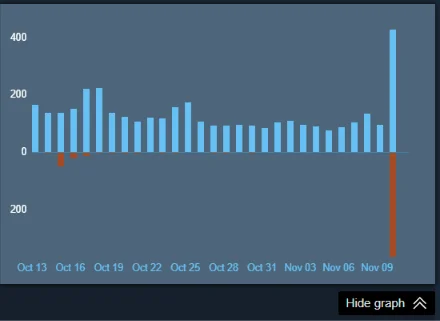
The game has since been getting review-bombed on Steam after the incident, although more than 50% of reviews being given on the day of the discovery were positive.
This naturally leads to a lot of debates over whether games that use Generative AI in any sort of matter should be allowed to receive awards. Fellow staff member StormKnightMelody mentions in her review of Clair Obscur: Expedition 33 about the controversy that game received for using a piece of AI art as a placeholder that the developers forgot to remove. The game won Game of the Year at The Game Awards last year, but its award was subsequently revoked after the AI art placeholder was revealed. The game has also lost other awards it was given to as a result of this same controversy.
There's also a debate over how much AI was actually used in relation to the size of the product and the manner in which it was used. Historically, Generative AI for coding was generally seen more favorably than using it for art, although this philosophy has been shifting over the past few months how many "vibe-coded" decomps/recomps of old games have surfaced.
How much AI does one have to actually use in their development before it morally requires a disclosure as such? If I were to make a game and I decided to ask a chatbot to offer suggestions about it plot development or character design, but I ended up using none of them, did I still use AI to make my game? If I used a piece of AI art as a placeholder texture like the aforementioned situation with Expedition 33, but then removed all of them being release, did I still use AI to make my game even if the placeholder art wasn't made by me?
What do you think about Big Walk using the tiny amount of AI that it did? Are you still choosing to play the game and have fun in it? Let us know in the comments below.




Leave a Comment