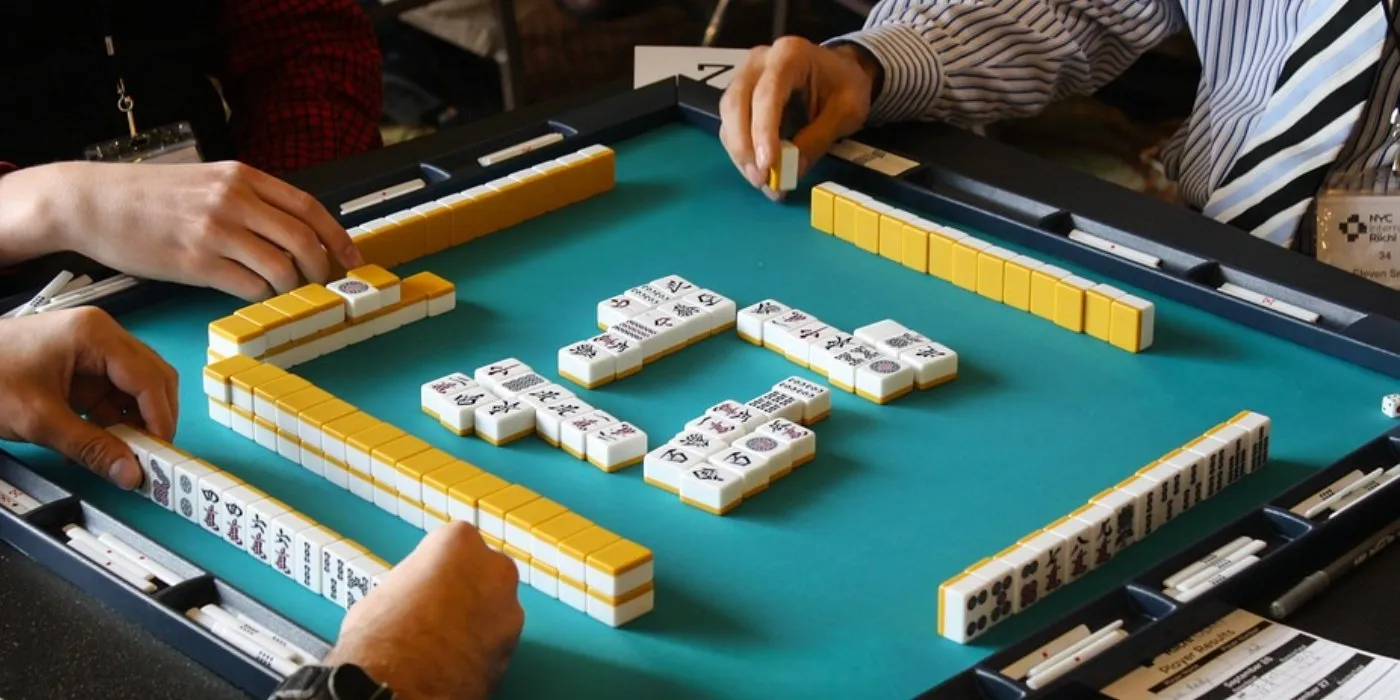
Collectible card games (CCGs) are about more than just luck and a good hand. They require players to think strategically, manage their resources, and anticipate the next move in the game. Interestingly, many of these skills are at the heart of Mahjong, an ancient Chinese game played with tiles and still popular today.
Although very different in format, Mahjong can teach CCG players many valuable lessons that can sharpen their strategies.
How Mahjong Works
Mahjong is a centuries-old game that originated during the Qing dynasty. It is a game of skill and calculation, with a bit of chance, just like CCGs. It is traditionally played with four players and 144 tiles, each marked with traditional Chinese symbols or characters.
The objective of the game is to create a complete hand, which is made up of sets and a pair, before your opponents beat you to it. Players take turns drawing and discarding tiles while they watch what their opponents are picking up and putting down.
Mahjong is all about balance. Players must manage their hands while also tracking the progress of their opponents, and have to constantly adjust their strategies as new tiles enter the game. Mahjong can be played for fun with friends or online on platforms like mahjong365.com for real money.
5 Strategies From Mahjong You Can Use In Collectible Card Games
Collectible card games (like Yu-Gi-Oh and Magic: The Gathering) and Mahjong may seem dissimilar at first, however, they’re linked by a foundation of strategy and luck. Both games require knowledge of risk management and how to ensure optimal play. Here are five strategies that CCG players can take away from Mahjong games.
1. Resource Management
Mahjong players must manage which tiles they keep and discard. By holding on to a weak tile for too long, players may be blocked from forming a useful set. However, discarding it too easily can give the opponent the upper hand. Timing and resource management are crucial.
The same principle can be applied to CCGs. The hand, deck, and mana are all finite resources. Players must know when to hold a card, sacrifice a creature, or play a combo to win.
Mahjong can teach CCG players the value of what’s in their hand, and what they can afford to let go.
2. Pattern Recognition
Mahjong requires players to recognize tile combinations, like sequences, pairs, triplets, or special hands. The better someone is at seeing patterns, the faster they’ll be able to combine a winning hand.
Card games tend to reward players who can recognize patterns between cards, too. Knowing how to spot a combo that creates a game-winning situation or how one card buffs another is crucial to winning and requires a keen eye. The quicker someone can identify possible pairings, the better the gameplay.
3. Reading Your Opponents
A subtle but powerful skill that Mahjong players must learn is how to read their opponents. Which tiles are being picked up? What are they discarding? Are they close to completing their winning hand? Knowing the answers to these questions can help players anticipate the next move and block their opponent’s progress, either by discarding misleading tiles or holding back a tile the other player needs.
This can also be applied to CCGs. Skilled players have to watch their opponents closely to see which cards are played and which patterns are emerging. If an opponent consistently avoids attacks, is it possible they’re building a combo? If they’re leaving mana untapped, are they preparing a counterspell?
4. Strategic Thinking And Decision Making
Mahjong requires strategic thinking since each tile drawn requires a choice to be made. Does the tile fit into the current hand, should it be discarded, or will it benefit other players? Mahjong players must remain adaptable and change their strategies during a game, depending on the tiles.
CCG players must also be adaptable. Players may start a match planning to attack their opponents, only to discover they’ve stacked their deck for defense. Strategic thinkers are able to pivot quickly during a game to revise their chosen path.
5. Outcome Assessment
Not every tile in Mahjong will contribute meaningfully to the round. Players are able to assess the outcome of all possible moves and use this information to change their aim while playing. For example, they can shift their goal from a complex, high-scoring hand to a quicker, small win.
In card games, players must also be able to evaluate the likelihood of a win. What are the odds of drawing a needed card? What will happen if you play it safe versus baiting an opponent?
Players must be able to assess whether their current strategy will deliver the desired outcome, or whether it’s time to change things up and adjust their goals and gameplay.
Wrapping Up
Winning a CCG tournament is not just about building a good deck. It also requires strategy, adaptability, resource management, and being able to assess various outcomes based on choices made. These skills are all inherent to playing Mahjong, and this ancient game can offer timeless lessons to card game players.
Comments
No comments yet
Be the first to share your thoughts!