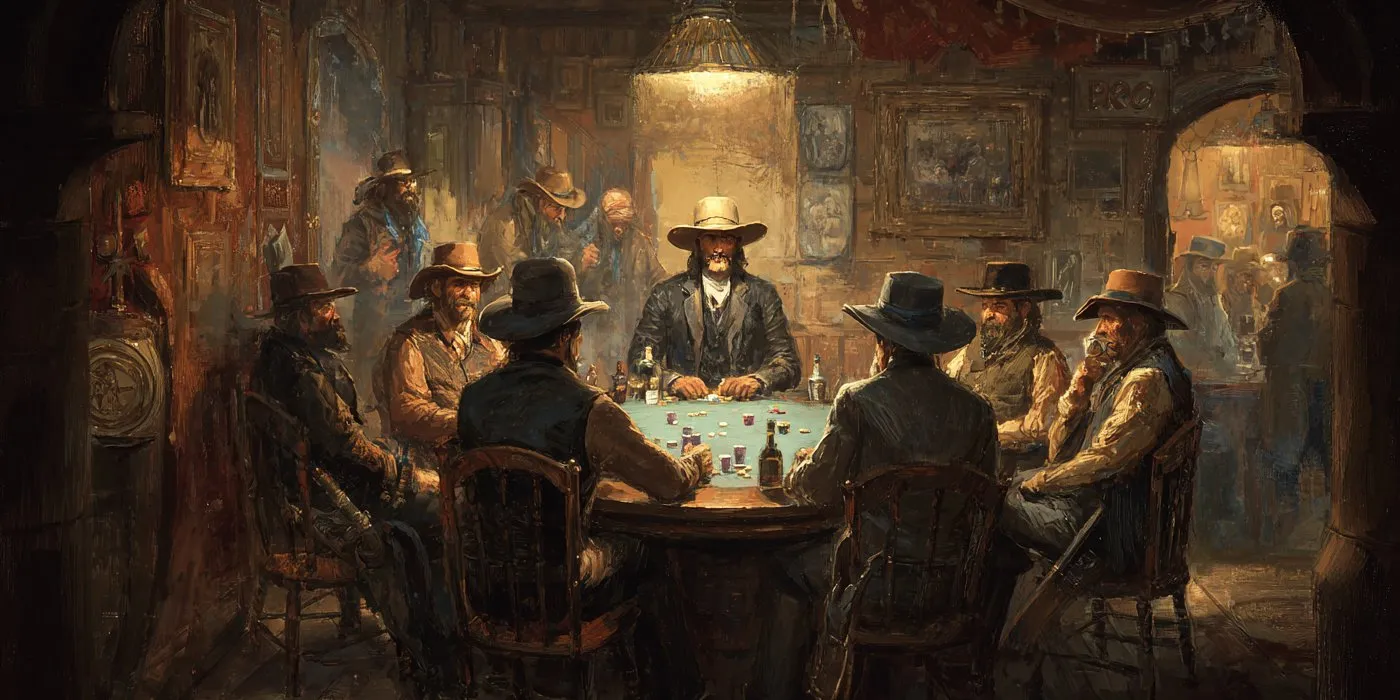
There's no undermining America's role in the history of global poker plays. Virtually everyone knows the earliest version of the game began with the French. But even Americans are sometimes at loggerheads over the true parents of poker in the US.
Here's taking a walk through memory lane and verifiable facts to trace the history of one of the world's most loved games - American poker.
The Early 19th Century
A French card game called “poque” reached Louisiana in the early 19th Century. Soon, Americans would transform poque into. 5-Card Draw poker title, with a 20-card playing deck. The subsequent decades saw poker travel across the United States via barrooms in riverboats sailing across the Mississippi River.
While poker grew on the Mississippi, it emerged into adulthood during the Civil War. Gambling was a welcome pastime for soldiers on both sides, as poker became a convenient and seamless game.
History tells that once reached General Sherman's headquarters, a new Confederate Commander, John Bell Hood, had been installed to replace him, and according to an account from Union Ranks, a Kentucky colonel told Sherman about a $2500 bet from Hood (apparently over Sherman's activities). Learning about the bet, Sherman prepped for the defense and defeated Hood's gamble soundly against an attacking Confederate.
Soon after the war, Stud, a new version of the game, emerged. First mentioned in The American Hoyle of 1864, Stud (or studhorse poker) sees a player receive one card down and four cards up, with a betting round following each card. Fast rolled in a seven-card version with increasing suspense and ambiance for live betting.
Saloons and Mining Camps
As peace returned, soldiers brought poker to every part of America as veterans sought to reestablish the game in Western regions. Riverboats gave way to saloons of cow towns and mining camps, which soon became the country's wide-open gambling centers. Lucky miners were eager to test their luck over cards, while passionate gamers were always on hand for a session.
About Texas Hold’em and Las Vegas
While the typical poker setting changed throughout history, and money casinos on Polskie Sloty may have replaced regular walk-in sites, the core psychology and skill of poker have remained the same. Decades down the line, into a world where veterans battled over saloon brawls and miners staked their fate over a card game, another poker variant would emerge - the Texas Hold'em.
Born in Robstown, TX, Texas Hold'em first appeared in the early 1900s and would soon reach another gambling hot spot, Las Vegas. Thanks to a group of traveling gamblers headed by Doyle Brunson in the 1960s, Texas Hold'em reached Nevada and the streets of Las Vegas, after which it traveled to other countries and became the most popular card game globally.
Meanwhile, Las Vegas was quietly growing in the US as a major gambling powerhouse. Today, it's inevitably cited as the world's gambling capital, thanks to the services of famous casinos like the Aria, the Bellagio, and the Legends Room, where super high-stakes games occur.
Being such a vibrant gambling hub, there's no denying that Las Vegas is a notable melting point for poker. Annually, the World Series of Poker, the world's most popular annual poker tournament, is held here. And beyond entertaining guests and viewers globally, the event has significantly impacted the rise of poker as a dominant force in the gambling world.
Enter Chris Moneymaker and an International Poker Frenzy
Las Vegas’ World Series of Poker was on track to stir an international frenzy with its prize wins. And it didn't take longer than the 2003 edition when Chris Moneymaker emerged winner for that to happen.
Moneymaker was an amateur player and accountant who qualified via an $86 online satellite for the event. Despite his humble exposure, he went on to win the $2.5 million grand prize, further captivating hearts within and outside America with poker.
Poker rooms relished his tale, as gamblers visited both live and online media to stake their fate. The rave soon became known as "the Moneymaker boom," spreading globally and attracting a whole range of new players to the game.
The Moneymaker boom meant the US would lead global online poker traffic until 2011, when "Black Friday" struck. Black Friday referred to the events leading up to an action by the Department of Justice to uphold the Unlawful Internet Gambling Enforcement Act (passed in 2006). It shut down all major poker sites, while states began to draft unique online poker legislation to allow residents to play legally.
On the brighter side, Black Friday stemmed the tide of Ponzi-like poker games such as Full Tilt Poker, which milked players' deposits for alternative uses. The World Series of Poker (WSOP) is still a major event in the poker world, making lucky and experienced gamers millionaires.
Summary
Poker has undoubtedly moved through different mediums and patterns since its 1900 roots. While their models of play changed over the centuries, the native psychology and skill of the poker fan remained undying.
Comments
No comments yet
Be the first to share your thoughts!