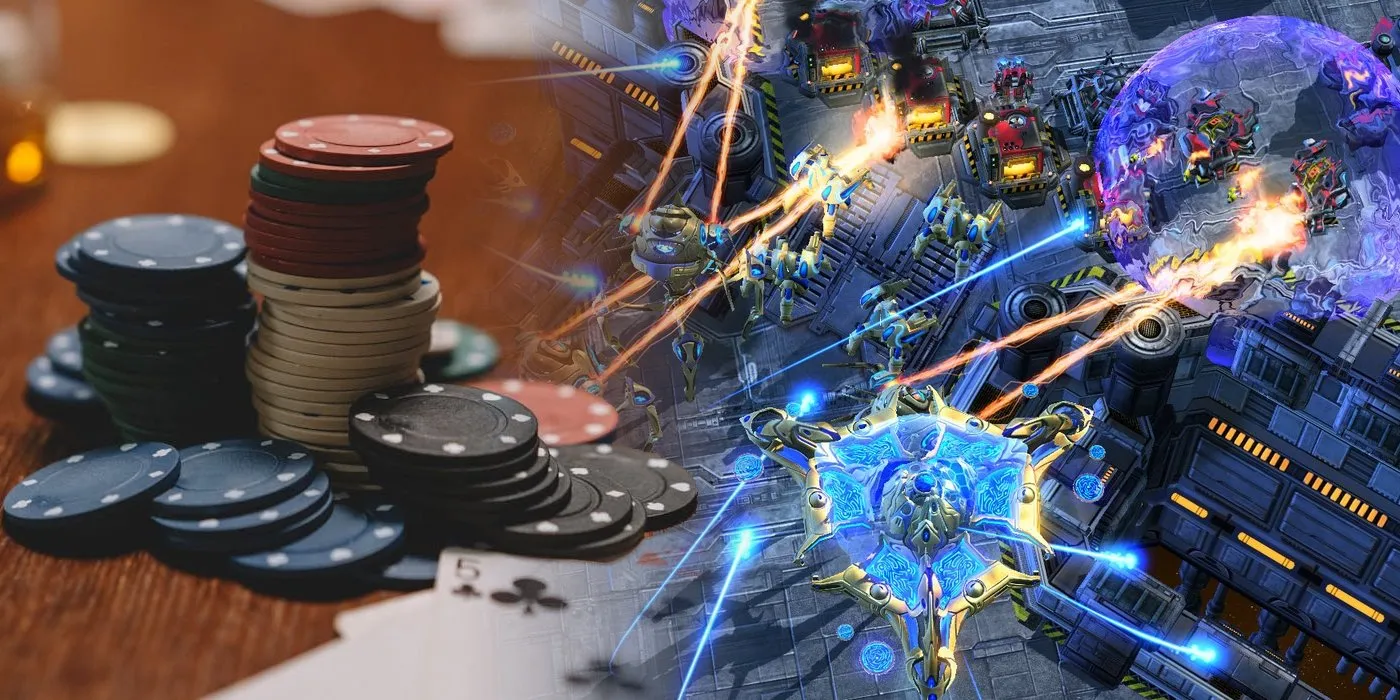
Bertrand "ElkY" Grospellier made $15,400,307 playing live poker tournaments. Before that, he played StarCraft at a professional level. According to his interview with PokerNews, Grospellier credits his gaming background as one of the main reasons for his success at the tables. He points to game analysis, competition, and deliberate action as skills that carried over.
He is not alone. StarCraft produced 12 former players who became poker professionals. Warcraft III produced 7. Doug Polk deposited $20 on a poker site during high school after competing in Warcraft III tournaments. He built a career from that deposit.
The pattern holds across the two industries. Players trained in competitive gaming show up at poker tables and perform. The question is why, and how far that transfer extends into other forms of gambling.
Cognitive Overlap Between Gaming and Gambling
Research published in PLOS One found that video gamers outperform non-gamers in attention, visuospatial processing, working memory, and mental flexibility. A literature review on ScienceDirect confirmed that perception, attentional control, and decision-making improved in subjects trained with video games.
These findings matter for games with strategic depth. Poker requires reading opponents, calculating odds, managing risk, and adjusting under pressure. Blackjack rewards counting and pattern awareness. Both require the kind of executive function that gaming strengthens.

A study in PMC tested video game skills across genres and found that high-skill players had faster psychomotor speed than medium- and low-skill players. Action games, which demand rapid motor responses, improved hand-eye coordination.
Where Gamers Test Their Skills Without Real Stakes
Free-to-play platforms give former competitive gamers a low-risk entry point into casino-style games. Social casinos, sweepstakes casinos, and demo modes on licensed sites let players apply pattern recognition and bankroll management without financial exposure. These options attract users who want to see how their reaction times and strategic habits hold up in slot mechanics or table game simulations.
The format suits players transitioning from esports or strategy games. They can measure how well their decision-making transfers before committing money to regulated gambling sites.
Strategic Thinking in Business and at the Table
IBM ran an internal gaming community. Almost half of participants said video games improved their business skills. Close to 40% reported using games to sharpen strategic thinking at work. This data, published in ScienceDirect in 2024, reinforces the idea that strategy games build transferable cognitive habits.
Poker rewards the same habits. You gather incomplete information, weigh probabilities, and commit resources under uncertainty. Corporate decision-makers and professional gamblers face structurally similar problems. Gaming trains the brain for both.
The Esports-to-Poker Pipeline
PokerProNews reported that professional esports players are moving to poker for two reasons: shared mental skills and larger potential earnings. Strategic thinking, risk assessment, and adaptability transfer well to the table.

The overlap makes sense. Esports players train for years in environments that punish slow decisions. Poker punishes the same thing. Both demand pattern recognition, composure, and long-term thinking over short-term emotion.
ElkY described the connection directly. He said the skills between esports and poker overlap enough to make the transition natural for players who already think in systems.
Market Convergence
The numbers show that gaming and gambling audiences overlap. According to Market Research Future, the esports betting market was valued at $12.92 billion in 2024. It is projected to reach $56.19 billion by 2035, growing at a compound annual rate of 14.3%. Esports Insider reported that 74.3 million people participated in esports gambling in 2024, up from 21.9 million in 2017.
Market Growth Reports found that among the 550 million esports fans worldwide, 69% have placed or considered placing a bet on an esports event. Players aged 18 to 30 represent over 63% of the global esports betting audience.
The online poker market reflects similar trends. Grand View Research estimated its size at $3.86 billion in 2024, with a projection to reach $6.9 billion by 2030. Integration of esports, live dealer games, and AI-driven tools is shaping how users engage with these platforms.
Where Skills Transfer and Where They Do Not
Poker and blackjack reward pattern recognition and probability assessment. A StarCraft player who can manage resources and calculate timing has an advantage at a poker table. The cognitive demands align.
Slots and roulette do not work the same way. These games run on random number generators. No amount of reaction speed or strategic thinking changes the house edge. A former esports professional has no mechanical advantage spinning a slot reel.
The difference matters. Skills transfer where decisions affect outcomes. They do not transfer where outcomes are predetermined.
Responsible Play and Industry Investment
BetMGM won the 2024 Online Casino of the Year award from the American Gambling Awards for the third consecutive year. The company operates over 3,500 titles across North American markets and runs one of the largest state-by-state exclusive jackpot networks. In August 2024, a New Jersey player won a $6.5 million progressive jackpot, the largest in that state's legal online casino history.
The company also contributes to responsible gambling research. The International Center for Responsible Gaming received $172,500 in 2024 for a project called Safe Bet. The goal is to design and evaluate a player-tailored responsible gambling promotion framework.
Conclusion
Gaming builds cognitive skills. Research confirms this. Esports players have crossed into poker and performed at professional levels, earning millions in the process. The pipeline from competitive gaming to gambling is real.
But the transfer is conditional. It works where decisions matter. It fails where randomness rules. A player leaving StarCraft for poker carries useful habits. The same player leaving StarCraft for slot machines does not.
Future Market Insights projects the online gambling market to reach $286.4 billion by 2035. Esports fans represent a large and growing share of that audience. The overlap between gaming and gambling will continue to shape both industries. For players, the question is simple: what game are you playing, and does skill matter there?
Comments
No comments yet
Be the first to share your thoughts!