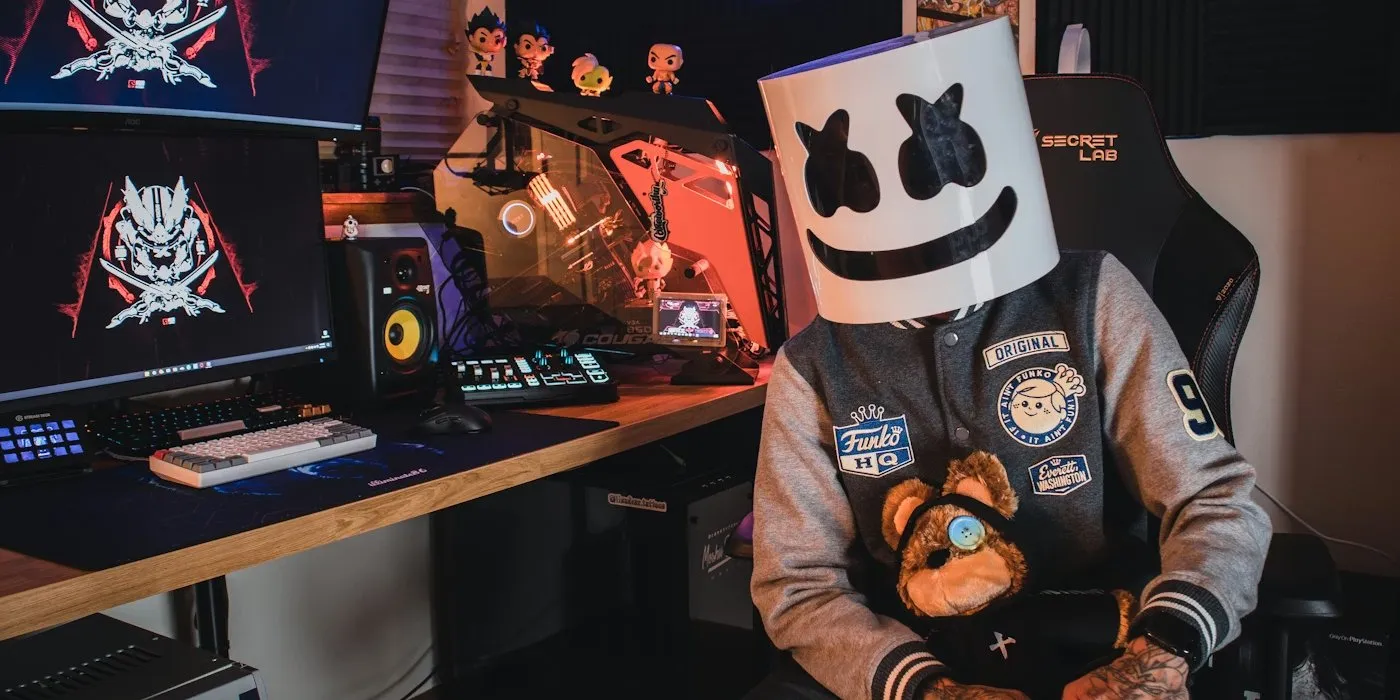
When most people think of public speaking, they picture a stiff podium, a PowerPoint clicker, and a room full of people in suits who appear bored. When they think of live streaming, they picture a gamer in a neon-lit room yelling at a monitor. On the surface, these two worlds couldn't look more different. One is associated with professional development, while the other is viewed as leisure. However, strip away the RGB lighting and the gaming chair, and you are left with the same core activity: holding an audience's attention in real-time.
For many students, the mere thought of delivering a presentation is terrifying. It is a specific type of performance anxiety that causes sweaty palms and blank minds. It is the kind of stress that leads desperate students to frantically search the internet platform to write my essay no AI, or create their slide deck just to minimize the ordeal. Yet, many of these same students will happily hop onto Twitch, hit "Go Live," and talk to strangers for four hours straight. They don't realize it, but they are voluntarily attending the most effective public speaking bootcamp available.
The Fear of "Dead Air"
The first rule of radio, TV, and public speaking is the same: don't let the silence kill the room. In broadcasting, this is referred to as "dead air." In a classroom speech, it is that awkward pause where the speaker forgets their next point and stares at their shoes.
Streamers master the art of the continuous monologue. When you are playing a game or doing a "Just Chatting" stream, there are natural lulls. The game might be loading, or the chat might be quiet. A good streamer knows how to fill that space with "stream of consciousness" commentary. They narrate their thoughts, explain their strategy, or tell a story. This is identical to the skill of "extemporaneous speaking," the ability to speak smoothly without a script. A streamer learns to keep their brain buffering the next sentence while their mouth is finishing the current one, a skill that eliminates the "ums" and "uhs" from a class presentation.
Managing the Hecklers (Live Feedback)
In a traditional speech, the audience is usually polite. They sit quietly and clap at the end. In a livestream, the audience is a chaotic, scrolling wall of text that reacts instantly to everything you say.
Streamers have to read chat, answer questions, ignore trolls, and thank new subscribers, all while playing a game or discussing a topic. This is multitasking on a level that makes a standard Q&A session look easy. To survive, you must master:
- Active Listening: You must parse questions quickly and determine which ones are worth answering.
- Crowd Control: You learn to de-escalate toxic comments without losing your cool.
- Engagement: You learn to make individuals feel seen ("Thanks for the sub, Dave!") without derailing the main topic.
If you can handle a chat moving at 100 messages a minute, answering a professor’s question about your history paper is a walk in the park.
The Setup is Your Stage
Professional speakers obsess over their environment: lighting, sound acoustics, and stage presence. Streamers do the exact same thing, just on a smaller scale. They learn early on that bad audio ruins the experience. They understand that if the lighting is bad, the audience can’t see their facial expressions, which kills the emotional connection.
This technical literacy translates directly to the modern era of "Zoom presentations" and remote work. A student who streams understands the importance of camera angles. They know to look at the lens (eye contact) rather than their own face on the screen. They understand how to modulate their voice so it doesn't peak the microphone when they get excited. In a world where job interviews and thesis defenses are increasingly held online, these "gamer skills" are actually professional assets.
Finding Your Authentic Voice
Perhaps the most valuable lesson streaming teaches is the importance of authenticity. In a formal speech, students often put on a "performer voice," which is stiff, formal, and unnatural. But on a stream, you can't fake a persona for three hours. Eventually, the mask slips. Successful streamers succeed because they are genuine. They learn to be comfortable being themselves on camera.
This concept is often discussed by Raymond Miller, who contributes to the blog of the essay writing service DoMyEssay. Drawing on his background in business and English, Miller parallels writing with speaking, suggesting that whether you are crafting a narrative or streaming to a camera, the audience connects with distinct, authentic voices rather than robotic templates. Streaming forces you to find that voice, teaching you to project your personality through a screen.
Improvisation and Resilience
Things go wrong. The game crashes. The internet cuts out. The microphone fails. In a classroom speech, a technical glitch often causes the student to crumble. They freeze up because the PowerPoint didn't load.
Streamers live in a state of constant technical troubleshooting. When things break live on air, they can't stop the show. They have to joke about it, fix it on the fly, and keep the audience entertained while they reboot. This builds incredible resilience. It teaches you to laugh off mistakes rather than apologize profusely. It teaches you that the show must go on and that the audience is usually on your side if you handle the mishap with grace and humor.
Conclusion
We need to stop viewing video games and content creation as purely "passive" consumption. Hitting that "Go Live" button is an act of vulnerability. It puts you on a digital stage with an audience that can leave with a single click. It teaches cadence, audience management, technical proficiency, and the ability to think on your feet. So the next time you see someone talking to a webcam for hours, don't just see a gamer. See a public speaker in training, logging their 10,000 hours of practice.
Comments
No comments yet
Be the first to share your thoughts!