League of Legends is not just a game of reaction and mechanics. The winners are not those who press the buttons faster, but those who think better. Especially in rated games above Gold, competent decision-making determines the outcome of the match. Even losing by kills, a team with strong macro and discipline can easily turn the game around.
That same mindset shows up far beyond the Rift. Many players who enjoy competitive games are naturally drawn to environments where probability, patience, and timing matter more than impulse. Sweepstakes casinos, for example, appeal to a similar psychological profile: success rarely comes from reckless spins, but from understanding systems, managing resources, and choosing the right moments to act. That’s why experienced players often take time to explore a list of new sweepstakes casinos, comparing mechanics, reward structures, and risk levels before committing – much like evaluating drafts, objectives, and win conditions in a ranked match. In both cases, long-term results favor those who play with intention rather than emotion.
In this article, prepared by the Lucky Gambler experts, we'll look at what decision-making is in LoL, what moments affect winning, and how to improve your gameplay wisely.

What is "decision making" in LoL
Decision-making in League of Legends refers to a player's choice in each specific situation. It's not just "attack or retreat," but also more subtle decisions that form an advantage:
Micro-decisions involve individual in-game actions – trades, skill usage, movement, positioning.
Macro-decisions are broader, team-based choices – rotations, objective control, when and where to push, and how to play the map.
It’s important to understand that there’s rarely a single “right” decision. Context always matters – champion compositions, cooldowns, timers, vision, and gold all influence what the best move is. Sites such as Lucky Gambler can assist with studying gameplay trends, providing tools and statistics that can be used to make wiser decisions and have a better chance at being improved, particularly in individuals who want to take the same theory and apply it to practice.
Key Types of Decisions Affecting the Outcome of the Game
1. Laning Phase
This is the moment when an advantage or lag arises. Often, players lose lane not because they play worse, but because they make the wrong micro-decisions:
- Trying to trade without knowing the position of the enemy forester.
- Pushing a wave without vision and getting ganked.
- Playing aggressively with low health or no summoner spells.
Smart decisions during the lane include:
- Wave tempo control (frieze, push, slow push).
- Evaluation of the opponent's strength (items, level, mana).
- Timely teleports or roams.
2. Rotations and Macro Play
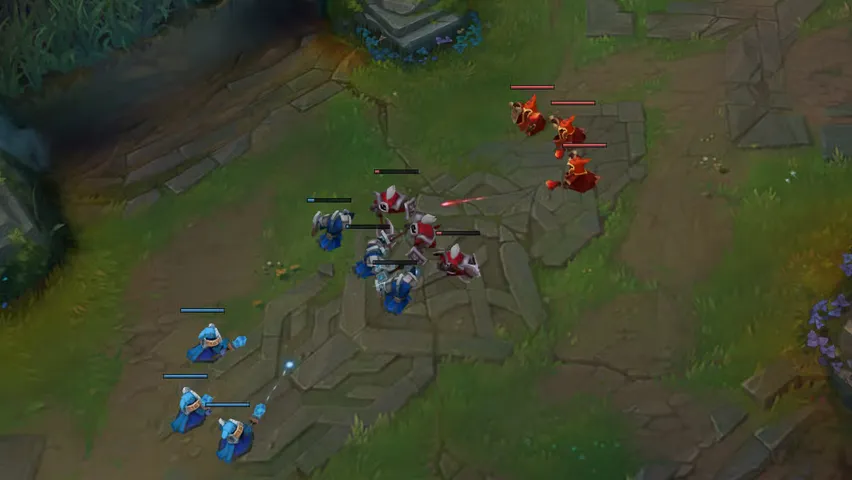
After 10-15 minutes, laning ends and macro play begins. It is important to understand where to move, what to put pressure on, and how to use the advantage. Mistakes in macro decisions are often not obvious, but they are critical:
- The team pushes down the tier 2 turret when it's easier to pick up the second dragon.
- Players rotate to the lane without taking into account the wards and die in an ambush.
Examples of correct macro decisions:
- Switching pressure to the opposite side of the map when an object is lost.
- The installation is visible before entering the enemy's forest.
- Ignoring kills in favor of lenses.
- Swapping from bot to top lane to take a free turret.
- Letting your carry take farm while you rotate elsewhere.
- Pressuring areas where the enemy is weak rather than where they’re grouped.
3. Playing Around Objectives and Teamfights
Before major objectives like Baron, Dragon, or inhibitors, your team needs to be fully coordinated. Key decisions at this stage include:
- Should you wait for enemy cooldowns (like Amumu’s ultimate) before forcing a fight?
- Is it safe to start Baron, knowing the enemy jungler is alive?
In teamfights, it is important:
- Don’t tunnel vision for kills if you can disengage and secure an objective instead.
- Play from position: do not initiate from the flank without vision.
- Focus on priority goals rather than the first one you see.
4. Late Game and Closing Out the Game
Many teams lose games they win due to poor decisions late game. Errors include:
- Diving under tier 3 turrets without Baron buff or key cooldowns available.
- Attempts to finish without minions, when you can take the Baron and calmly defeat him.
- Overstaying after a won fight – instead of resetting for items and cooldowns, players go for greedy pushes and get punished.
Closing a game requires discipline and clear thinking, even when you're dominating. Sometimes it's easier to take a step back to ensure victory in the next step.
How to Improve Your Solutions in LoL
The skill of decision-making can be trained. Unlike mechanics, it does not depend on reaction speed, but on thinking and analysis.
Here are practical ways to improve:
- Analyze your replays. Look why thou hast fallen: Was this the proper commencement of battle? Was it worth pushing the wave?
- Keep an eye on the minimap. Most mistakes come from not knowing the enemy's position.
- Watch professional games. Note, it is not the mechanics that one should observe, nor the timings, nor the placement of the wards.
- Improve communication. You can even organize by pings and signal, even in the solo cue.
Examples From the Professional Scene
Professional teams win not only because of the mechanics, but also because of the decision to play in a disciplined manner. For example, the T1 team often avoids unnecessary fights and forces Baron only when it knows for sure that the opponent has no chance to contest.
In the final of Worlds 2023, Gen.G won the decisive card by simply holding the medline and punishing the opponent for every step into the forest without vision. Their advantage wasn't huge, but their decisions were infallible.
Conclusion
League of Legends isn't just about clicks and reflexes. At all levels of the game, from silverware to the pro scene, those who make better decisions win. Competent thinking and analysis of the situation will allow you to win even in difficult matches. Don't just focus on the mechanics – start thinking strategically, and your rating will go up.
Comments
No comments yet
Be the first to share your thoughts!