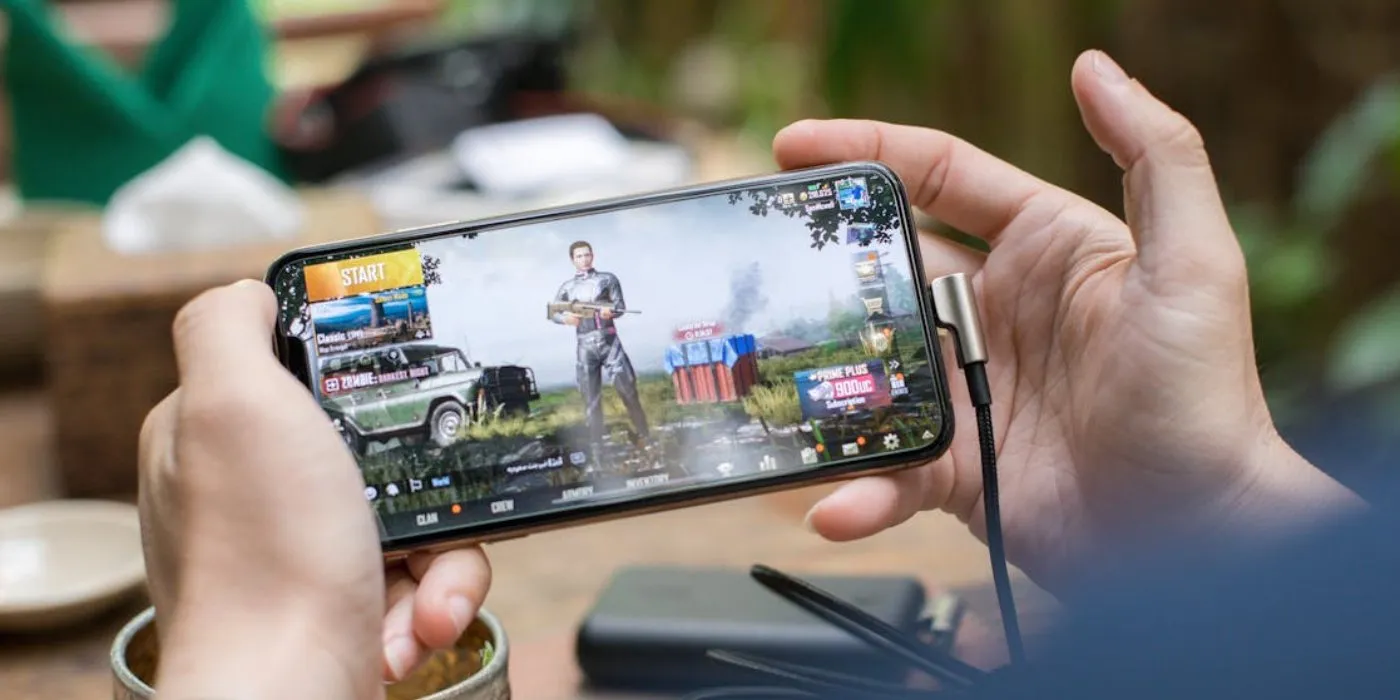
When you’re in the market for a new smartphone, the spec sheet can feel like a mountain of jargon. But for anyone who uses their device for more than just scrolling through emails, there is one choice that matters more than any other: OLED or LED?
While LCD (Liquid Crystal Display) has been the reliable workhorse of the mobile world for decades, OLED (Organic Light-Emitting Diode) has officially claimed the throne for premium gaming.
If you’ve ever wondered why some screens look "inkier" or more lifelike, the answer lies in a fundamental technical breakdown of how these displays handle light, colour accuracy, and peak brightness.
The Physics of "True Black"
LCD screens rely on a backlight that shines through a layer of liquid crystals. Because that backlight is always "on" to some degree across the panel, black areas of a game often look like a dark, muddy grey.
OLED pixels, on the other hand, are self-emissive. Each individual pixel is its own light source that can be turned off completely. This creates an "infinite" contrast ratio where blacks are truly black, allowing colours to stand out with startling intensity.
The Secret to Outdoor Gaming
If you’ve ever tried to play a round of mobile bingo while waiting for a bus on a sunny day, you’ve met the enemy of mobile gaming glare. This is where "nits" the measurement of a screen’s peak brightness become non-negotiable.
High-end OLED panels in 2026 can often reach well over 4,500 nits in "High Brightness Mode." This sheer power allows the screen to "fight" the sun, maintaining colour saturation even in direct light. While some advanced LCDs (like Mini-LED) can also hit high brightness, they often suffer from "blooming," where the light leaks from bright objects into dark ones. OLED avoids this entirely, keeping your game sharp and clear without that washed-out look.
Colour Accuracy and Motion Clarity
Beyond just brightness, OLEDs generally offer a wider colour gamut (DCI-P3), meaning they can display a broader range of hues than standard LCDs. For games with artistic, stylized graphics, this results in a more immersive experience.
Furthermore, OLEDs have near-instantaneous response times. Because pixels change colour almost the second the signal hits them, fast-moving games feel smoother, with significantly less motion blur compared to the "ghosting" often seen on older LCD panels.
Is it Worth the Upgrade?
While LCD technology is becoming increasingly rare in high-end flagship devices, it still holds a place in the budget market due to its lower manufacturing costs and longevity. However, for the modern mobile gamer, the benefits of upgrading to an OLED or AMOLED panel are undeniable.
When you choose a phone with a superior display, you aren't just buying a more expensive screen; you are investing in the intended experience of the developers. A high nit count and infinite contrast ratio bridge the gap between a generic mobile app and a truly immersive digital world.
Comments
No comments yet
Be the first to share your thoughts!