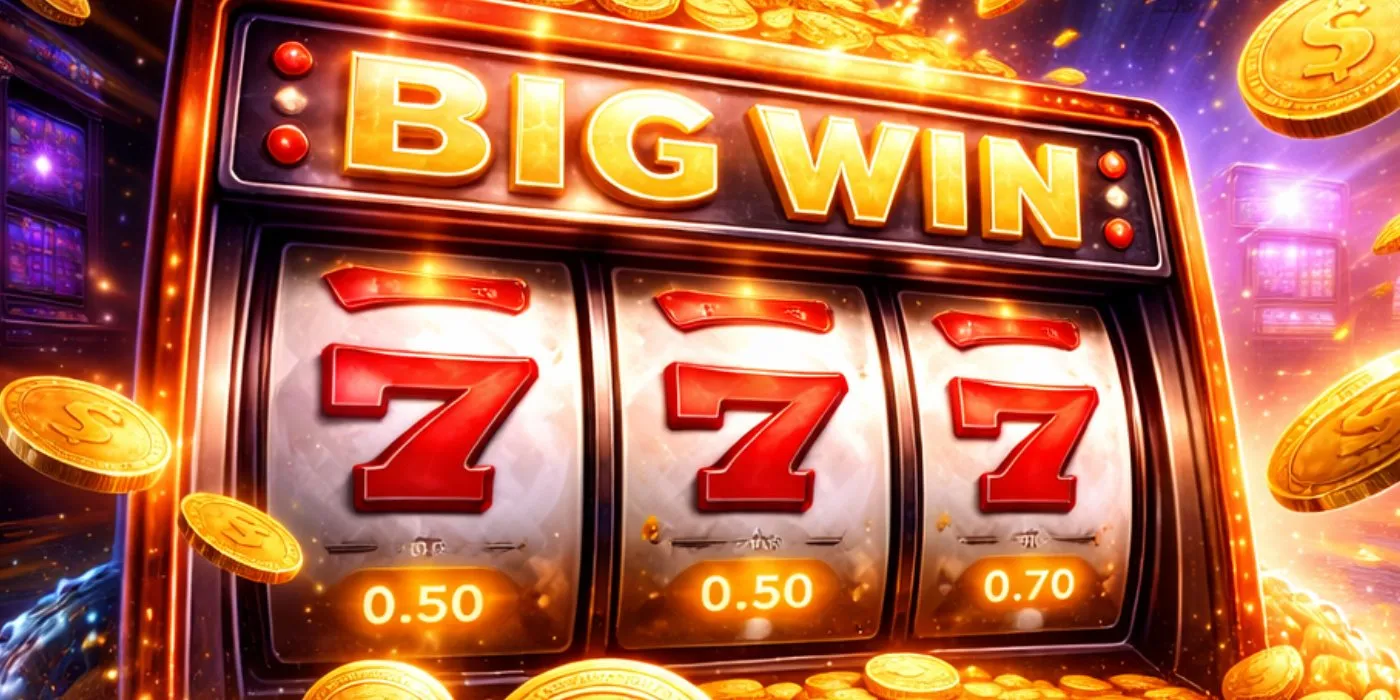
At first glance, a slot that pays out every few spins feels generous. The screen flashes, coins jingle, and your balance keeps getting little boosts. Yet when you check the total after twenty minutes, the number is smaller than when you started. This is one of the most common frustrations among Canadian players, especially those playing online slots with advertised “high hit frequency.”
The confusion comes from mixing up how often a game pays with how much it actually returns. Frequent payouts can create the sense that you are doing well, even while the math quietly works against you. This article breaks down why that happens.
We’ll look at how small wins mask real losses, how bet size and payout size drift apart, how hit frequency differs from RTP and volatility, and why the brain is especially vulnerable to games that “almost always pay.” The goal is clarity, not persuasion. For additional examples and promotions often tied to these mechanics, see https://casinosanalyzer.ca/free-spins-no-deposit/100-dollars.
Why Small Wins Feel Better Than They Are
Hit frequency simply describes how often a slot produces any win at all. In many modern online slots available in Canada, this number sits between 25% and 40%. That means one spin out of three or four returns something, but that “something” is often smaller than the original bet.
https://evpowered.co.uk/feature/the-best-ways-to-get-the-most-out-of-a-no-deposit-bonus/
Consider a $1 spin on a slot with a 35% hit rate. Many wins land at $0.20, $0.40, or $0.60. The game records them as wins, yet your balance still drops. After ten spins costing $10, four small wins might total only $2.50. Why this feels misleading:
- Frequent win animations keep attention engaged and create momentum, making losses feel smaller and less noticeable during continuous play sessions.
- Small payouts register as wins in the brain, even when balance declines, reinforcing a false sense of success over time.
- Short gaps between hits reduce emotional impact of losing spins, preventing players from noticing cumulative losses building up over sessions.
- Consistent feedback keeps focus on rewards instead of net results, allowing bankroll erosion to happen quietly without immediate warning signs.
Frequent hits create a steady rhythm that feels safe. Over time, that emotional comfort masks real losses, causing the balance to drain without a clear warning moment.
How Bet Size and Win Size Drift Apart
From a mathematical point of view, the size of wins matters more than how often they appear. A slot can hit on 40% of spins and still return less than the bet size on average. Many high-hit games are built so that the most common payouts range between 10% and 60% of the wager, creating frequent feedback without real value.
Imagine a Canadian player depositing $50 and betting $1 per spin. Over 100 spins, a slot with a 96% RTP is expected to return $96 in total wagers. That doesn’t mean the player sees $96 land in one moment. Instead, it usually shows up as dozens of small wins worth $30 or $40 combined, plus maybe one medium hit. The rest disappears through constant under-sized payouts that feel active but steadily drain the balance.
This structure explains why high-hit slots often feel generous while quietly costing more overtime. Regular small payouts make players feel as though they are winning when, technically, they are not — even if the math remains steady. In the absence of the ability to track total wagers and returns, it is simple to confuse activity with value. Over longer sessions, these small gaps between bet size and payout compound, turning what feels like steady play into a gradual but consistent loss.
Why designers use this structure
Frequent small payouts extend playtime. From the operator’s side, this keeps players engaged longer without increasing the casino’s risk. From the player’s side, the balance declines slowly, which feels less painful than sharp losses. The math is not hidden, but it is easy to overlook because attention is pulled toward how often the game pays, not how much it pays.
Three Numbers Players Often Confuse
Return to Player, or RTP, is the percentage of wagered money a slot is designed to return over millions of spins. In Canada, most licensed online casinos offer slots with RTP between 94% and 97%. A 96% RTP means the house edge is 4%, regardless of hit frequency.
Volatility is the description of how payments are awarded. Low-volatility games are those where there are lots of small wins. High-volatility games pay out less frequently but give you bigger payouts when they hit. Two games may both offer a 96% RTP, yet feel totally different because of volatility and hit rate.
What tends to mystify players, however, is how these things all affect each other in actual play. RTP governs the eventual price of the game, volatility dictates what you can expect in a given session.
A low-volatility slot might preserve your balance for hours as it slowly bleeds neglible value. A high-volatility slot might seem brutal early on, then suddenly turn around with a huge hit. There's no “default” that makes one better than the other. They only affect how fast wins and losses materialize, not the underlying odds.
Why mixing these concepts causes confusion
Players often assume that frequent wins equal better value. In reality, a low-volatility, high-hit slot and a high-volatility, low-hit slot can cost the same over time. The difference is emotional, not mathematical. One drains the balance quietly through small losses.
The other does it in sharp bursts. Understanding this separation explains why a slot can feel generous while still behaving exactly as the math predicts. How to evaluate a slot more accurately:
- Check RTP first to understand the long-term expected return, not short-term excitement.
- Identify volatility level to know whether losses arrive slowly or in clusters.
- Track net balance change over at least 200–300 spins instead of judging individual wins.
- Ignore win frequency and focus on average win size compared to your bet.
- Choose based on session goals—longer play or higher risk—rather than emotional comfort.
This method aids in distinguishing how a game feels against what it realistically costs over time.
Comments
No comments yet
Be the first to share your thoughts!