
Hello everybody and welcome back to another game review. This time, we’re looking at Penny’s Big Breakaway, which is an indie 3D Platformer developed by Evening Star and launched on February 21 2024. Exactly two years ago to this very day, so we’re celebrating the two-year anniversary of this game with a playthrough.
Evening Star was founded by Christian Whitehead, whom you may know for his contribution to the Sonic series. He worked on ports of the Genesis Sonic games until he was appointed as the lead designer of Sonic Mania in 2018. Later that year is when he founded Evening Star, and he was also involved in the development of Freedom Planet 2. Penny’s Big Breakaway is Whitehead’s first foray in game development outside of the Sonic franchise. Another alumni of Sonic Mania fame involved in the game is Tee Lopes, who was the composer for Sonic Mania. He came back too to make the soundtrack of Penny’s Big Breakaway.
How has Whitehead’s first game outside of the Sonic world played out? It’s time for us to see.
Lights, Camera, Action/Adventure!
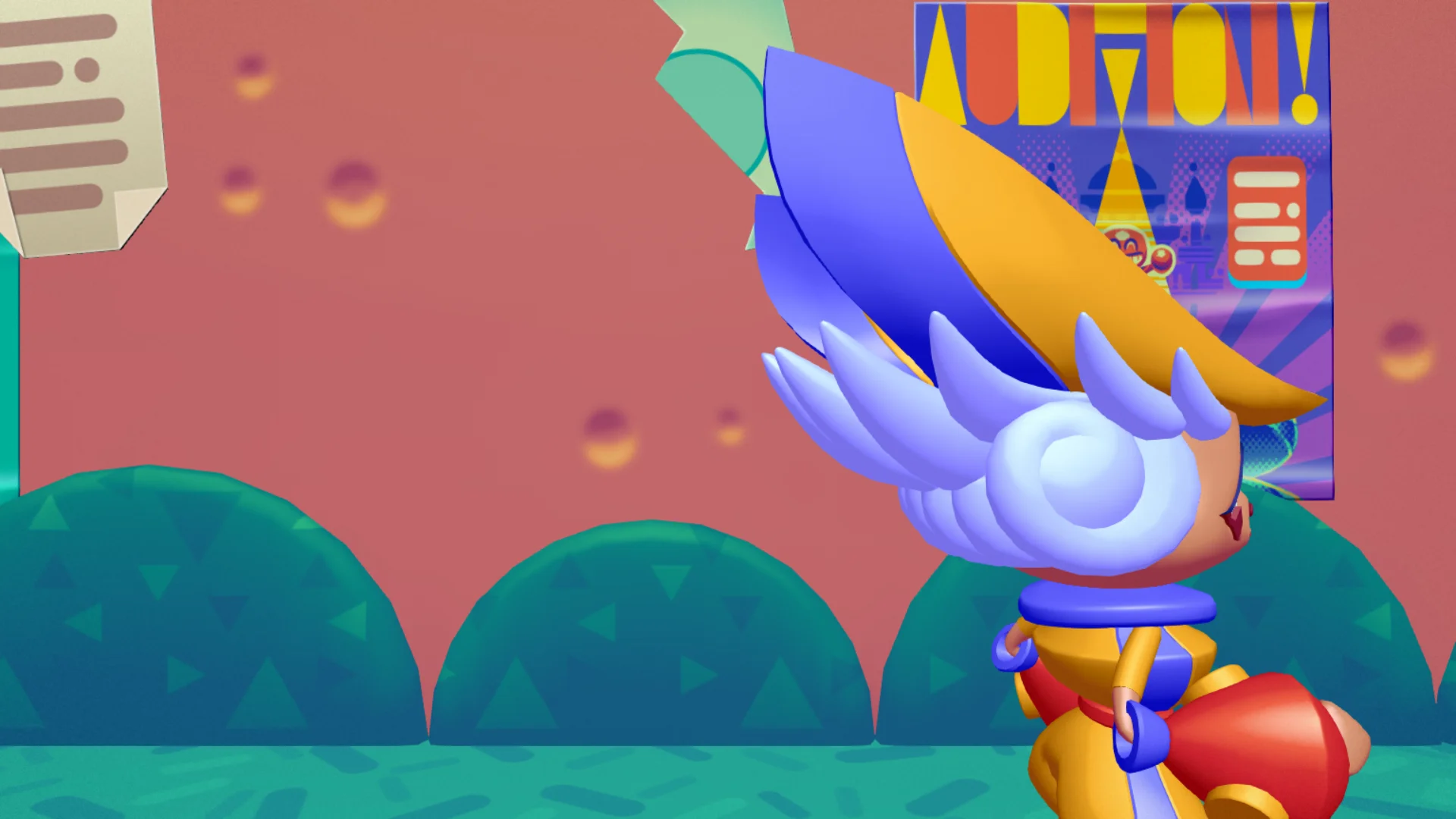
Penny’s Big Breakway is about a street performer named Penny, and her specialty is yo-yo tricks. Even though I haven’t touched a yo-yo in at least 18 years, the premise is immediately relatable to anyone. I wouldn’t be able to tell you how prominent yo-yos are today as children’s toys, but if you’re my age, you definitely had one when you were a kid. Penny’s yoyo however is a bit different because it’s actually sentient.
In Vanillatown, Penny sees an advertisement for a talent audition at Emperor Eddie’s gala. After cutting through the line, it’s Penny’s turn to perform for the Emperor, which goes great until the sentient yo-yo jumps and rips the Emperor’s clothes off. With Penny wrongfully accused of the crime, she quickly flees while being chased by Eddie’s penguin guards… Even though everyone could very blatantly see that the yo-yo acted on its own accord.
It is now essentially up to her to escape while she finds help from the outside and clear her name, while the penguin guards are after her to capture her for a crime she didn’t commit. It’s a fairly simple story with imperfect logic, but it does actually give Penny a reason to explore outside of the standard opening world and it’s different from the standard “bad guy did something bad” approach that a typical platformer would take.
Magnificent Moves
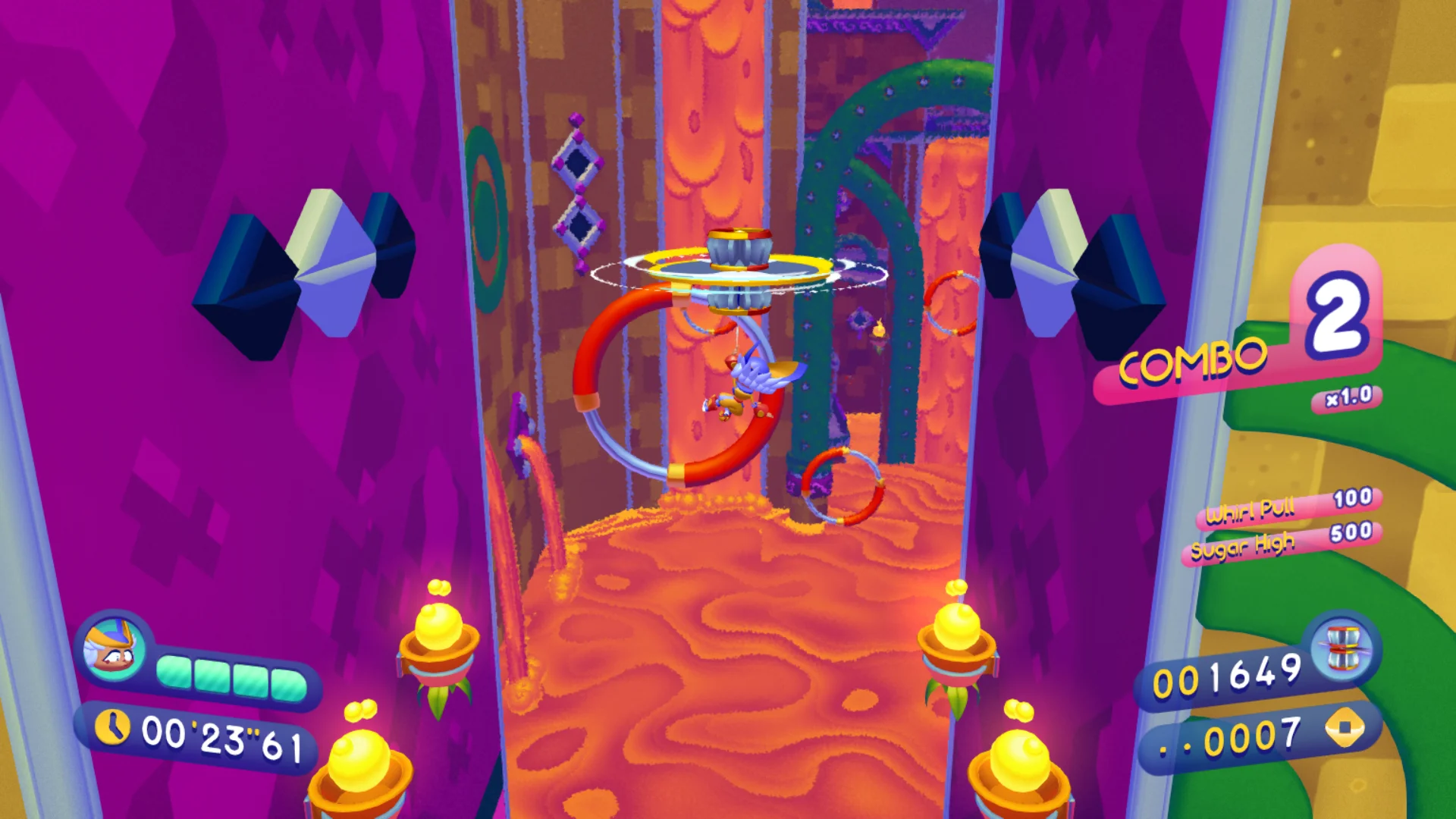
As the game is about a girl who is able to perform yo-yo tricks, the game is naturally built around using your yo-yo. It’s your main method of attacking and a method of transportation. You can use it as a weapon to stave off penguin guards and break things, you can suspend it in mid-air to use it to swing across gaps. You can attach it to things to let you swing and throw yourself off of it, or you can ride it which allows you to build momentum and move faster.
Unlike a lot of other platformers, combat in this game really isn’t a big contributor. You have a weapon at your disposal, but this is mostly used for breaking open containers and destroying obstacles rather than for actual combat because enemies in this game are largely a non-factor. The only real “enemies” in the game are Emperor Eddie’s penguin guards, which try to latch onto you and if you have 5 of them on you at a single time, you “die” and restart part of the stage. There are also boss fights in the game, which are fine. They’re a fine enough distraction in-between worlds that keeps the variety up.
Penny’s moveset is what makes the platforming really fun. Not only is there a satisfying variety in what you can do with the yo-yo, but the game also rewards you for being able to pull off move combos together without touching the ground with a score system. If you beat a level with a high enough score, you unlock a postcard associated with that level that you can view in the gallery. Additionally, the moves that Penny can do allow for a lot of creativity in how you can approach obstacles, often allowing you to get through level sections in ways other than just the “proper” way.
The game also rewards exploration. Each level has three hexagonal objects called “showpieces”, which you can use to purchase bonus levels (you need every one in the game to buy all of the bonus levels), and three citizens who need your help with a certain task. The showpieces satisfy the collect-athon than in me, and the citizen tasks are a fun piece of worldbuilding and they offer unique and varied challenges, but otherwise serve no purpose other than completion percentage.
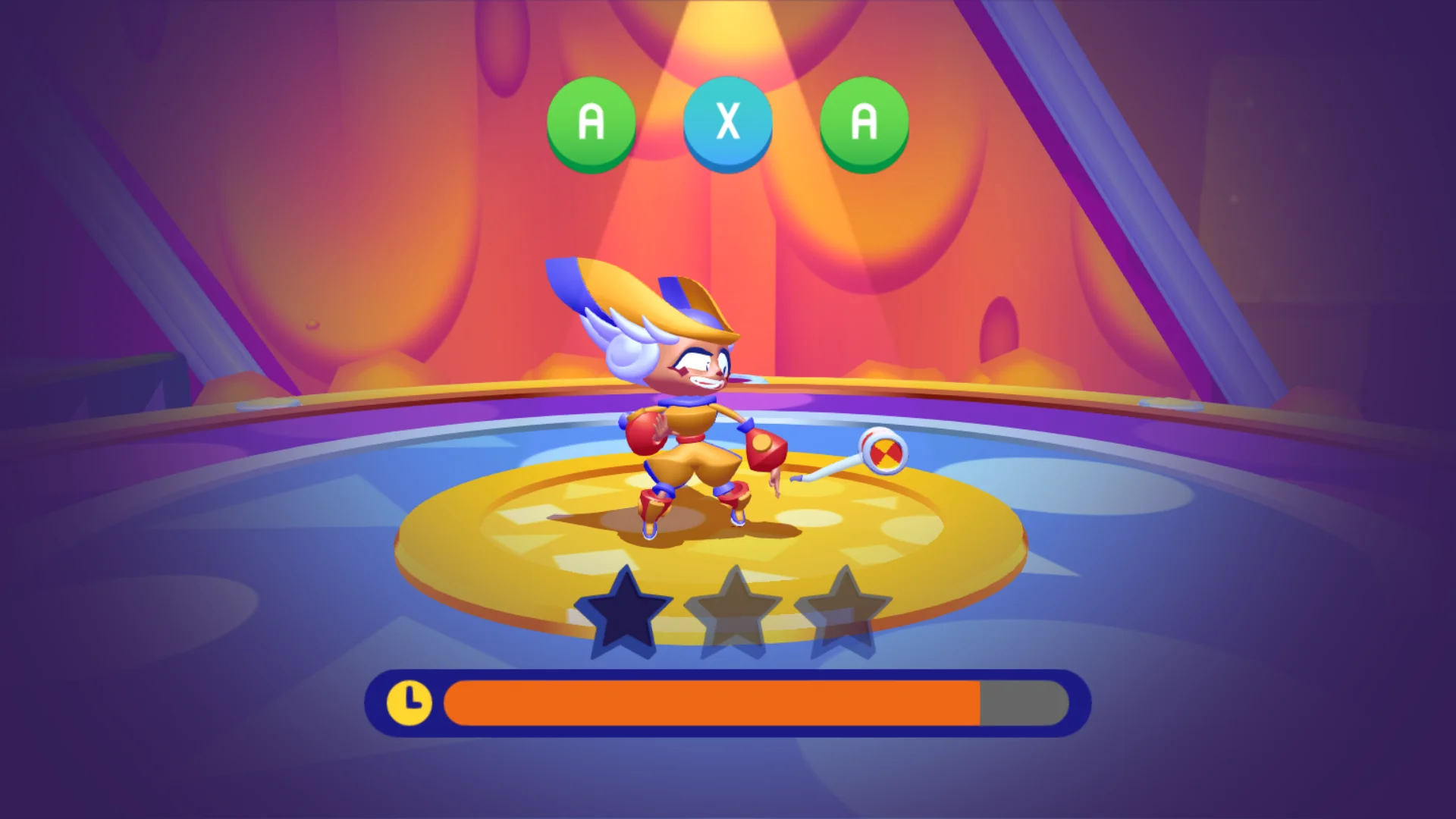
At the end of each level is a platform consisting of three tiers. When you land on one of them, you complete the levels with a button prompt minigame, where you can gain both coins and points depending on which tier you landed on. This doesn’t really add that much, but it’s a fun way to show Penny’s skills as a yo-yo performer.
Sensational Scoring
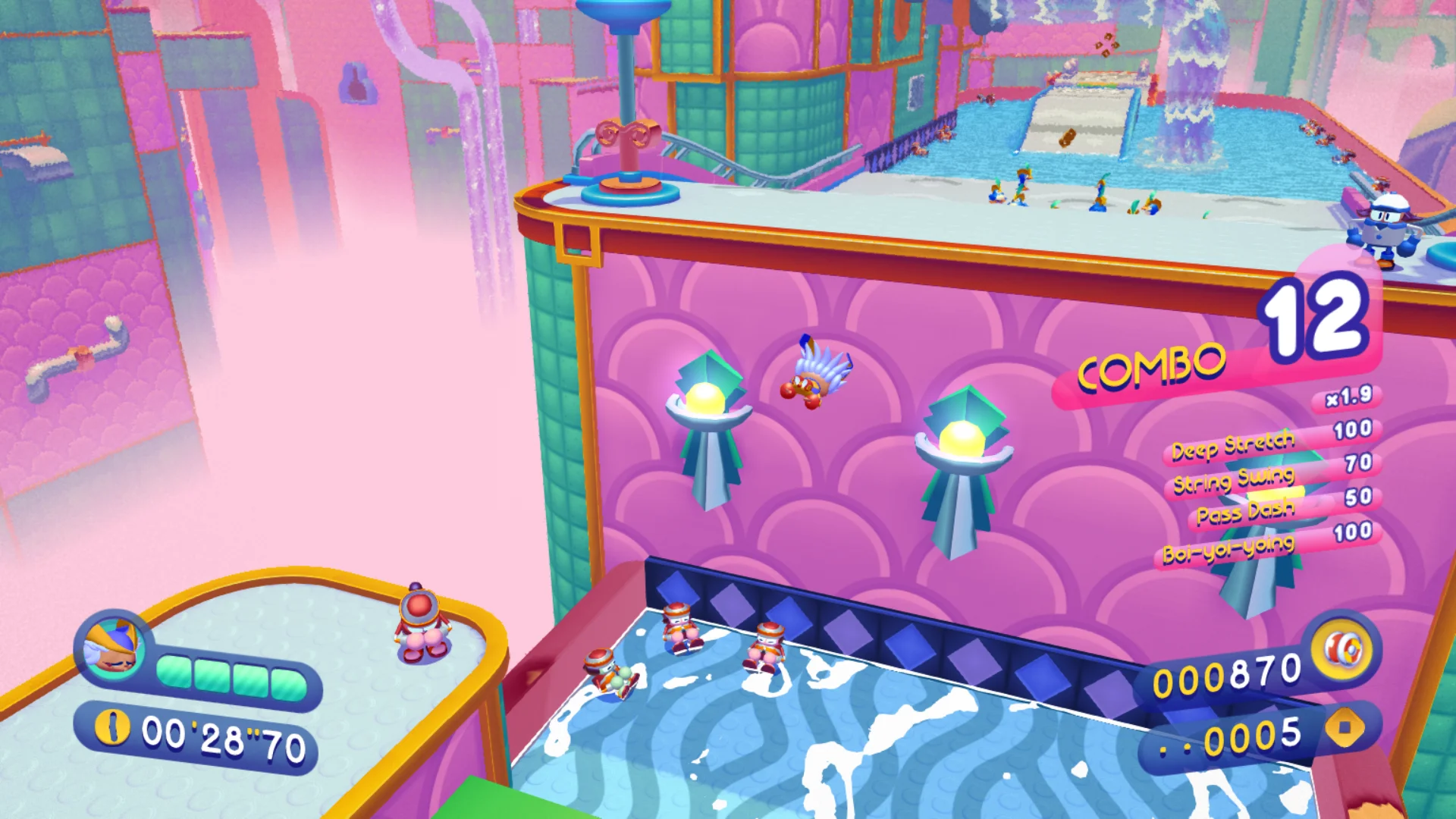
So far, score seems quite important, right? Well, not really actually. The only thing that high scores do, other than for leaderboard purposes, is that each level has a threshold to beat and if you beat it, you unlock a “postcard” which contains some official artwork. That’s it. That’s literally all they do. There isn’t even an achievement tied to score (although there is one tied to having a combo of 100 or more).
Similarly, there are a bunch of coins scattered around the level that you can pick up. Unfortunately, just like points, these don’t serve much of a purpose. Other than unlocking one achievement, the only thing you can do with coins is buy single-use items that make the game slightly easier, but if you’re decent enough at platformers, you don’t need them.
Even if you’re not so good at platformers, there’s no penalty for dying since when you lose all of your Health, you have the option to start right back at your last checkpoint. The only thing you lose is a lump sum of points, but as we’ve already established, points are completely useless unless you’re just really into unlocking postcards. By the time I realized all of this, I stopped caring about points entirely and just went forward to finish each level.
There’s also a time trial mode in this game, which as you can guess, involves you trying to see how quickly you can complete the levels. Once again, this serves no real purpose other than bragging rights, so if you don’t care about time trials in general, you can skip this too.
You can see the problem here, right? The game gives you a bunch of different mechanics and modes, but then it gives you no reason to care about most of it. Barring a few achievements that don’t ask for much interaction with them, there’s no significant incentive to care about points, coins, or the time trial mode. You can just play each level as a simple collectathon level from point A to point B and you’re not really missing anything important. Everything off to the side unfortunately feels half-baked and caters to only a very select portion of platforming fans.
Picturesque Prestidigitation
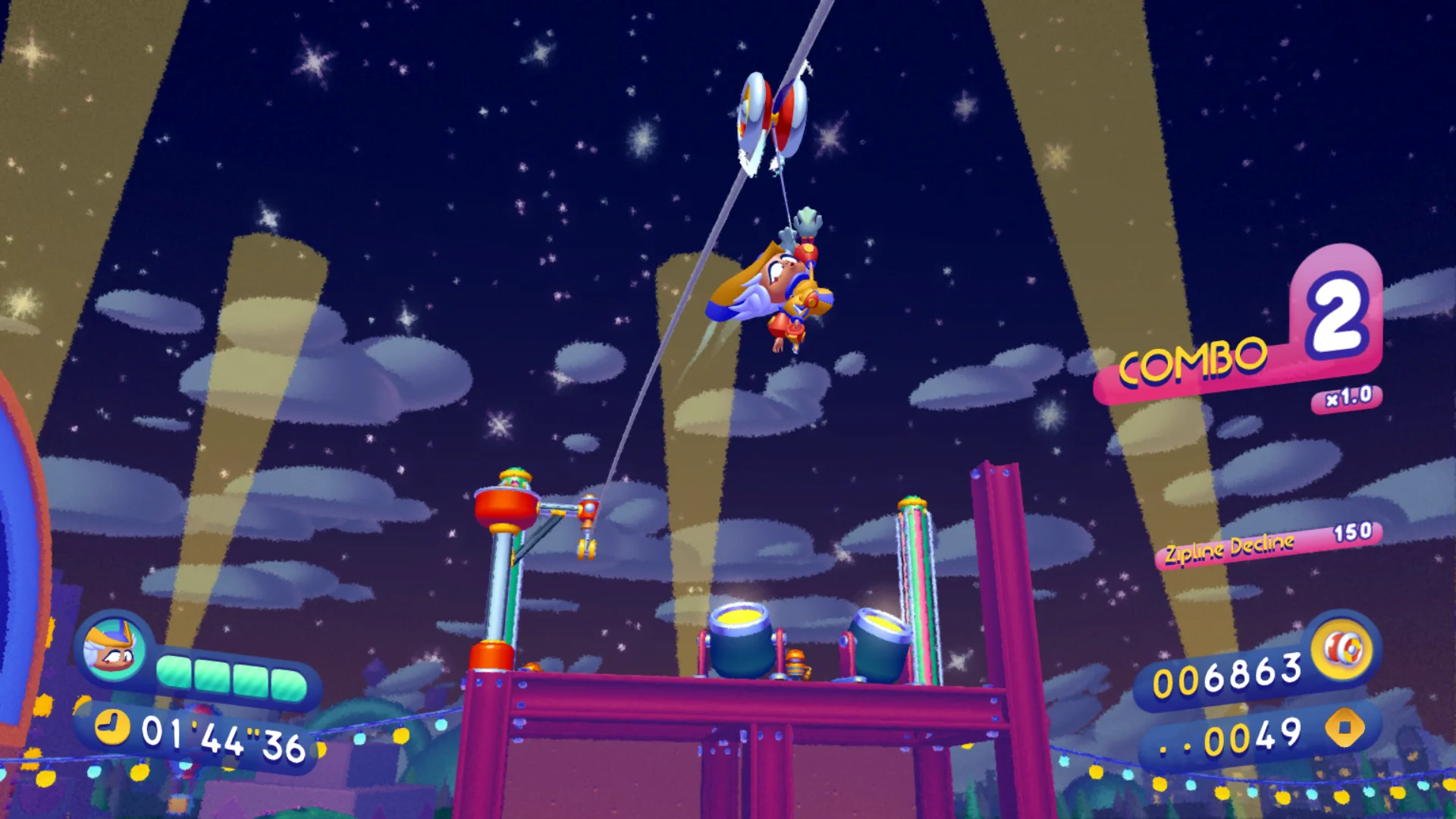
Penny’s Big Breakaway is very distinguishable by its art and music style. The art style in this game is very polygonal and full of blocky objects that feel like a platformer from the 1990s has been given modern graphics, and everything has a gentle, pastel color scheme to it with the same polygonal design on all of the textures. Aesthetically, this game looks distinct and it captures your eyesight wonderfully. Everything easily stands out against everything else, so navigation is never really a problem.
There are a total of 11 worlds in the game, and each level distinguishes itself in looks immediately. Notably, there’s no “first world is the grass world” mentality here as is commonplace in several other platformers. In fact, the variety of world aesthetics in this game is quite unusual, but also very impressive. It’s quite rare for worlds to feel like places that people actually live as opposed to obvious “video game-y” setpieces, but this game manages to do just that.
There are a couple of unusual world themes in this game (like the “bath house” themed world, and yes that is genuinely a world theme in this game), and unique takes on recognizable, but more “out there” world types (there’s a restaurant-themed world, which differentiates itself from the standard “food themed” levels in other games), and also the standard world types (like “snow world”) that all make the experience cohesively fresh and satisfying on the visual side of things. All in all, the developers did an excellent job in not just establishing all of the world themes, but making sure all of them were properly “baked”.
Off the back of Sonic Mania, Tee Lopes once again returns to act as the game’s main composer, joined alongside Sean Bialo and even the level development side of things took their stab at a few music tracks as well. Among many other things, Sonic Mania is known for its music composition, which is great. While the music in that game largely consists of remixed versions of old Sonic songs with a few original pieces interspersed throughout, Penny’s Big Breakaway is (as far as I can tell), their first project consisting entirely of original music, so it’s a chance to see how they can stack up when they need to start from scratch.
In another attempt to establish this game’s originality from the Sonic creations that the team has been involved with in the past, the game’s music style is similarly not much like Sonic. Penny’s Big Breakaway sets itself apart by not focusing much on fast-paced energetic beats and is instead mostly focused on using the music to make everything feel like part of a grandiose adventure (and in fairness, that is essentially what you are doing), often swapping between “poppy” (as in the action, not the genre), bouncy beats and atmospheric, immersive tracks. There’s a fair few songs in this game that stuck with me as I was playing it, but the game bizarrely doesn’t have the soundtrack available for purchase anywhere.
A Spectacular Peformance?
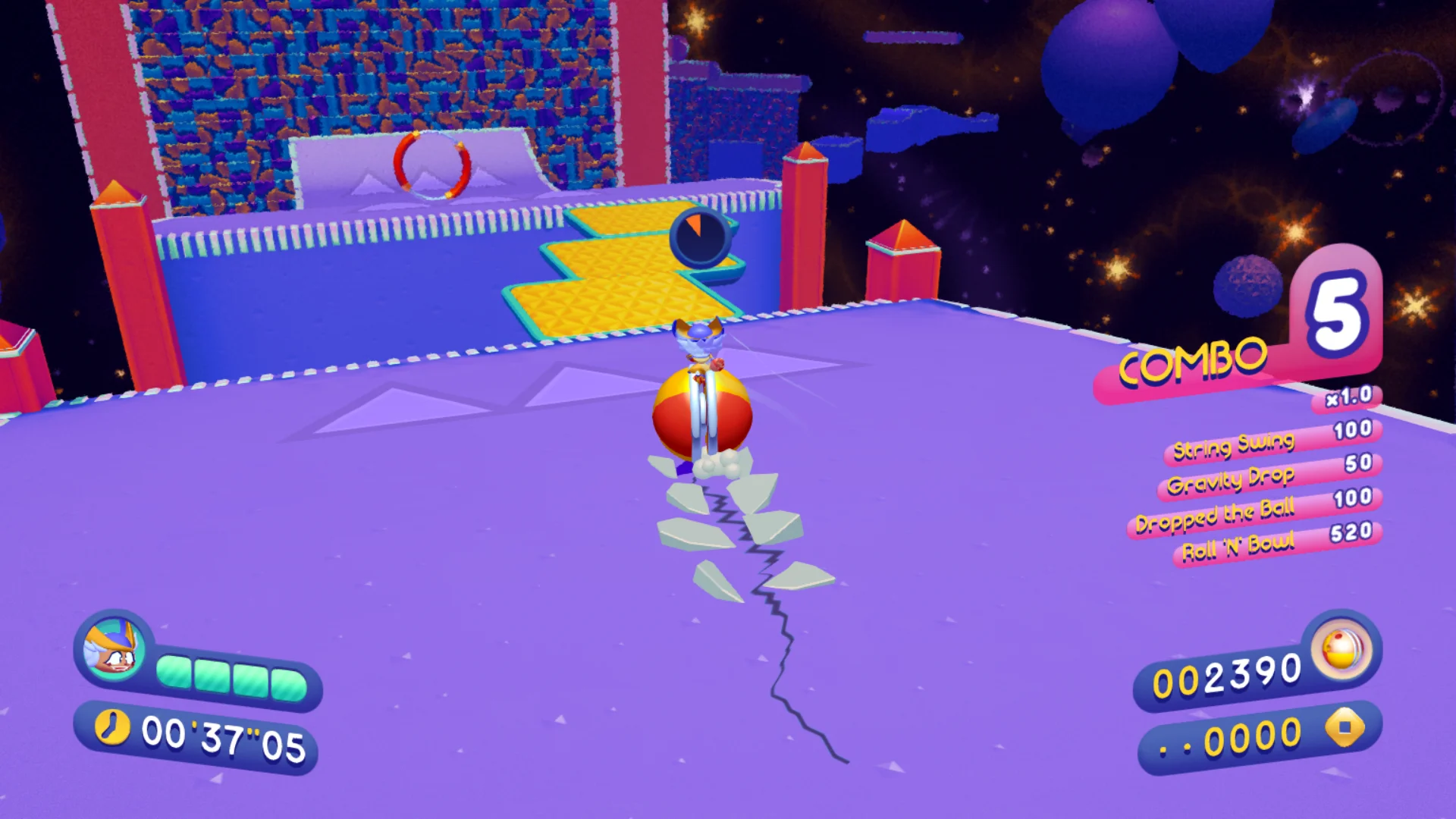
If you do choose to buy Penny’s Big Breakaway, there are a few things to be weary of. Every once in a while, the game would bug out and collision physics would act really strangely. There were quite a few times where the yo-yo simply refused to grab something even when I was about a centimeter away from the object I was trying to grab, which was really bad in timed challenges that require you to deliver an item to someone. I sometimes failed these because it took about 5 tries before the yo-yo actually grabbed the item that I needed to deliver.
There were a few times where I ended up glitching through walls, which caused me to fall down and die. Speaking of falling down and dying, this game also uses the very weird trope of instantly dying upon contact with the liquid at the bottom. Standing in ankle-deep water inexplicably kills you when it’s this type of liquid, but not the tiny pools or jet streams you sometimes interact with. There are a select few spots where lava flows downwards and touching this instantly kills you even when I’m touching while I’m still visibly standing on a platform. It felt really jarring to die because my arm touched a tiny amount of lava even though I’m right above (or in some cases, even standing on solid ground).
This game is available for several platforms, although the Nintendo Switch has the worst performance, failing to keep a solid 60fps unless you turn down the console’s native resolution. Should you choose to buy the game, try to buy it on a platform that isn’t the Switch version. I played the Steam version for this review, and the experience was buttery smooth throughout with no crashes. This is not an intensive game to play and it takes up next to no disk drive space, so you can easily install it and forget about it.
Penny's Big Breakaway is a great game for platformer fans, like myself, but there's definitely some very noticeable areas where it feels like something could've been there, but there isn't.
Leave a Comment