Nintendo is suing the US government.
It really is exactly what it sounds like it is. Nintendo has decided to take legal action across the entire government of the United States in regards to the "unlawful" exploitation of tariffs by Donald Trump.
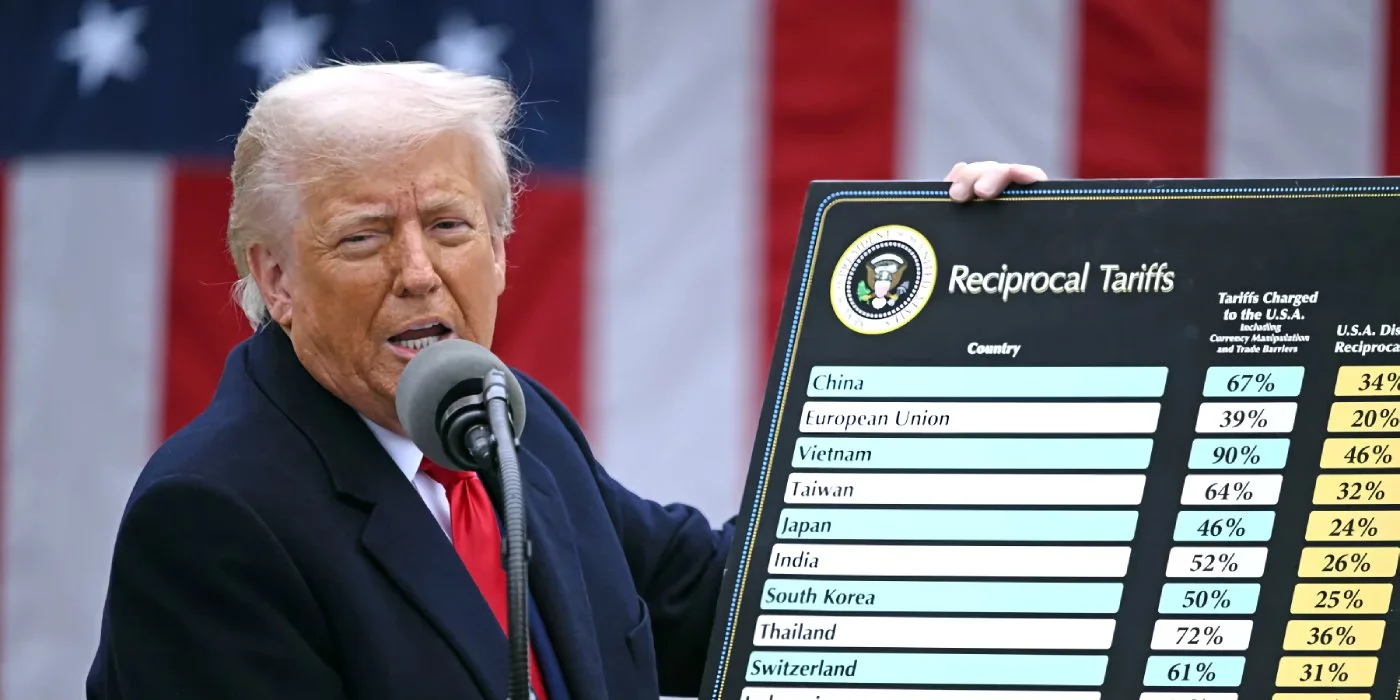
On February 20 2026, Donald Trump imposed a 10-15% global tariff, which has resulted in him being the target of legal action from a number of different sources, and Nintendo has decided to throw their hat into the ring. After Nintendo had to delay release of the Switch 2 in the US because of Trump's previous tariffs on April 2 2025, it seems that this one has finally resulted in the company hitting their breaking point.
As of today, they have officially sued the government, targeting refunds of the tariffs and a declaration of the "unlawful" usage of the tariffs. Say what you want about how trigger-happy Nintendo's legal team are, but they are not afraid to go after anyone.
Full legal document down below.
Quote From Ashleigh J. F. Lynn UNITED STATES COURT OF INTERNATIONAL TRADE
NINTENDO OF AMERICA INC.,
Plaintiff,
v.
U.S. DEPARTMENT OF THE TREASURY;SCOTT BESSENT, Secretary of the Treasury; U.S. DEPARTMENT OFHOMELAND SECURITY; KRISTI NOEM, Secretary of the Department of Homeland Security; OFFICE OF UNITED STATESTRADE REPRESENTATIVE; JAMIESONGREER, U.S. Trade Representative; U.S.CUSTOMS & BORDER PROTECTION;RODNEY SCOTT, U.S. Customs & Border Protection Commissioner; UNITED STATESOF AMERICA; U.S. DEPARTMENT OFCOMMERCE; HOWARD LUTNICK, Secretary of Commerce,
Defendants.
Court No. 1:26-cv-1540
COMPLAINT
Plaintiff, Nintendo of America Inc. (“Nintendo”), by and through its attorneys, alleges and states as follows:
1. This action concerns Defendants’ initiation and administration of unlawful trade measures that have, to date, resulted in the collection of more than $200 billion in tariffs on imports from nearly all countries.
2. This Complaint focuses on Defendants’ unlawful imposition of tariffs (“IEEPA Duties”) founded on President Trump’s executive orders invoking the International Emergency Economic Powers Act of 1977, 50 U.S.C. § 1701 et seq., (“IEEPA”) to justify same. Those executive orders (the “Executive Orders”) include:
i. Exec. Order No. 14193 — Imposing Duties to Address the Flow of Illicit Drugs Across Our Northern Border, 90 Fed. Reg. 9113 (Feb. 1, 2025) (the “Canada Tariff EO”);
ii. Exec. Order No. 14194 — Imposing Duties to Address the Situation at Our Southern Border, 90 Fed. Reg. 9117 (Feb. 1, 2025) (the “Mexico Tariff EO”);
iii. Exec. Order No. 14195 — Imposing Duties to Address the Synthetic Opioid Supply Chain in the People’s Republic of China, 90 Fed. Reg. 9121 (Feb. 1, 2025) (the “China Tariff EO”);
iv. Exec. Order No. 14200 — Amendment to Duties to Address the Synthetic Opioid Supply Chain in the People’s Republic of China, 90 Fed. Reg. 9277 (Feb. 11, 2025)(the “Amended China Tariff EO”);
v. Exec. Order No. 14228 — Further Amendment to Duties Addressing the Synthetic Opioid Supply Chain in the People’s Republic of China, 90 Fed. Reg. 11463 (Feb.11, 2025) (the “Second Amended China Tariff EO”);
vi. Exec. Order No. 14257 — Regulating Imports with a Reciprocal Tariff to Rectify Trade Practices that Contribute to Large and Persistent Annual United States Goods Trade Deficits, 90 Fed. Reg. 15041 (April 2, 2025) (the “Liberation Day Tariffs EO”);
vii. Exec. Order No. 14259 — Amendment to Reciprocal Tariffs and Updated Duties as Applied to Low-Value Imports from the People’s Republic of China, 90 Fed. Reg. 15509 (April 14, 2025) (the “Amended Liberation Day Tariffs EO”);
viii. Exec. Order No. 14266 — Modifying Reciprocal Tariff Rates to Reflect Trading Partner Retaliation and Alignment, 90 Fed. Reg. 15625 (April 9, 2025) (the “Second Amended Liberation Day Tariffs EO”);
ix. Exec. Order No. 14323 — Addressing Threats to the United States by the Government of Brazil, 90 Fed. Reg. 37739 (July 30, 2025) (the “Brazil Tariff EO”); and
x. Exec. Order No. 14329 — Addressing Threats to the United States by the Government of the Russian Federation, 90 Fed. Reg. 38701 (August 6, 2025) (the “India Tariff EO”).
3. Defendants have imposed, adjusted, and expanded coverage of IEEPA Duties under these Executive Orders via executive actions and administrative directives.
4. Plaintiff imports goods from countries impacted by the IEEPA Duties (“Impacted Countries”) and has paid the IEEPA Duties on same.
5. The IEEPA does not authorize or otherwise provide justification for the imposition of the IEEPA Duties. Both this Court and the Federal Circuit have issued rulings confirming same. V.O.S. Selections, Inc. v. Trump, 149 F.4th 1312 (Fed. Cir. 2025), cert. granted, No. 25-250, 2025WL 2601020 (U.S. Sept. 9, 2025). On appeal to the United States Supreme Court, V.O.S. Selections was consolidated with Learning Resources, Inc. v. Trump, 784 F. Supp. 3d 209 (DC2025). The consolidated case, herein referred to as “Learning Resources,” was argued on November 20, 2025.
6. On February 20, 2026, the Supreme Court issued its opinion in Learning Resources, affirming this Court and the Federal Circuit’s rulings in V.O.S. Selections and striking down the IEEPA Duties. Learning Resources, Inc. v. Trump, No. 24-1287, slip op. at 20 (U.S. Feb. 20, 2026)(affirming V.O.S Selections).
7. Later that day, President Trump issued an executive order invalidating the Executive Orders and ordering that IEEPA Duties no longer be collected. Exec. Order No. 14389— Ending Certain Tariff Actions, 91 Fed. Reg. 9437 (Feb. 25, 2026) (the “IEEPA Duties Termination EO”). The IEEPA Duties Termination EO did not address refunding of the illegally collected IEEPA Duties.
8. While the Opinion of the Court in Learning Resources did not address issuing refunds, it did confirm that this Court has exclusive jurisdiction over challenges to the IEEPA Duties. Learning Resources, slip op. at 5.
9. Plaintiff requests that, consistent with the Supreme Court’s ruling in Learning Resources and the Federal Circuit’s and this Court’s rulings in V.O.S. Selections, this Court order the prompt refund, with interest, of any IEEPA duties paid by Plaintiff regardless of liquidation status, and provide any and all remedies that the Court deems appropriate.
JURISDICTION
10. The Court possesses subject matter jurisdiction over this action pursuant to28 U.S.C. §§ 1581(i)(1)(B) & (D), which confer “exclusive jurisdiction” on the Court over “any civil action commenced against the United States, its agencies, or its officers, that arises out of any law of the United States providing for . . . tariffs, duties, fees, or other taxes on the importation of merchandise for reasons other than the raising of revenue” and over the “administration and enforcement with respect to matters referred to in subparagraphs (A) through (C) of this paragraph and subsections (a)–(h) of this section.” See also Learning Resources, Inc. at 5, n.1.
11. The Court thus has all the same powers in equity and law of a United States District Court, 28 U.S.C. § 1585, including to enter a monetary award, declaratory judgments, injunctions, and any other appropriate civil remedies. 28 U.S.C. §§ 2643(a)(1), (c)(1).
PARTIES
12. Plaintiff Nintendo, located at 4600 150th Ave NE, Redmond, WA 98052, is a videogame company. Plaintiff is a U.S. importer of record and regularly imported goods into the United States that, prior to the United States Supreme Court’s ruling in Learning Resources and for several days thereafter, were subject to IEEPA Duties.
13. Defendant United States of America received the disputed tariffs and is the statutory defendant under 5 U.S.C. § 702 and 28 U.S.C. § 1581(i)(1)(B).
14. The Office of the United States Trade Representative (“USTR”), headquartered in Washington, D.C., is an executive agency of the United States charged with implementing tariffs directed by the Executive Orders.
15. Jamieson Greer is the U.S. Trade Representative. In this capacity, he oversees USTR’s implementation of the tariffs directed by the Executive Orders.
16. Defendant U.S. Customs & Border Protection (“CBP”), headquartered in Washington, D.C., is the agency that collects tariffs and duties on imports, including IEEPA Duties.
17. Defendant Rodney Scott is Commissioner of CBP. In this capacity, he oversees CBP’s collection of IEEPA Duties.
18. Defendant U.S. Department of Homeland Security, headquartered in Washington, D.C., is responsible for implementing and enforcing the Executive Orders including through its component CBP.
19. Defendant Kristi Noem, Secretary of the Department of Homeland Security, is responsible for implementing and enforcing the Executive Orders on behalf of the U.S. Department of Homeland Security, including through its component CBP.
20. Defendant U.S. Department of the Treasury, headquartered in Washington, D.C., is responsible for consulting with the Department of Homeland Security and other agencies about the legal authority for and financial implementation of the Executive Orders.
21. Defendant Scott Bessent, Secretary of the Treasury, is responsible for consulting with the Department of Homeland Security and other agencies on the legal authority for and financial implementation of the Executive Orders on behalf of the Treasury.
22. Defendant U.S. Department of Commerce, headquartered in Washington, D.C., is responsible for taking action in support of economic restrictions issued under national emergency actions and coordinating with agencies in relation to national emergency actions, including the IEEPA Tariffs.
23. Defendant Howard Lutnick, Secretary of Commerce, is responsible for taking action in support of economic restrictions issued under national emergency actions and coordinating with agencies in relation to national emergency actions, including the IEEPA Tariffs on behalf of the U.S. Department of Commerce.
STANDING
24. Plaintiff has standing to sue because it is the importer of record for goods that were subject to IEEPA Duties. Plaintiff was thus responsible for paying the IEEPA Duties on those goods and made such payments. As a result, Plaintiff has suffered injury caused by the IEEPA Duties. If not remedied, and absent a ruling from this Court consistent with Slip Op. 25-154 in AGS Company Automotive Solutions, et al., v. United States, No. 25-00255 (holding the government judicially estopped from arguing that liquidation prevents the Court from ordering refunds in a pending matter), Plaintiff will suffer imminent and irreparable harm for the entries it has paid (i.e., entries that have already been liquidated and those that will continue to be liquidated as long as the IEEPA Duties are imposed).
TIMELINESS OF THE ACTION
25. A plaintiff must commence an action under 28 U.S.C. § 1581(i)(1)(B) “within two years after the cause of action first accrues.” 28 U.S.C. § 2636(i).
26. The instant action contests action taken by Defendants to establish the IEEPA Duties and impose same on Plaintiff. Plaintiff’s claims accrued, at the earliest, on February 1,2025, when the President issued the first of the Executive Orders. Plaintiff has therefore timely filed this action.
BACKGROUND
I. IEEPA DUTIES
27. Since February 1, 2025, President Trump has executed the unlawful Executive Orders, imposing tariffs on imports from a vast swath of countries.
28. On February 1, 2025, President Trump invoked the IEEPA to issue three (3) such executive orders imposing tariffs on goods imported from Canada, Mexico, and China (the Canada Tariff EO, Mexico Tariff EO, and China Tariff EO). President Trump justified these orders by asserting that there were national emergencies and asserted that the tariffs were authorized under IEEPA.
29. For the Canada Tariff EO, President Trump declared a national emergency based on purported trafficking of opioids into the United States and imposed a 25% tariff on goods imported from Canada with certain exceptions.
30. For the Mexico Tariff EO, President Trump declared a national emergency based on purported entry of “illegal aliens” and “illicit drugs” and Mexico’s alleged failure to police drug and human traffickers and other crimes. President Trump imposed a 25% tariff on goods imported from Mexico with certain exceptions.
31. For the China Tariff EO, President Trump declared a national emergency based on purported entry of “illegal aliens” and “illicit drugs” and China’s alleged failure to police drug and human traffickers and other crimes. During the first Trump Administration, the United States had already imposed tariffs on certain goods imported from China pursuant to Section 301 of the Trade Act of 1974. In issuing the China Tariff EO, President Trump imposed an additional 10% ad valorem tariff on products imported from China, with certain exceptions.
32. On February 5, 2025, via the Amended China Tariff EO, President Trump amended the China Tariff EO to include an elimination of the de minimis exception, pending the imposition of systems to process and collect tariffs even on goods that would previously have been eligible for the de minimis exception.
33. In March 2025, via the Second Amended China Tariff EO, President Trump again amended the China Tariff EO to further increase the tariffs on goods imported from China from10% to 20% based on a purported failure of the Chinese government to address the influx of illicit drugs.
34. In early April 2025, President Trump declared that alleged trade deficits with United States trade partners were a national emergency justifying the imposition of further tariffs. President Trump issued the Liberation Day Tariffs EO, an executive order imposing a base 10%tariff on 57 countries. Under this EO, the tariffs imposed on imports from US trade partners ranged from approximately 10 to 50%.
35. Less than a week later, citing to alleged retaliatory tariffs issued by China on goods imported from the United States, President Trump issued the Amended Liberation Day Tariffs, amending the Liberation Day Tariffs EO to eliminate the de minimis exception on imports from China and impose additional tariffs.5 This EO resulted in an 84% ad valorem duty for goods of PRC origin with certain exceptions, along with other significant tariff increases.
36. President Trump then promptly issued the Second Amended Liberation Day Tariffs EO, staying all tariffs imposed under the Liberation Day Tariffs EO and revising the Amended Liberation Tariffs EO to substantially increase the tariffs on goods imported from China from 84to 125%.
37. However, in May 2025, President Trump reduced the China-specific tariff rate from125% to 34% and paused the application of the higher country-specific tariff on imports from China until November 10, 2026. During that time, a 10% tariff rate remains in effect.
38. This Court received the first legal challenge to these tariffs on April 14, 2025, in the complaint filed in V.O.S. Selections. This Court held, and the Federal Circuit affirmed, that the tariffs imposed under the Executive Orders were not authorized by the IEEPA and were therefore unenforceable.
39. Thereafter, President Trump continued to issue executive orders imposing tariffs on goods imported from other countries based on purported national emergencies and alleged authority provided under IEEPA.
40. This includes, but is not limited to, the India Tariff EO, which purported to be a response to national security concerns related to Russia’s invasion of Ukraine by imposing a 25%ad valorem duty on imports from India with certain exceptions (due to India’s purported role in importing Russian oil).
41. Likewise, President Trump issued the Brazil Tariff EO, which purported to respond to national security concerns arising from actions by the Government of Brazil that allegedly interfere with the U.S. economy, infringe the free expression rights of U.S. persons, violate human rights, and cause a breakdown in the rule of law in Brazil. The EO imposed a 40% ad valorem duty on imports from Brazil with certain exceptions.
42. Defendants imposed the adjusted and expanded coverage of IEEPA Duties under these Executive Orders via executive action and administrative directives. 19 U.S.C. §§ 1500,1502.
43. Defendants assessed and collected the IEEPA Duties and consulted on same until February 24, 2026, when President Trump’s IEEPA Duties Termination EO became effective. 19U.S.C. §§ 1500, 1502.
II. ENFORCEMENT OF IEEPA DUTIES AND IMPACT TO PLAINTIFF
44. After this Court’s findings regarding the illegality of the IEEPA Duties, Defendants enforced and continued to assess and collect those duties.
45. Plaintiff has been directly harmed by Defendants’ unlawful actions related to the Executive Orders and IEEPA Duties.
46. Since the implementation of the unlawful Executive Orders, Plaintiff imported goods from various countries that are subject to tariffs imposed under those orders. These goods are subject to IEEPA Duties.47. Plaintiff paid the IEEPA Duties unlawfully collected under the unauthorized Executive Orders.
48. Certain entries for which Plaintiff has paid IEEPA Duties have been liquidated, and additional entries will continue to liquidate.
49. Plaintiff has been substantially harmed by the unlawful execution and imposition of the unauthorized Executive Orders and corresponding payment of the IEEPA Duties.
STATEMENT OF CLAIMS
COUNT I
IEEPA DUTIES ARE ULTRA VIRES IN VIOLATION OF IEEPA
50. Paragraphs 1 through 49 are incorporated by reference.
51. In V.O.S. Selections, Inc. v. Donald J. Trump, 772 F. Supp. 3d. 1350, 1383 (Ct. Int’l Trade 2025), aff’d, 149 F.4th 1312 (Fed. Cir. 2025), aff’d, Learning Resources, Inc. v. Trump, No.24-1287, slip op. at 20 (U.S. Feb. 20, 2026), this Court held that the President’s imposition of the IEEPA Duties was outside of his authorization under the IEEPA.
52. The Supreme Court affirmed this decision in Learning Resources, Inc., No. 24-1287, slip op. at 20 (U.S. Feb. 20, 2026) (affirming V.O.S. Selections, Inc. v. Trump, 149 F.4th1312 (Fed. Cir. 2025)) (holding that the power granted to the President under the IEEPA to “regulate importation” does not extend to imposing tariffs).
53. The IEEPA Duties were therefore unlawful, as was the collection of tariffs paid thereunder.
54. All tariffs collected under the IEEPA Duties must be refunded with interest. Defendants have conceded this point. Specifically, in addressing the balance of equities in their Emergency Motion for a Stay Pending Appeal filed in the United States Court of Appeals for the Federal Circuit in V.O.S. Selections, Defendants argued that “a stay would not cognizably harm plaintiffs. If tariffs imposed on plaintiffs during these appeals are ultimately held unlawful, then the government will issue refunds to plaintiffs, including any post judgment interest that accrues." Mot. Stay Pending Appeal at 25 (ECF 6).
55. All liquidated entries including IEEPA Duties must be reliquidated. This Court has the authority to reliquidate entries subject to the IEEPA duties. AGS Co. Automotive Sol. v. U.S. Customs and Border Protection, et. al., No. 25-00255, slip op. 25-154 at 3-4 (Ct. Int’l Trade Dec.15, 2025). Defendants have conceded this point as well. See Princess Awesome, LLC v. U.S. Customs and Border Protection, et. al., No. 25-078, Joint Stipulation, ECF No. 17 (Ct. Int’l Trade May 23, 2025) (“Defendants stipulate that they will not oppose the Court’s authority to order reliquidation of entries of merchandise subject to the challenged IEEPA duties and that they will refund any IEEPA duties found to have been unlawfully collected, after a final and unappealable decision has been issued finding the duties to have been unlawfully collected and ordering defendants to refund the duties” ); see also V.O.S. Selections, No. 25-066, ECF No. 32, Apr. 29,2025 (“[E]ven if future entries are liquidated, defendants do not intend to oppose the [c]ourt’s authority to order reliquidation . . . . Such reliquidation would result in a refund of all duties determined to be unlawfully assessed, with interest.”); see also AGS Co. Automotive Sol. v. U.S. Customs and Border Protection, et. al., No. 25-00255, slip op. 25-154 at n.1 (citing additional cases reflecting the government’s consistent position on this issue).
56. Regardless, this separate action is necessary because, despite the Supreme Court’s ruling and Defendants’ concession regarding the necessity of refunds, Plaintiff and other importers who paid the illegally collected IEEPA duties are not guaranteed the refund to which they are entitled absent this Court providing such relief.
57. Plaintiff requests that this Court follow the binding precedent set in V.O.S. Selections and Learning Resources and enter an order refunding any and all IEEPA Duties collected from Plaintiff, plus interest, regardless of liquidation status.
PRAYER FOR RELIEFWherefore, Plaintiff respectfully requests that this Court:
(1) declare that Defendants’ actions resulting in IEEPA Duties are unlawful and void ab initio;
(2) enjoin Defendants and their agents, employees, and any persons acting under Defendants’ direction or control from engaging in any effort to collect or liquidate any IEEPA Duties;
(3) order the reliquidation of any liquidated entries including IEEPA Duties;
(4) order the liquidation of all unliquidated entries including IEEPA Duties to remove the IEEPA Duties;
(5) order Defendants to promptly refund, with interest, any IEEPA duties paid by Plaintiff regardless of liquidation status, or alternatively enter a money judgment in the same amount;
(6) award Plaintiff its costs and reasonable attorney fees; and
(7) grant such other and further relief as may be just and proper.
Respectfully submitted,
Dated: March 6, 2026
/s/ Ashleigh J. F. Lynn
Ashleigh J. F. Lynn
VENABLE LLP
750 E. Pratt Street, Suite 900
Baltimore, MD, 21202
Telephone: (410) 244-7400
Fax: (410) 244-7742
[email protected]Ashley W. Craig
VENABLE LLP
600 Massachusetts Avenue, NW
Washington, DC 20001
Telephone: (202) 344-4351
Fax: (202) 344-8300AW
[email protected]Counsel to Nintendo of America Inc.
CERTIFICATE OF SERVICE
Pursuant to U.S. Court of International Trade Rule 4(b) and (h), I hereby certify that on March 6,2026, copies of Plaintiff’s Summons and Complaint were served on the following parties by certified mail, return receipt requested:
Attorney-In-Charge
International Trade Field Office
Commercial Litigation Branch
U.S. Department of Justice
26 Federal Plaza
New York, NY 10278Attorney-In-Charge
Commercial Litigation Branch
U.S. Department of Justice
1100 L Street, NW
Washington, DC 20530Deputy General Counsel
Office of the General Counsel
Office of the U.S. Trade Representative
600 17th Street, NW
Washington, DC 20508Office of Chief Counsel
U.S. Customs & Border Protection
1300 Pennsylvania Ave., NW
Washington, DC 20229/s/ Ashleigh J. F. Lynn
Ashleigh J. F. Lynn
What do you believe of these lawsuits and what will come of them? Let us know your thoughts in the comments below.
Comments
No comments yet
Be the first to share your thoughts!