
It starts with a limited-time cosmetic in the shop. The kind that looks perfect with a favorite character, weapon, or build. The price is listed in in-game currency - not dollars - and you're just a little short. No problem: there's a "best value" bundle that tops up the wallet and leaves some extra currency for later. A day later, the battle pass timer is ticking down, and the thought appears: if the pass is bought now, those extra rewards can be earned while playing anyway.
That's the loop – currency bundle, cosmetics, battle pass, and back again, often running across multiple live-service games at the same time. Microtransactions are designed to feel small and optional, which is part of why they can sneak up on people. Industry reporting from 2024 to 2026 consistently estimates that a substantial share of live-service revenue comes from microtransactions and recurring content systems rather than one-time purchases. Even without exact numbers, the experience is familiar: a lot of "small" charges, and a monthly total that's larger than it should be. The same impulse-driven spending pattern shows up outside gaming too - it's why people who decide to buy Litecoin or any other crypto "just a little at a time" often find the total outlay looks very different at the end of the month than it did at the start.
How the Live-Service Money Model Actually Works
The Three Pillars That Reinforce Each Other
Most live-service monetization relies on three systems that are designed to keep each other running. Battle pass tiers sell progression - they turn normal playtime into a track of unlocks, which creates urgency when the season clock is running. Cosmetic skins sell identity - the look and social expression that makes a player feel like themselves in-game. Premium currency sits in the middle as the spending layer, wrapped around both of the above, obscuring real prices and nudging players into buying more than needed because bundles rarely match exact item costs.

Together, they create motion that feels natural: play to progress, buy to express, and convert real money through a virtual currency layer that makes spending feel frictionless. Understanding the structure doesn't make it less enjoyable. It just makes it easier to opt in and out deliberately.
The Myths That Cost People Money
A few spending traps show up consistently, and none of them come from bad intentions:
"It pays for itself." Some passes return currency - but only when the pass is completed. Unfinished tiers are where value quietly disappears.
"It's just five dollars." Small purchases are exactly how cumulative cost hides, especially with weekly shop rotations and timed event cadence.
"Leftover currency is basically free." Leftovers are rarely free. They're breakage - designed to push a top-up next time because the wallet already has "most of what's needed."
None of these make someone foolish. They just make the business model easier to fall into without noticing.
The Real Budget Problem: Stacked Commitments Across Games
One Player, Five Stores
The biggest spending issue usually isn't a single purchase. It's an overlap. One player active in multiple live-service games faces each game's own pass season, its own cosmetic events, and its own in-game currency. A realistic month can include two passes because two seasons overlap, two cosmetic events because each game runs a limited drop, and a discounted starter pack that looks smart in isolation.
Every store asks for attention. Every event is "ending soon." And suddenly recurring spending feels normal even when the monthly total isn't. This is subscription creep without a subscription label - and it's how gaming spend becomes a source of low-grade stress rather than enjoyment.
The Portfolio Idea: Pick a Main Game Seasonally
A helpful reframe is to treat games like a rotating portfolio rather than a permanent stack. Instead of trying to keep up with everything simultaneously, pick a main game for the season and let other games become "social drop-ins" - playable and enjoyable, but with spending paused or kept optional.
The benefit is straightforward: fewer passes bought, fewer unfinished reward tracks, less season timer pressure. The trade-off is real too: missing some events and not collecting every cosmetic. For most players, that trade-off is worth it because it turns gaming back into a hobby rather than a calendar of obligations.
Building a System That Makes Spending Intentional
Set a Monthly Cap That Fits the Hobby
A monthly budget is easier to maintain than making a fresh judgment call on every shop page. It reduces decision fatigue because the question shifts from "is this worth it?" - asked in the middle of a limited-time offer - to the much calmer "does this fit the cap?"
Two methods work well. A fixed monthly amount that stays consistent, regardless of what's in the shop. Or a percentage of discretionary fun money, so gaming spend scales naturally with overall budget. Either way, taxes and platform fees should be included in the cap - a limit that ignores small add-ons is a limit that will be broken by surprise.
Separate Progress Purchases From Identity Purchases
Progress purchases are tied to time and completion: battle passes, tier skips, XP boosts, and anything connected to progression systems. Identity purchases are about expression: cosmetic skins, emotes, banners, and themed bundles.
These categories fail differently, which is why they deserve different rules. A progress purchase fails when the pass isn't completed - time was the real cost, and the cost wasn't there. An identity purchase fails when it never actually gets used - it becomes cosmetic clutter in a locker no one opens. Treating them separately reduces regret on both sides.
The One-Page Tracker That Actually Works
A minimal tracker often works better than a dedicated budgeting app because it's blunt and quick enough to maintain. It makes drip purchases visible instead of invisible:
Date
Game
Item
Amount spent
Reason (pass, event, favorite character, social pressure, etc.)
Remaining monthly cap
That last line is the whole point. It turns each purchase into a clear tradeoff instead of a vague feeling that money is leaking out somewhere unaccountable.
Battle Passes: Decision Rules That Prevent Regret
The Time Test: Buy Only When Completion Is Realistic
A battle pass is only a reasonable purchase if there's genuinely enough time to finish enough tiers to justify the cost. The simplest guardrail is a time test before buying: estimate typical weekly progress, multiply by remaining weeks, and compare to the tiers that actually matter. The target doesn't have to be maximum completion - it can be "the tiers with the rewards I actually want."
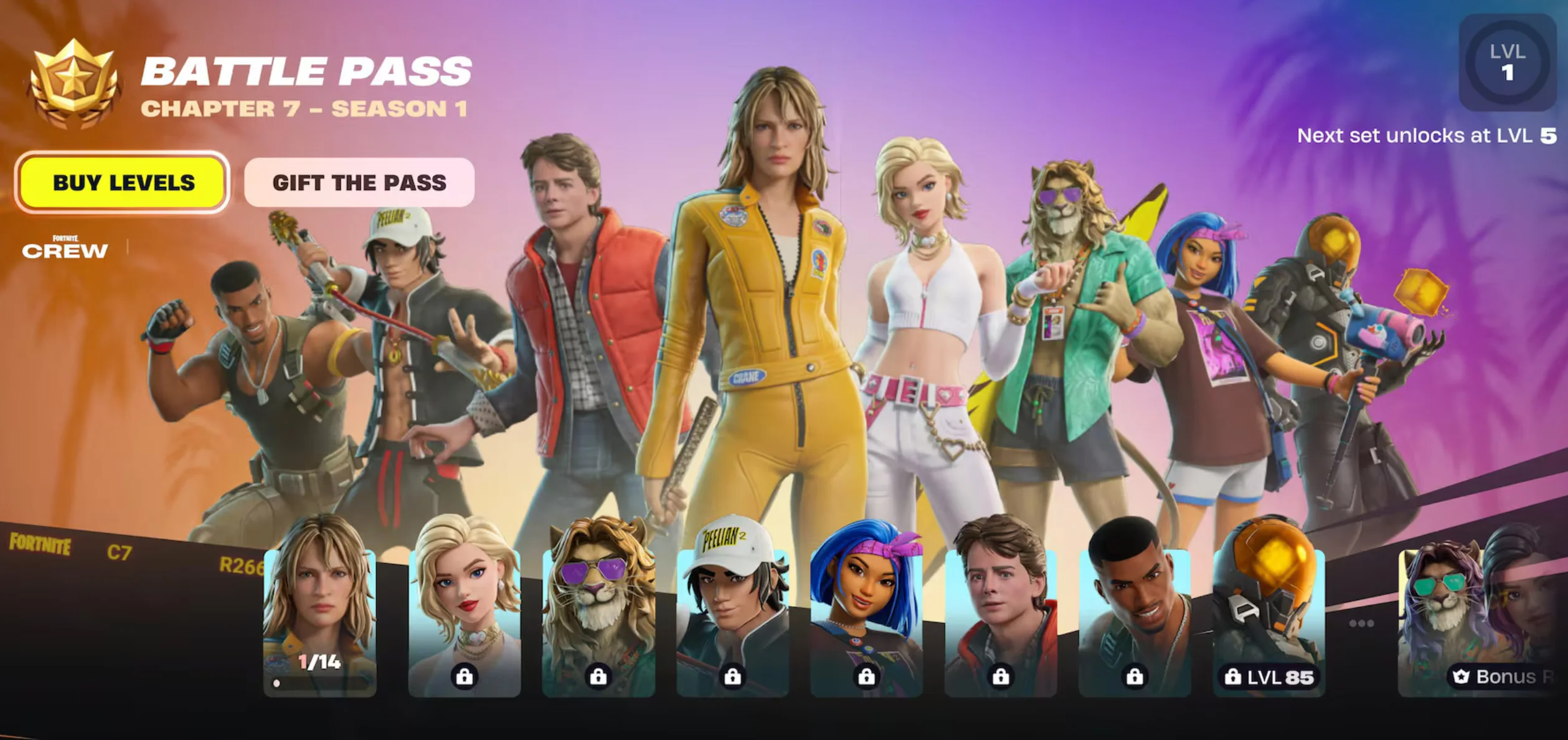
This also reduces panic-spending on tier skips later in the season, which is often where a pass becomes expensive. A pass that can't realistically be finished is basically a stress subscription - money paid to feel behind.
The Value Test: Rewards You'll Actually Use
Reward value isn't measured by the number of items on the track. It's measured by how often those items will show up in a real loadout. A useful rule: if there aren't at least three items on the pass that would genuinely be used - not just collected - skipping the pass is usually the right call.
This sounds strict on paper but feels freeing in practice. It treats cosmetics like a wardrobe: owning forty shirts doesn't help if only three ever get worn. In games, actual use frequency is the honest metric, and applying it makes pass decisions much less agonizing.
Avoiding Sunk-Cost Upgrades Mid-Season
Mid-season tier skips often happen when enthusiasm dips but the season clock keeps ticking. That's the sunk cost fallacy in a new outfit - "already started, so might as well pay more to not waste it." A 24-hour pause interrupts it cleanly. Review the tracker, check the remaining cap, and ask one question: is this upgrade buying more fun, or buying relief from pressure? If it's a relief, it's almost always smarter to lower the completion goal than to spend more money chasing a sense of closure.
Premium Currency and Bundles: Translating Virtual to Real
The Unit Price Method in 30 Seconds
Premium currency math sounds tedious, but a rough conversion takes half a minute and breaks the spell of "coins don't feel like real money." If a pack costs A for B coins, and the item costs C coins, the approximate real cost is A×CBA×BC. It's not perfectly precise - bonus coins and regional taxes add nuance - but it's good enough to make the decision feel grounded. Once an "800-coin skin" registers as a roughly $7-10 purchase depending on the pack chosen, the impulse slows down noticeably.
Leftover Coins: The Hidden Tax
Leftover currency is one of the quieter features of virtual currency design. Packs rarely match item prices exactly - which is the point. Leftovers create a psychological nudge toward a top-up next time because the wallet already has "most of what's needed" for the next purchase.
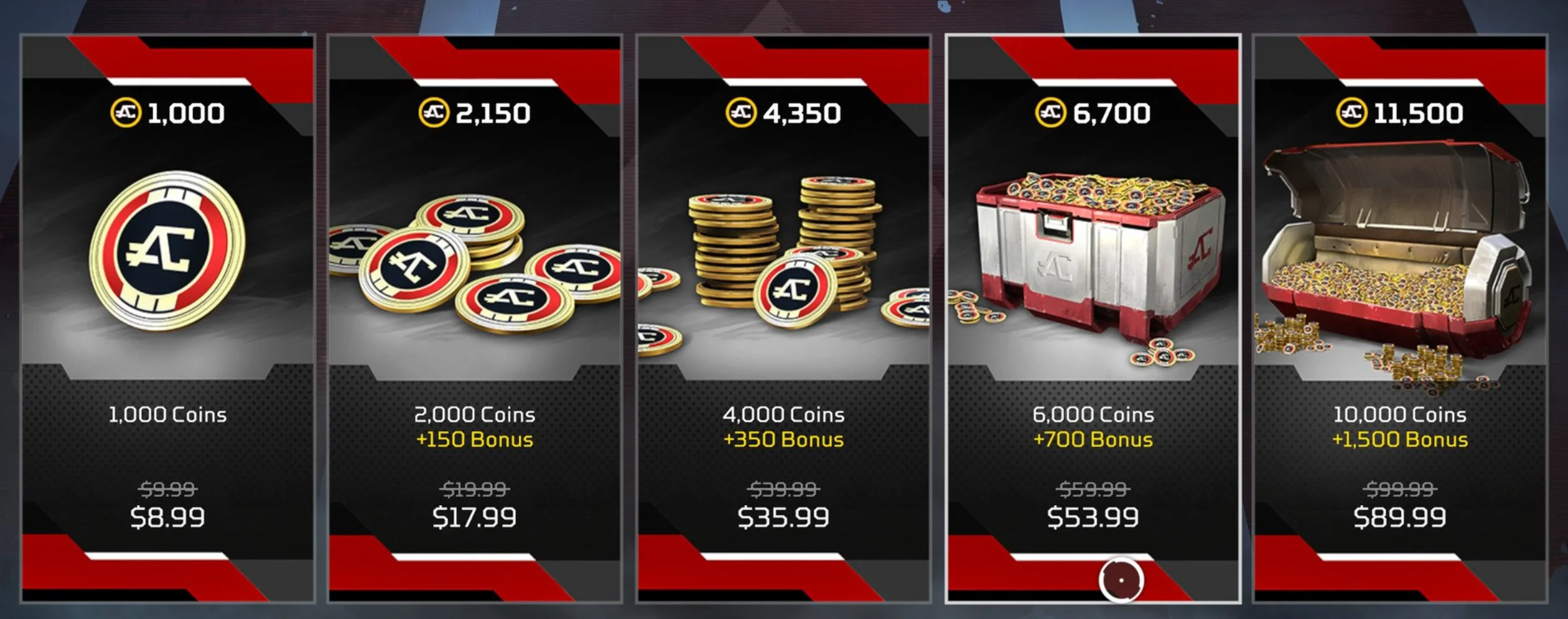
Two habits reduce this. First, only buy currency when the next planned purchase is already decided - not because a bundle looks efficient. Second, aim for near-zero leftovers by choosing packs that land close to the needed amount, even if they look less "efficient" in isolation. Efficiency isn't of value if it guarantees another purchase next week.
Cosmetics and FOMO: Buying Without the Spiral
The 24-Hour Rule for Shop Items
Most cosmetic regret is preventable with a single habit: wait before buying. The 24-hour rule works because desire changes after sleep. When a limited-time item appears in the shop, screenshot it, write down the actual reason it's appealing (not just "it looks cool," but the real reason - matches a main, fits a build aesthetic, been wanted for months), and revisit the next day.
If it still feels genuinely exciting and it fits the monthly cap, it's a confident purchase. If it feels lukewarm or you've already half-forgotten about it, it was probably an impulse. This one habit keeps FOMO from making the decision at the worst possible moment - right when the countdown timer is flashing.
An Identity Budget Built Around a Theme
A theme-based approach to cosmetics turns accumulation into curation. Instead of buying across every event and shop rotation, pick a consistent visual identity and use it as a filter: a specific color palette, a tactical aesthetic, a single character main's look, retro arcade style, something that's actually yours.
The theme doesn't need to be elaborate - it just needs to exist. When a new cosmetic doesn't fit it, skipping becomes easy rather than a sacrifice. The collection becomes cohesive instead of random, and spending becomes intentional instead of reactive to whatever is in rotation this week.
Platform Controls and Social Strategies
Make Spending Harder on Purpose
A lot of accidental spending comes from convenience - saved payment methods, one-click checkout, and zero friction between browsing and buying. Basic friction helps more than people expect.
Remove saved payment methods so each purchase requires a deliberate step
Enable a purchase PIN to add a pause point before confirming
Turn on spending limit notifications so costs don't disappear into the background
Consider family approval settings in shared households - not as policing, but as a way to reduce the mental load of constant small decisions
Account security matters here too. Unauthorized purchases are a real risk in online gaming ecosystems, and a compromised account can create real financial and logistical headaches.
Friend-Group Norms That Reduce Pressure
Social pressure is a quiet spending engine. When a squad is regularly showing off new skins, default cosmetics can start to feel like falling behind - even when the actual gameplay hasn't changed at all. Simple scripts make it easier to normalize opting out:
"Cosmetics optional this season. Gameplay first."
"No shame for defaults. Everyone plays on their own budget."
"Budget season: one pass max, no impulse shop buys."
These lines feel slightly awkward to say the first time. What they do is make it normal to opt out - and that alone takes real pressure off the purchase moment.
A 14-Day Reset Plan
Days 1-3: Audit and Interrupt the Triggers
The reset starts with visibility, not restriction. List the live-service games played in the last 30 days, every active pass, and any recurring perks or subscriptions attached to them. Then reduce exposure: turn off store notifications and limited-time sale pings, and remove saved payment cards to create friction. This isn't punishment - it's interrupting the trigger loops that make spending feel automatic. Even three days of reduced prompts can change how the hobby feels, which is often a nice surprise.
Days 4-10: Choose a Focus and Set Simple Rules
Pick one main game for the season. Set a monthly cap. Define a short ruleset: one pass at a time, one cosmetic theme, a 24-hour delay on shop items. The goal is to stop stacked commitments from multiplying across games and events. This is also the right moment to decide what "supporting the game" actually means - some players feel good buying a pass when they're actively playing; others prefer occasional cosmetics; others prefer spending nothing and just showing up. All of those are valid. The rules just prevent the drift.
Days 11-14: Review, Adjust, and Lock In the Defaults
A 10-minute review at the end of the two weeks is enough to close the loop: total the tracker, give the week a gut-check enjoyment rating, and make one small adjustment. Maybe the cap needs to be higher or lower. Maybe the theme is too restrictive. Maybe two games are competing and one should move to "social only" mode for a while. Then lock in the defaults - notifications off, PIN on, tracker running. The best version of this system feels boring, which means it's working.
Spending Rules That Protect the Hobby
Sustainable gaming isn't about never buying anything. It's about having enough control over microtransaction spending that the hobby stays fun - fewer purchases, better choices, less stress when a shop timer starts flashing. Battle passes work best when time is treated as a real cost. Premium currency decisions get cleaner when converted into actual money. Cosmetics feel better when they're curated rather than accumulated.
One immediate step worth taking today: set a monthly cap and create the one-page tracker before the next store refresh. The next purchase decision will feel different - slower, clearer, and a lot more optional.

Leave a Comment