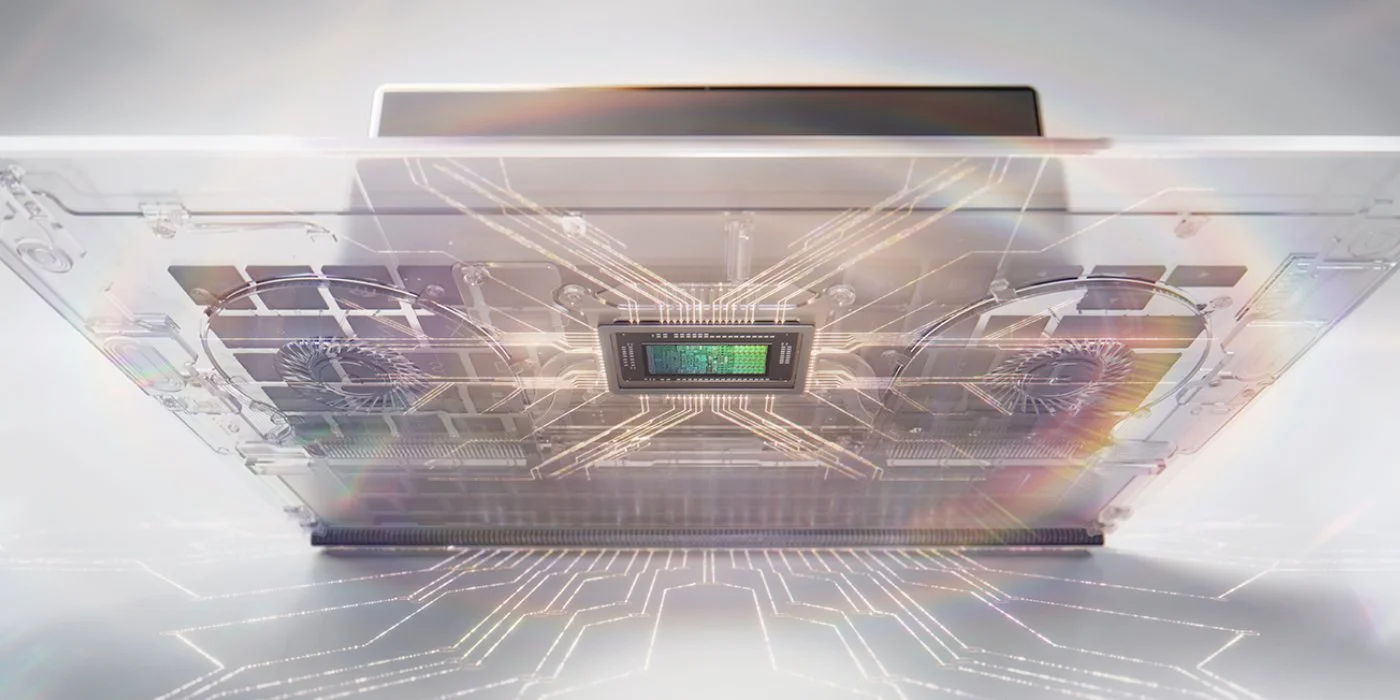
NVIDIA's GTC conference is currently taking place in Taipei, and we have a massive announcement regarding the future of gaming on Windows. Well, maybe. Here's what you need to know:
NVIDIA RTX Spark powers the world’s first Windows PCs purpose-built for personal agents, featuring 1 petaflop of AI performance, industry-leading power efficiency, full-stack NVIDIA AI and graphics technology, and up to 128GB of unified memory.
NVIDIA and Microsoft collaborate to deliver a native Windows experience for personal agents, including new security primitives and NVIDIA OpenShell to run agents securely on primary devices.
RTX Spark lets creators, AI developers and gamers render ultralarge 90GB+ 3D scenes, edit 12K 4:2:2 video, generate 4K AI videos, run 120B-parameter LLMs with up to 1 million tokens context using agents locally, and play AAA games at 1440p and over 100 frames per second.
Adobe is rearchitecting Photoshop and Premiere from the ground up for RTX Spark to deliver 2x faster AI and graphics performance.
RTX Spark-powered slim Windows laptops with all-day battery life and premium displays, as well as compact desktop PCs available this fall from ASUS, Dell, HP, Lenovo, Microsoft Surface and MSI, with models from Acer and GIGABYTE to follow.
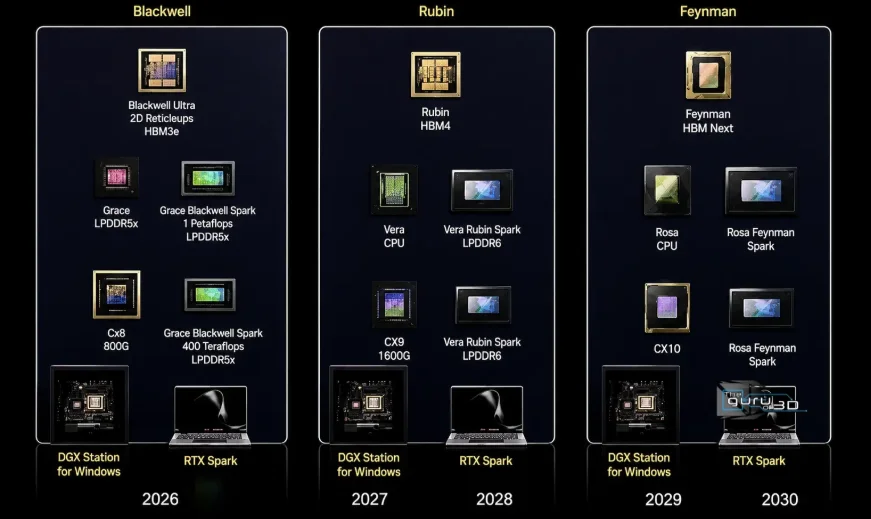 Above is the timeline of releases for the next few years from NVIDIA's Blackwell, Rubin, and Feynman platforms with RTX Spark on the laptop side of things. NVIDIA will be releasing Windows-focused processors every 2 years. The DGX Station is also receiving Windows support, currently it is only supported by DGX OS Desktop, RHEL, and CentOS.
Gaming?
Oh yeah. Demos during the presentation showcased Forza Horizon 6 and 007: First Light running on RTX Spark systems. NVIDIA's claim is that the platform delivers 1440p gaming with ray tracing when paired with DLSS. We're going to need to let the public get their hands on these laptops though to truly know what the performance is in gaming, but if we take their word, this is a large upgrade over previous iterations of ARM-based processors and Windows.
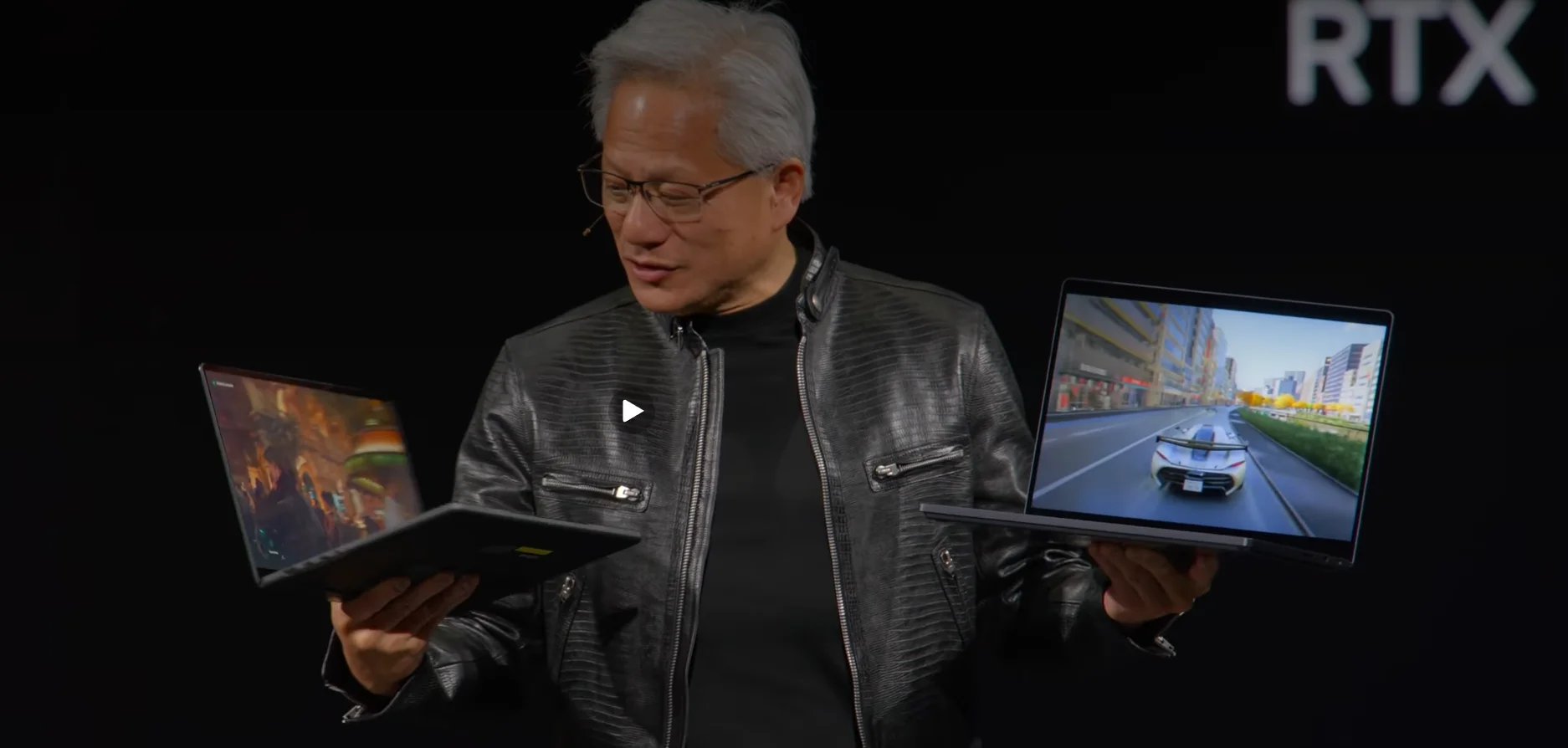
Which is exciting because that's a fourth competitor entering the CPU space for Windows and gaming. Intel, AMD, and Qualcomm were the previous entrants, and Qualcomm wasn't able to pair their ARM CPUs with the traditional dedicated graphics cards we've come to expect out of laptops featuring Intel and AMD processors.
Grace CPUs?
Grace is the code name for NVIDIA's CPU which runs on the ARM architecture, the same kind of CPU architecture that powers the iPhone or Android smartphone you have in your pocket and Apple's M-Series computers which made their debut in 2021. We've also seen ARM deliver their own CPUs to power Windows-based laptops, utilizing Windows' ARM version of the operating system, as regular Windows does not work with ARM processors.
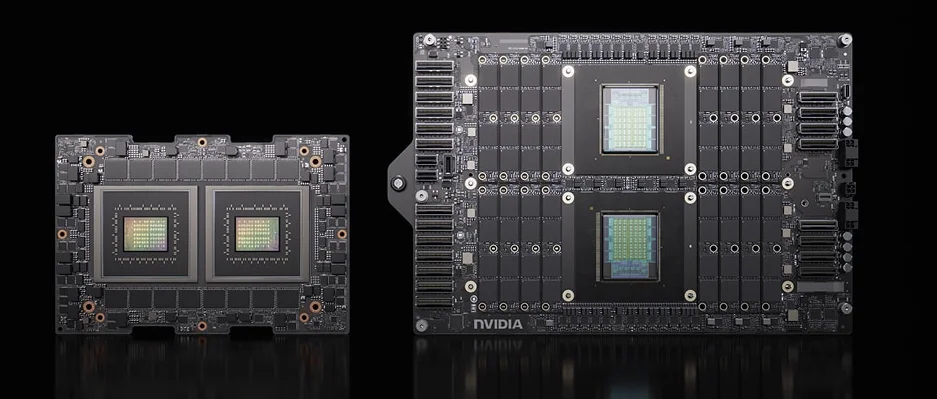
This new CPU endeavor is a 20-core processor that will power the non-graphical and non-ai portions of your new laptop, should you opt to buy outside of the Intel and AMD ecosystems. NVIDIA originally launched these CPUs for the data center, to be at the foundation of their AI infrastructure, and featuring a whopping 72 cores each CPU (144 for the dual chip). Yeah, we definitely don't need that amount of compute on a laptop.
We knew from back in 2023 that NVIDIA was going to be challenging Intel and AMD with their own CPU for Windows laptops, which is great for helping move the Windows ecosystem to an ARM-based future. We've seen Apple take macOS over to ARM which gave users incredible battery life, and Qualcomm's ARM-based Windows laptops have similarly also come out ahead in the battery life game.
AI though?
I know a lot of gamer-type folks aren't the biggest fans of "AI". I'm not here to persuade anyone to be on either side of the fence, but this is a genuinely cool addition to a laptop to have such a large focus on AI.
Whether we like it or not, AI is being integrated into our lives. Much like those who ignored the automobile and other technological revolutions, this is going to be one of those times where if you aren't making use of intelligence (one can certainly debate how intelligent some of all this is right now) you will fall out of favor and potentially behind. The computing world is heading in that direction so having a toolkit available to leverage local-based intelligence rather than relying on costly cloud models, it's huge.
"Run 120-billion-parameter large language models with 1 million tokens context"
RTX Spark platform supports FP4.. so what is that?
FP4 is a way of storing numbers using 4-bits of precision instead of the 8, 16, or even 32 bits that we see from AI models. FP4 is a bit like an aggressively compressed JPEG image where it takes up a lot less storage space but the end result doesn't look as great as the original. That's not to say we can't use it, but it certainly won't be competing in a beauty competition.
A 120 billion parameter LLM with FP16 precision would require 240 GB of memory to hold the weights. When we drop to FP8, that's 120 GB, which would fit into the max memory size of the RTX Spark laptops which comes in at 128 GB. FP4, that drops down to 60 GB. We don't have all the details on which memory sizes RTX Spark laptops will be in, but it's safe to say that in order to utilize a 120 billion parameter model, you're going to need at least 64 GB of RAM, but likely a good chunk more (96 GB version please?) because that's just storing the model on memory, that doesn't include your OS and other programs also running in memory.
Which is still cool. Doing this on a portable, single piece of dedicated hardware is still an achievement and puts some more power in the hands of the open model communities and it will be interesting to see what people are able to do with it. Unified memory has put macOS and Apple's hardware at the front of the local AI scene, making it difficult to acquire new Apple hardware, now NVIDIA and Windows are going to try and take some of that marketshare.
ARM: The Future of Windows?
Could the future of Windows be ARM? If you ask me, I'd love to see it because x86-64 is archaic and polluted with so much legacy support that moving away from it and onto a brand new set of chips would pave the way for a more energy efficient future without major compromises on performance. That's not to say you can't buy computers with Intel and AMD processors that support longer battery life, but performance-wise and performance-per-watt, their lower-end CPUs do not compete in performance and cores with ARM-based offerings.
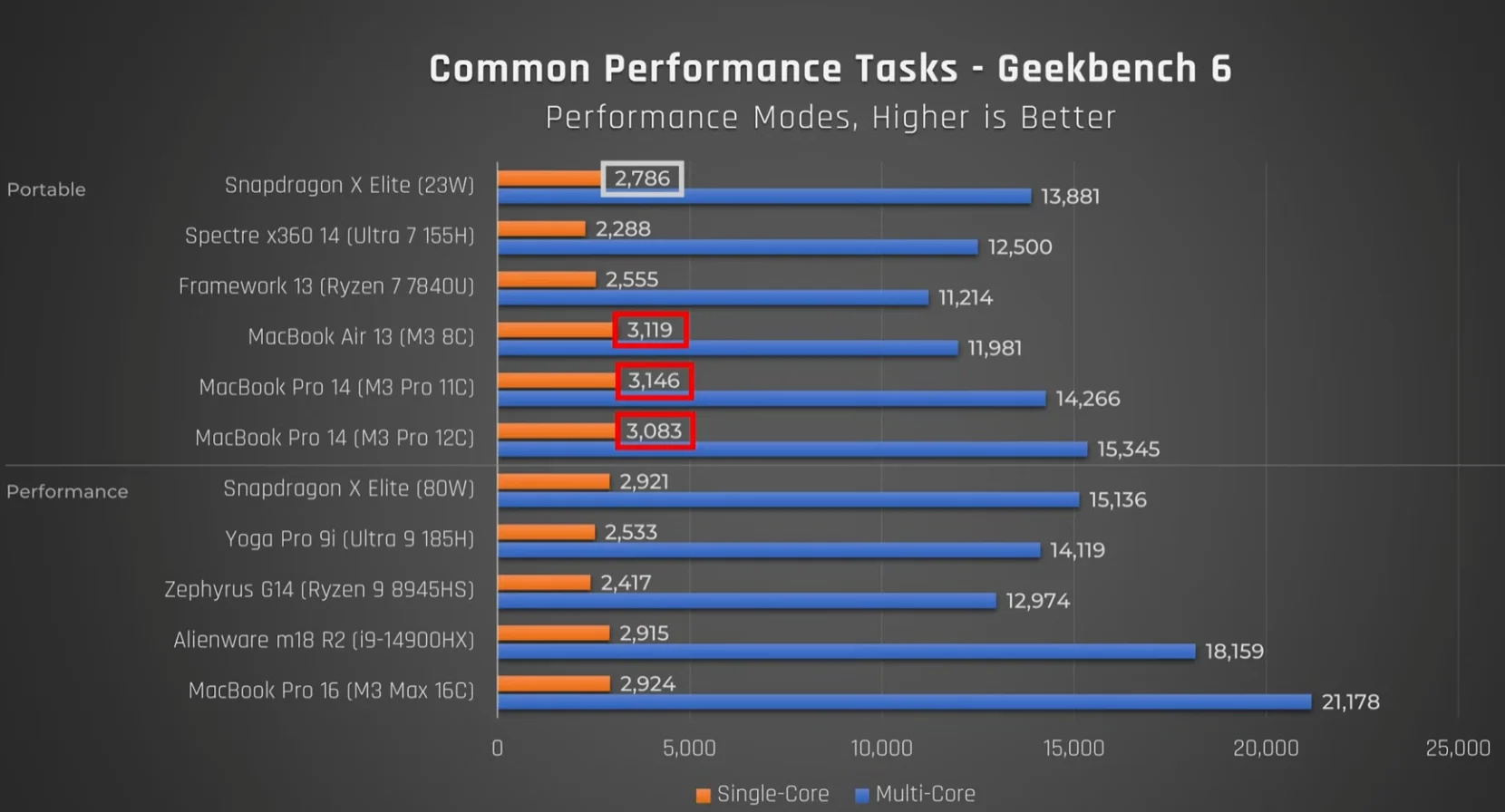
Take a look at this data from Just Josh on YouTube from late 2024 when we saw Qualcomm jump into the Windows PC space. We see the ARM-based portable chips out-performing the Ultra 7 155H and Ryzen 7 7840U CPUs in both single-core and multi-core workloads.
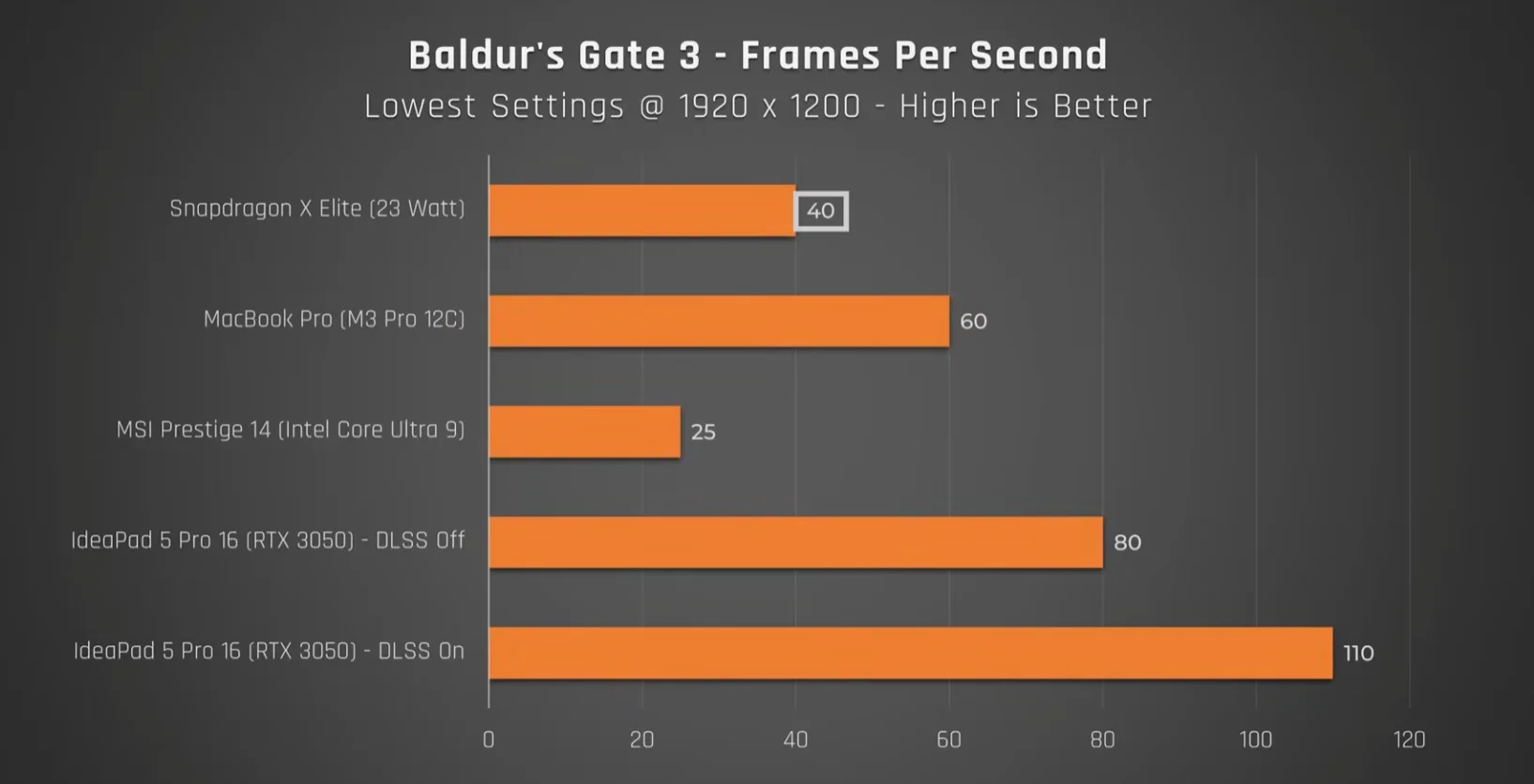
Even looking at gaming performance, Baldur's Gate 3 (1920x1200, Lowest Settings) we see the game at playable framerates (one can certainly debate if 40 FPS is playable, fight me in the comments) on the Snapdragon X Elite but Intel's Core Ultra 9 internal GPU, a low 25 FPS is not great. Now why you'd be using a Core Ultra 9 processor without a dedicated GPU isn't really something I can even comprehend, but once you put an RTX 3050 into the mix, you're talking about massive amounts of extra power consumption.
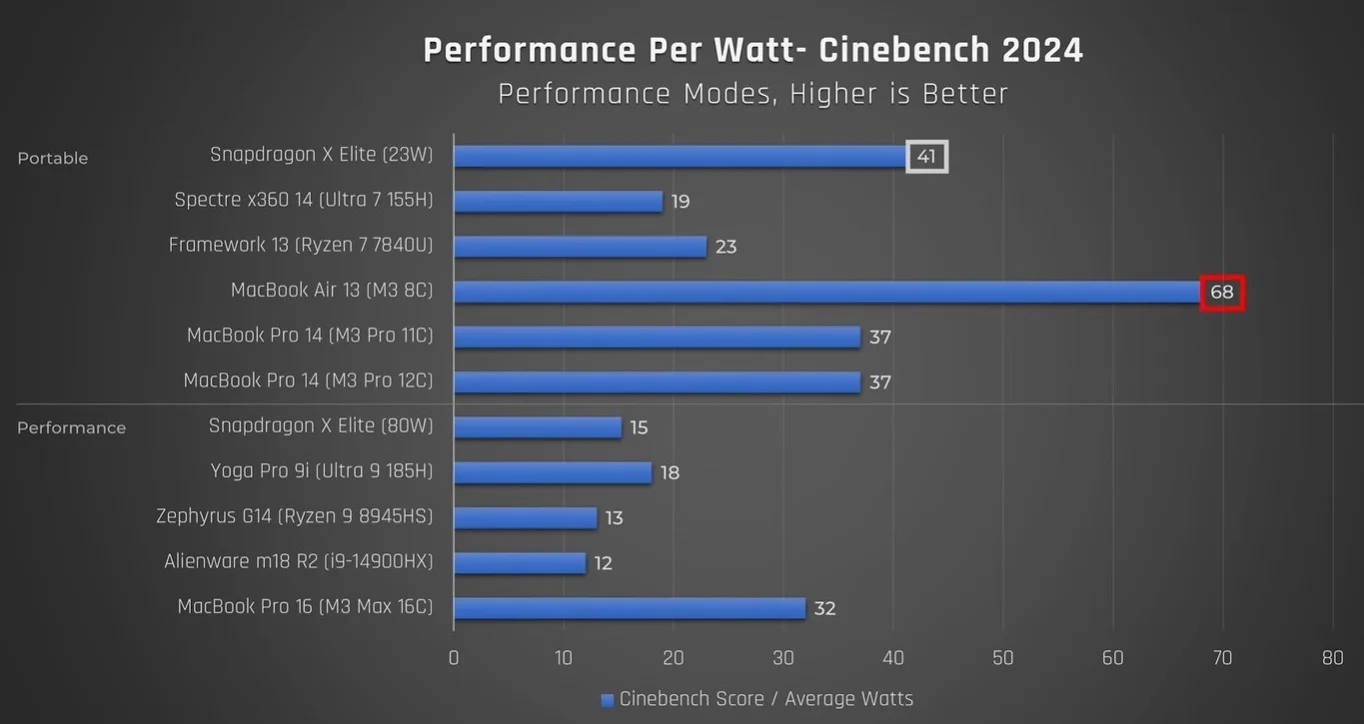
 Which is where we go next. Performance-per-watt. ARM-based processors kick serious ass when it comes to their power efficiency. When we can't make larger batteries for laptops, this makes the CPU and GPU efficiency absolutely vital.
 Does this matter for the hardcore gamer who just wants to plug their desktop into the wall and go all out with max settings? No, it certainly doesn't matter that much to them, but I'd argue that we should care more about our energy efficiency.
First though, back to the question. Is ARM the future of Windows? I'd say yeah, for most people they would gain huge benefits in choosing an ARM-based laptop for their daily computing needs. If you are mainly using a web browser especially, a computer based on ARM giving you that full computer experience, you won't notice anything different than if you were on team blue or team red's CPU offerings. Windows' Prism emulator can handle any x86 and x64 applications that don't natively support ARM, so the performance may not be as great in those scenarios since emulation always has overhead, but at least apps are usable.
Energy Efficiency
All computers when we're gaming dump a ton of heat into our environments. When we're seeing a rise of global temperatures which require us to cool our houses with air conditioning to feel comfortable, the last thing we need is additional heat being generated inside our homes. The more heat we generate, the more electricity we need to use to cool the air down.
Assuming your PC is pumping out 500 Watts of heat during a long gaming session, that's an extra 100-167 watts of energy an air conditioner is going to need to use to cool the room. If you're in a place with high electricity prices, that's 20% more electricity being used to play video games. It all adds up at the end of the month when the bill comes. If you can reduce your load on the power grid, and lower your monthly expenses, those are both very solid advantages by simply switching the platform you are playing on (ARM vs x86-64).
This is based on Coefficient of Performance knowledge. Air conditioners there are cited as having a COP of 3.5 to 5 - it's easier to move heat from one place to another than it is to generate heat in the first place. Maths.
As someone who has primarily moved to macOS (M2 on a Mac Studio) even for gaming tasks, vs the monster PC running Windows and Linux that I own, most of that was driven by the simple fact I prefer the ecosystem for development, but I also can't disagree with saving money on electricity. My computer setup uses on average 4 kWh a day when I'm using my Mac Studio and a typical day includes work during the day and games at night. Whenever the PC gets turned on to play video games at night instead, I'm at 8.6 kWh of usage. It only saves me around $15 per month in electricity (we have very cheap electricity here, woo Nuclear and Hydro), over a three year lifespan for my computer, which really we're likely looking at 4 or 5, that's a minimum of $540 saved. It would be more because if I was working on my PC all day as well, it would be using more energy than my Mac does.
It's not even like my Mac was that expensive either, I would have paid the same amount of money for a similarly spec PC.
So yeah, throw me on the train directly to ARM-based Windows and with NVIDIA's solution of RTX Spark, it makes me feel very bullish on the future of ARM and Windows. Snapdragon's ARM offerings intrigued me, now I'm tempted to actually get a Windows-based laptop for the first time in a decade. Of course, I want to see peer benchmarks before I come to any purchasing conclusions.
RTX Spark laptops arrive in Fall 2026 and will include options from ASUS, Dell, HP, Lenovo, Microsoft Surface and MSI, with models from Acer and GIGABYTE to follow in the future.

Leave a Comment