
Nakama Studios has pulled back the curtain on Coloratura, a single-player narrative adventure that ditches visuals in favour of sound, and it is coming to PlayStation 5 later this year. In a new PlayStation Blog deep dive published today, the team explained how they set out to build a game you can genuinely play blindly, using spatial orientation and sensory perception as its core.
We love a idea, and this one is about as bold as it gets. The project grew out of Museful, a Game Jam prototype that confirmed three-dimensional movement was possible without any visual guiding.
What is Coloratura about?
Coloratura is a single-player narrative adventure where you play as Alex, a talented musician who has lost her sight due to an accident. Rather than limiting movement, the game breaks the limits of traditional accessibility designs, giving the player total freedom in a 3D environment without cardinal boundaries, with the ability to rotate the camera and freely explore the scene.
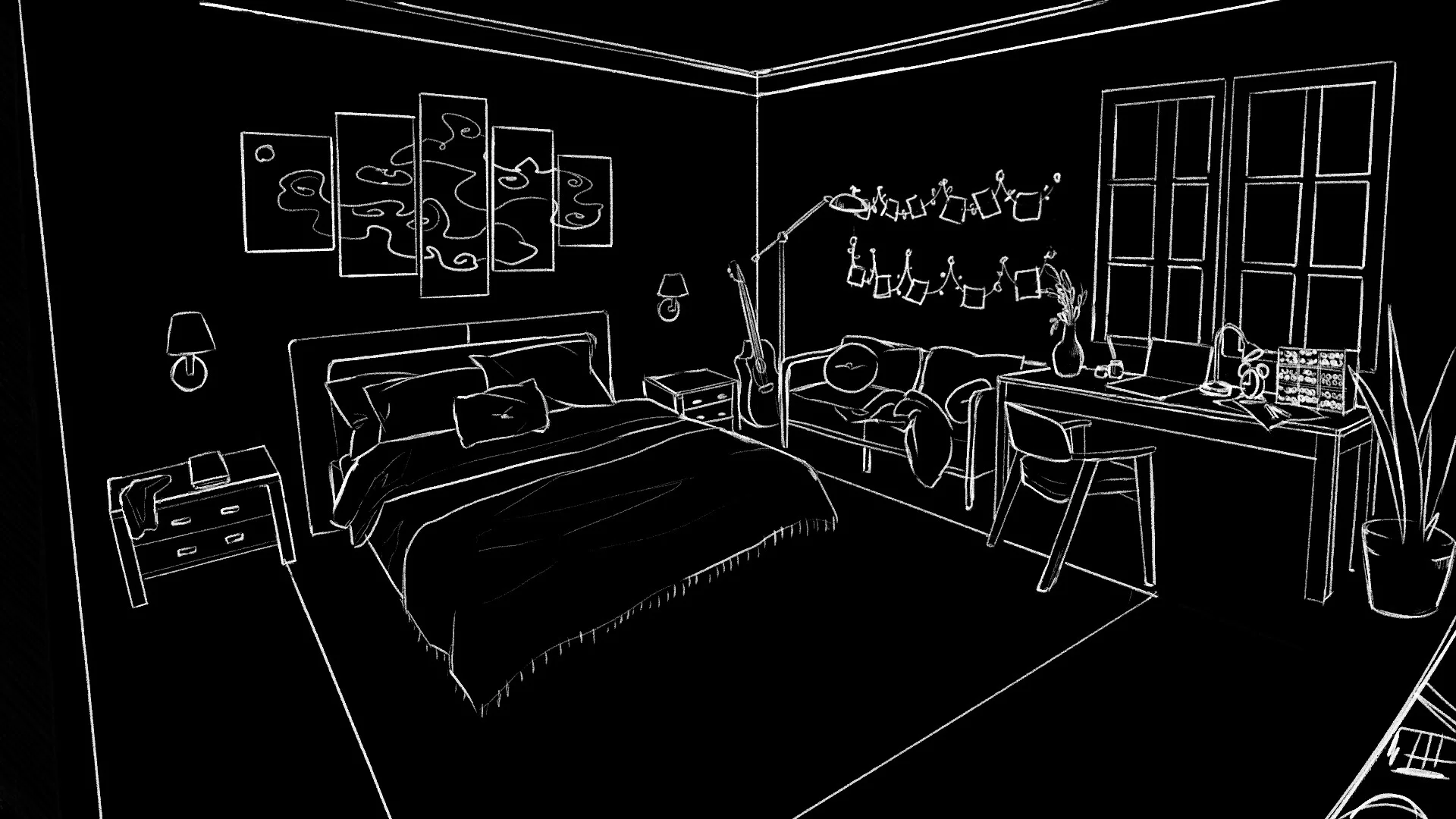
For its narrative and world building, the team drew inspiration from titles such as Life is Strange, embracing a musical indie tone with slice of life themes and a heavy focus on the main character's inner conflict. They also studied games designed to be played blindly, like The Vale and A Blind Legend, to work out what worked and which visual aids they wanted to avoid to keep the experience purely sightless.
How does the audio-first gameplay work?
To help players navigate the levels intuitively and comfortably, the team designed a set of innovative audio mechanics:
Radar and memory systems: Alex can concentrate to feel elements at different distances. A "memory" system assigns a positional sound to objects such as a table or a coffee machine once they are discovered, letting the player build a mental map of the space.
The objective "button": To stop players from feeling lost, the team added a bell sound to indicate the direction to follow, translating classic visual objective tracking into a purely sound-based guide.
Musical puzzles: The goal is to locate sound sources that become puzzles. Once solved, the player builds up melodies to form the final game soundtrack, mirroring Alex's life stages.
How was the world designed?
In Coloratura, sound design is a main part of the visual design in a sense. The world is built through a rich sound landscape that lets the player triangulate their position at any point. The musical identity, designed by Jose Ramon "Bibiki" Garcia, is sharply defined: acoustic guitar riffs represent Alex's personality and conscious state, while piano sounds evoke more introspective and dreamy moments.
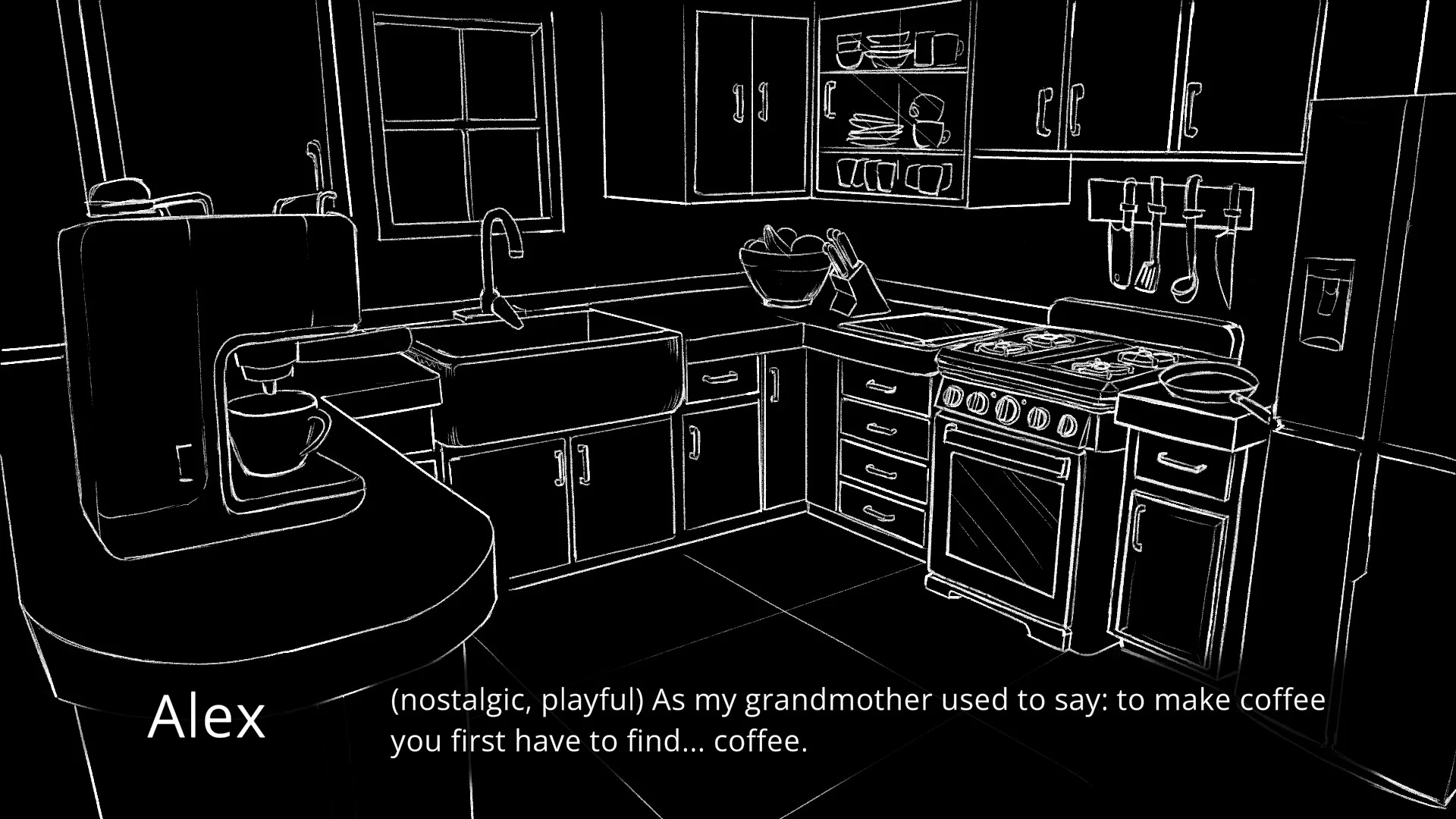
The 3D environment was built with a focus on fluidity. The team eliminated strict collisions and designed scenes with broad walls so players could move around without the frustration of getting stuck against an invisible object. There was also a comprehensive dubbing effort using professional actors capable of transmitting deep emotions with an almost ASMR vibe, so the voice acting hit the right spot without feeling overwhelming.
What were the biggest development challenges?
The main challenge, according to the team, was "unlearning" how to create video games, since traditional game design rules built for visual games simply did not work here. On a technical level, they had to adjust positional sound to clearly indicate when an object was behind the player, which stopped users from turning around and walking sideways - or, as the team puts it, walking like a crab - out of fear of getting disoriented.
To solve these problems, the team leaned on constant iteration and playtesting, and worked closely with blind players throughout development. One of those collaborators was Sergio Vera, who is blind. Sergio helped validate and refine the game's spatial movement and shared personal experiences that informed the story and helped make its portrayal of blindness feel authentic. The goal was not to make a game solely for blind players, but an accessible experience that people both with and without visual impairments could enjoy on equal terms.
What does Coloratura offer on PlayStation 5?
The team notes that the industry and platforms like PlayStation are making a strong bet on inclusion and accessibility, pointing to initiatives like the Access controller. Coloratura arrives in that context as a pioneering project that showcases the full potential of PlayStation 5's sophisticated 3D audio, offering a level of technical immersion that few narrative games achieve.
The game also includes a mode with a supporting interface made of sketched illustrations and text for people with dyslexia or other needs, but the studio insists the true magic is in the inclusive gameplay itself.
Coloratura invites PlayStation players to put on their headphones, blindfold themselves or play in total darkness, and lose themselves in the experience. As the team at Nakama Studios points out, there are no graphics more powerful than those drawn by our own imagination when the outside world fades away and only sound remains.
Coloratura launches on PlayStation 5 later this year. Would you be brave enough to blindfold yourself and play by ear? Let us know in the comments.


Leave a Comment