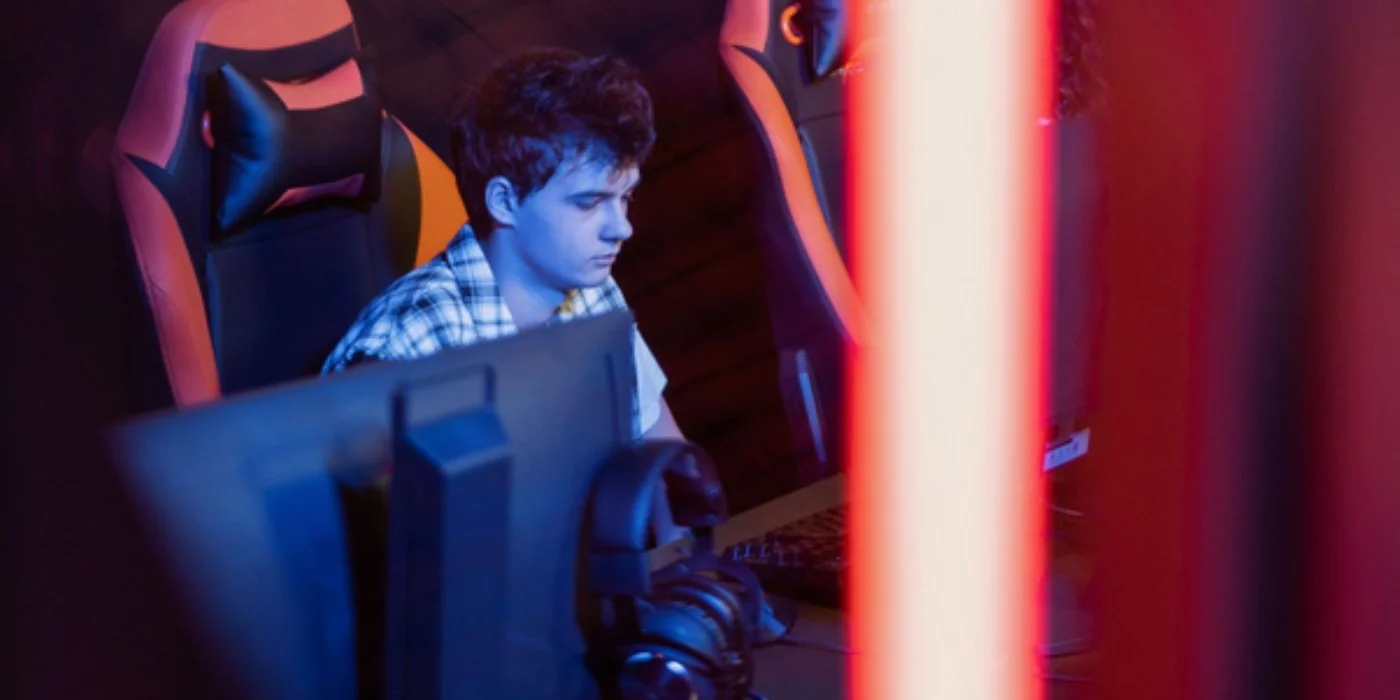
Most students have heard some version of the same advice: spend less time playing games and more time studying. It sounds logical on the surface. Yet the reality is often more complicated. Many of the mental habits students develop while gaming are surprisingly similar to the ones they need in school. Planning ahead, recognizing patterns, adjusting after failure, and making decisions with limited information are all part of learning, even if they happen in different environments.
The interesting question is not whether games replace education. They do not. The better question is why so many students naturally develop ways of thinking through games that later help them solve academic and real-world problems.
One reason is that games reward thoughtful decisions rather than simple memorization. A student might spend an hour experimenting with different approaches before finally solving a difficult challenge. That process feels very different from completing homework, yet many of the same cognitive abilities are involved.
Students also learn in different ways. Some prefer lectures, others benefit from visual examples, and many combine several resources while preparing assignments. A student may compare explanations from textbooks, discuss ideas with classmates, or browse educational platforms such as Write Any Papers to understand different approaches to academic writing. Exploring multiple perspectives often strengthens learning because it encourages evaluation instead of passive reading.
Strategy Is More Than Winning
People often associate gaming with fast reactions. While speed matters in some games, strategy depends on something deeper.
Strategic thinking skills involve asking questions before making a decision.
What is the goal?
Which option creates the best long-term result?
What resources are available?
What happens if the first plan fails?
Students answer similar questions every day. They decide how to divide study time, which assignments deserve extra attention, and when it is worth changing their original plan.
Some students even examine examples of custom research paper orders to better understand how complex academic papers are organized before attempting large research projects of their own. The value comes from analyzing structure and reasoning rather than simply looking for answers.
Whether someone is studying engineering, psychology, history, or business, thoughtful planning usually produces better outcomes than rushing into the first available solution.
Small Decisions Build Bigger Skills
One fascinating aspect of gaming is that important thinking often begins with very small choices.
A player managing resources in a simulation game must constantly balance competing priorities. Spending everything too early may create problems later. Saving too much can slow progress.
This type of reasoning resembles many academic situations.
Gaming Situation | Academic Skill |
Managing limited resources | Planning and organization |
Predicting an opponent's move | Analytical reasoning |
Revising unsuccessful plans | Scientific thinking |
Working with teammates | Collaboration |
Learning unfamiliar mechanics | Adaptability |
Although games simplify reality, the decision-making process remains surprisingly transferable. Over time, students strengthen their problem-solving skills by evaluating different options, learning from mistakes, and adapting to changing situations.
Why Failure Can Become a Teacher
Many students dislike making mistakes because grades often make failure feel permanent.
Games create a different environment.
Failure is expected.
A player loses, restarts, notices something new, and tries again.
This repeated cycle encourages curiosity instead of frustration.
Researchers studying cognitive development have long argued that learning improves when people actively experiment instead of memorizing isolated facts. Educational theories developed by Jean Piaget and later expanded by Lev Vygotsky both emphasize that knowledge develops through interaction, reflection, and gradual refinement rather than passive observation.
Games naturally create those opportunities.
Instead of avoiding difficult problems, students become more comfortable exploring them.
Not Every Game Develops the Same Abilities
The phrase gaming for students sometimes suggests that every game provides identical educational benefits.
That is not really true.
Different genres encourage different habits.
Strategy games require long-term planning.
Puzzle games reward logical experimentation.
Simulation games teach resource management.
Role-playing games encourage balancing immediate needs with future goals.
Even traditional board games remain valuable. Chess continues to be studied because each move influences countless future possibilities. Modern cooperative board games ask participants to communicate clearly, negotiate priorities, and adapt when unexpected situations appear.
The platform matters less than the quality of the thinking taking place.
Critical Thinking Often Hides Behind Entertainment
Students rarely describe gaming sessions as learning experiences.
They simply describe them as fun.
Yet many enjoyable moments involve careful reasoning.
Imagine facing a challenge that seems impossible.
The first attempt fails.
The second reveals a hidden pattern.
The third succeeds because earlier mistakes become useful information.
That sequence represents critical thinking through games.
The player observes evidence.
Tests assumptions.
Adjusts strategy.
Evaluates results.
Applies new knowledge.
Those are exactly the kinds of mental processes students use when conducting experiments, writing essays, or solving mathematical problems.
Team Games Teach More Than Communication
Group assignments remain one of the most common frustrations in education.
Some people contribute very little.
Others try to complete every task themselves.
Successful cooperative games present similar situations, but they encourage players to solve them together.
One teammate coordinates resources.
Another explains strategy.
Someone else adapts when the original plan fails.
Leadership develops naturally because the situation demands it rather than because someone assigns the role.
These experiences cannot replace formal education, but they offer repeated opportunities to practice decision-making under pressure.
Reflection Makes the Difference
Playing games alone does not automatically improve thinking.
Reflection matters.
Students who pause after completing a difficult challenge often ask valuable questions.
Why did the original plan fail?
Which decision changed the outcome?
What information was overlooked?
Could the same reasoning help solve another problem?
This habit transforms experience into learning.
Professional athletes review performances.
Scientists analyze experiments.
Students benefit from reviewing their own thinking as well.
A Balanced Perspective
The discussion surrounding the benefits of video games for learning sometimes becomes too extreme.
Games are neither magical educational tools nor automatic distractions.
Too much gaming can reduce sleep, interrupt healthy routines, and interfere with academic responsibilities.
Balanced use creates a very different outcome.
When gaming becomes one part of a student's broader learning experience alongside reading, writing, discussion, exercise, and real-world problem solving, it can strengthen habits that remain valuable far beyond the screen.
Students gradually become more comfortable making thoughtful decisions, adapting to unexpected situations, and solving unfamiliar problems with confidence.
Those qualities rarely appear overnight.
They develop through repeated practice, careful reflection, and a willingness to learn from failure, whether that failure happens in a classroom or inside a virtual world.

Leave a Comment