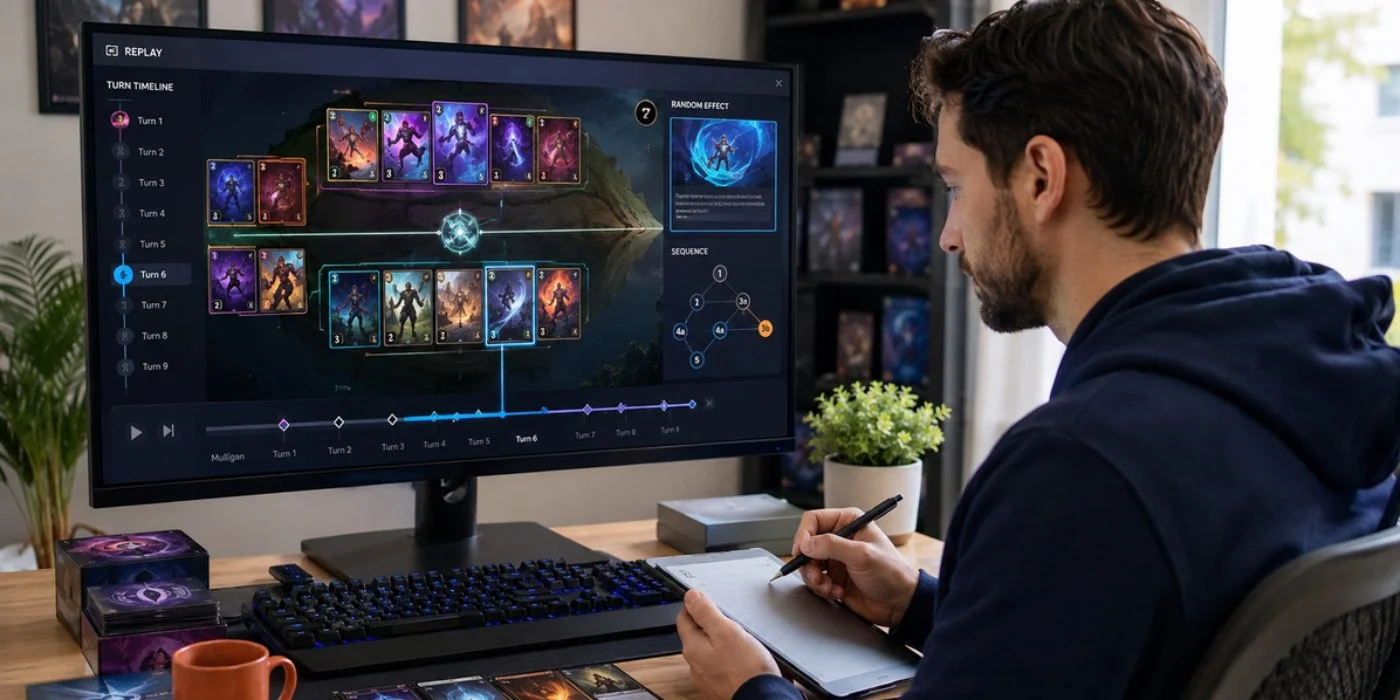
A close loss in a digital card game often ends with a results screen. The rank changes, the opponent disappears and the client moves on. Ten minutes later, the decisive turn may be difficult to reconstruct.
Hearthstone, Marvel Snap and MTG Arena process every card, target and random effect on a server, yet much of that history remains hidden or dependent on outside software.
The Minimum Record Is Not Complicated
A useful history needs a dependable account of what happened. Five fields provide a workable starting point:
Mode, queue and starting rank.
Both players and the deck selected.
Cards played in chronological order.
Generated cards, random targets and transformed objects.
Result, match length and resulting rank change.
Those details answer basic questions without a screen recording. A full replay can arrive later, but the event log must exist first.
Casino accounts illustrate the level of detail required when a disputed result involves money. Each completed round at Royal Reels should be traceable by casino game, stake, timestamp, outcome and the corresponding balance movement. That casino record allows support to investigate an interrupted reel animation or an account total that appears incorrect.
A card game needs comparable evidence for cards, turns and rank. The visual animation is only a presentation layer; the server record describes the event that actually counted.
Hearthstone Built an External Ecosystem
Hearthstone has long relied on third-party tools. Hearthstone Deck Tracker records matches, displays deck information and creates logs that services can analyze.
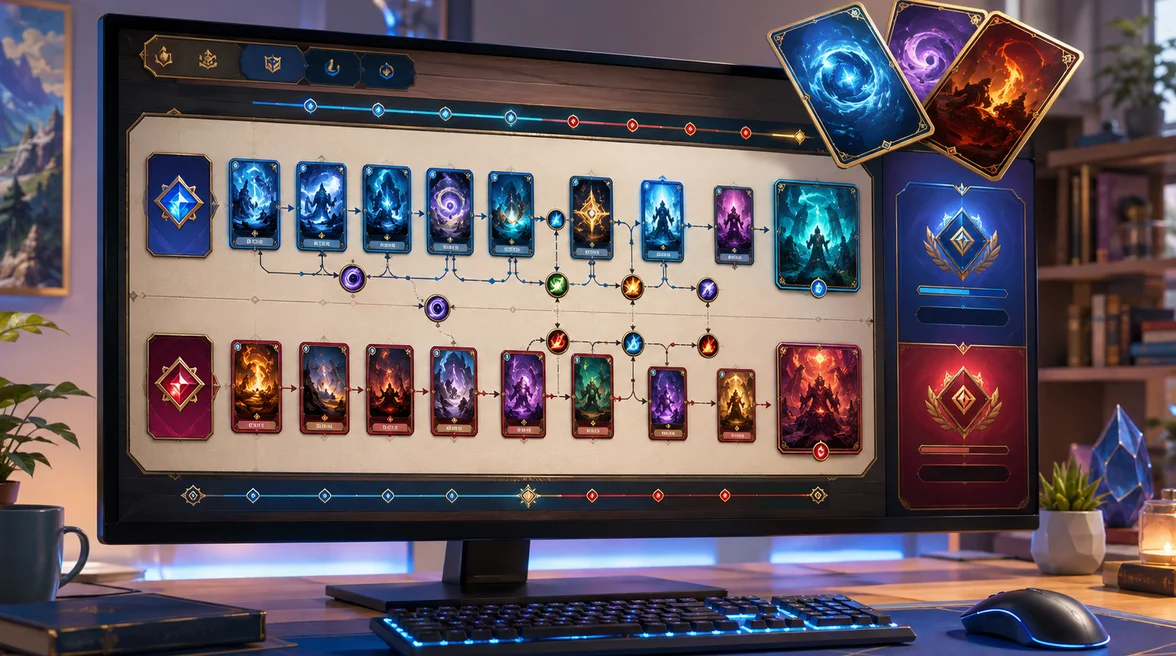
The records are converted into browser-based replays and statistics by HSReplay, using data collected from millions of games each week. Firestone offers another route, combining collection management, deck tracking and post-match analysis.
Out of Games joined that ecosystem with its Companion desktop app. The beta released on July 12, 2026 records matchups, decks, results and ranks. It also logs opened packs, including data relevant to pity timers.
These tools expose the underlying problem: separate software retrieves information the game already processes.
MTG Arena Still Leaves Too Much Outside the Client
Magic: The Gathering produces especially complicated matches. Priority passes, triggered abilities, replacement effects and cards created outside the original deck can all matter to the final result.
MTG Arena still offers no complete built-in match history or replay viewer. Trackers such as Untapped.gg and 17Lands read local logs to supply deck records, win rates and draft analysis. The arrangement works for dedicated PC players, but it is less useful on mobile and invisible to anyone who never installs a tracker.
A proper client history would also help with bug reports. “The creature disappeared” gives support little to investigate. A match ID, turn number and ordered list of effects narrows the incident to a specific server event.
A Replay Does More Than Confirm a Loss
Good replays are learning tools. They reveal whether a removal spell was used too early, whether a lane was abandoned unnecessarily or whether a resource could have been preserved for the final turn.
They also improve discussion. A shared replay gives balance designers, tournament administrators and community writers the same evidence. Screenshots usually capture only the surprising result, omitting the setup that made it possible.
Mythgard demonstrated the value years ago by placing replays in the profile history. Matches could be watched again, and other public games could be studied. The implementation was not elaborate, but it treated review as a normal part of play rather than a specialist feature.
Different Games Need Different Levels of Detail
One design cannot serve every card game. Hidden information, match duration and platform restrictions change what can safely be recorded.
Game | Most useful record | Current practical route |
|---|---|---|
Hearthstone | Turn log, deck and generated cards | Deck trackers and HSReplay |
Marvel Snap | Lane state, cube changes and retreat timing | Third-party match trackers |
MTG Arena | Stack order, triggers and draft record | Local-log applications |
Mythgard | Full match replay | Built-in profile history |
Marvel Snap needs a particularly compact solution. Its six-turn matches make full replays inexpensive to store, while cube gains and retreat decisions are central to performance. A final win-loss figure cannot show whether a deck wins matches but loses cubes through poor retreat timing.
Privacy and Competitive Integrity Still Matter
A history system should not expose every hidden card immediately. Developers need several safeguards:
keep an opponent’s unrevealed hand private;
delay public tournament replays when necessary;
allow account names to be hidden in shared links;
separate personal statistics from global data collection;
provide a clear retention and deletion policy.
The match can still be reconstructed from the owner’s perspective. After both players finish, the system may reveal only cards that entered public zones or affected the board. Tournament organizers could receive a more complete record under separate permissions.
Match History Should Survive the Patch
Live-service games change constantly. Cards are rebalanced, rules are revised and visual effects are replaced. A replay based only on the current client may misrepresent an older match unless it also stores the relevant rules version.
That makes a durable event log more valuable than a video file. It can preserve card IDs, patch number, actions and results in a compact format, then render them through a replay interface when required.
Digital card games ask players to learn from hundreds of small decisions. Their clients should preserve those decisions after the defeat screen closes. Match history is not an optional statistical extra; it is part of explaining why the game produced the result it recorded.

Leave a Comment