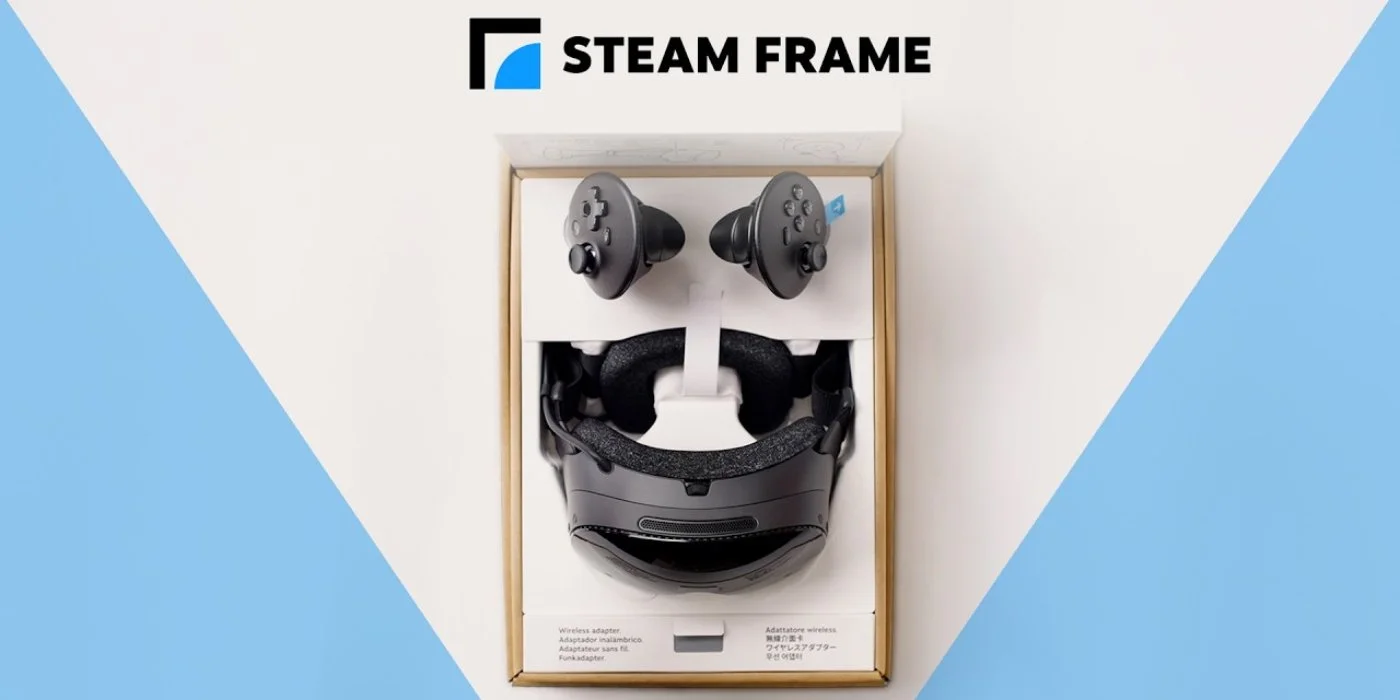
The final piece of the Steam Hardware trifecta is here! After month of waiting, the Steam Frame will be available starting September 17th... kinda, we'll get to that. The headset, powered by a Snapdragon 8 Gen 3, comes with Half-Life Alyx included... but no charger. Here's the full spec sheet:
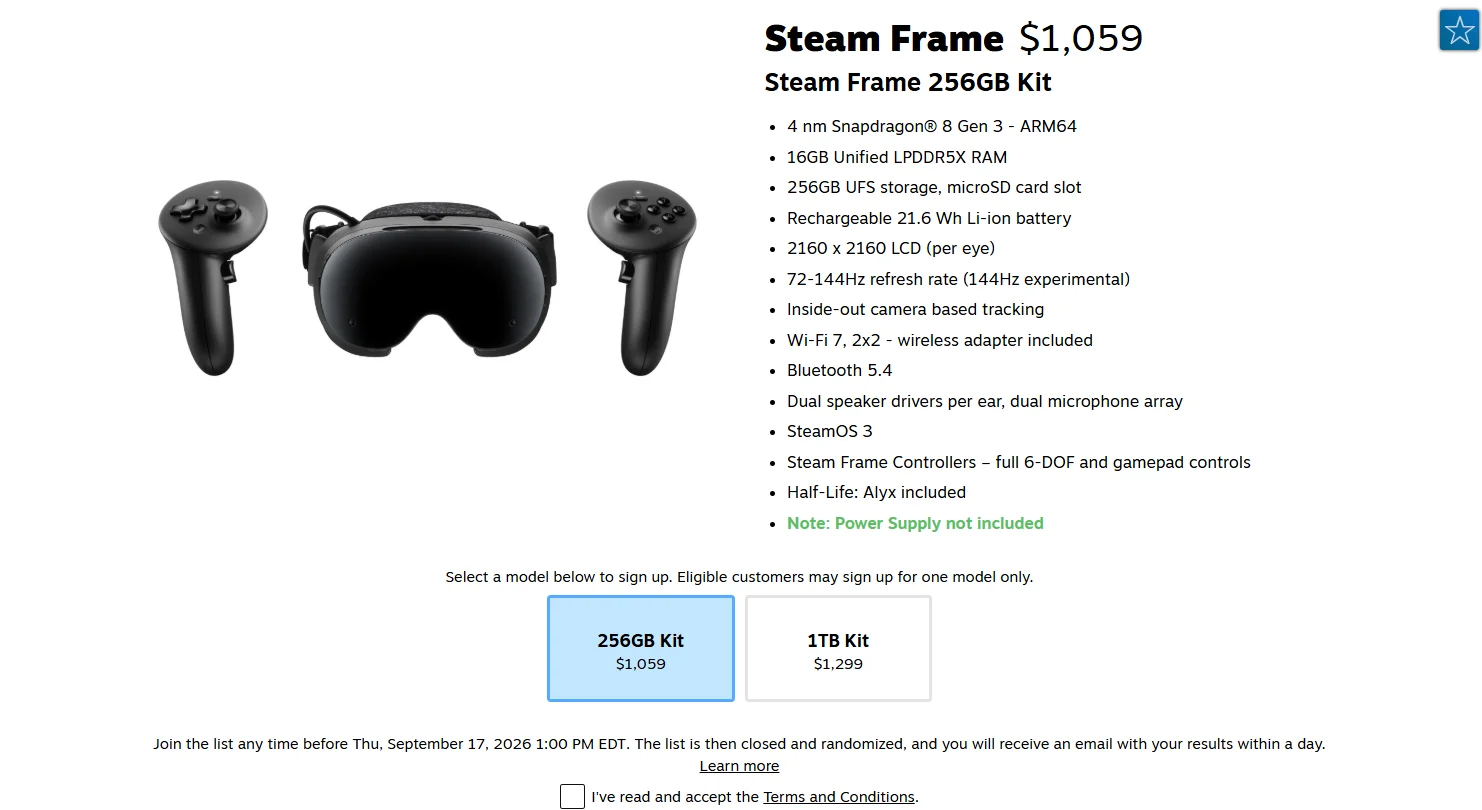
Those are some beefy specs for a VR headset. And the price matches the specs, as it'll be 1'059 USD (prices vary by region, check steam) for the 256 GB model, or 1'299 USD for the 1TB model. The two headsets are otherwise identical.
As mentioned, no charger, but you can use a Steam Deck charger if you have one, or any 45W charger, which should be cheaper. If you want to get one from Valve, it'll cost you 30 USD or the regional equivalent (40 euros? WTH, Valve?). There's also an Ergonomic accessory pack for 59 USD, and a replacement kit for 49 USD (those are included in the base package, hence replacement).
.webp "image (1)")
But wait, how do you get the console? Like with the Machine, you'll have to join a waiting list on the Steam page and "wait for the results" on September 17th. This means you'll get the headset... sometime in the future. We'll just have to wait and see.
The controllers have a similar layout to the Steam Deck/Controller, minus the trackpads. They also run on a single AA battery each, which, personally, I prefer. Quicker to change the battery on the controller than wait for it to recharge. (use Nickel–Metal Hydride batteries, people)
What can the Frame do?
This is information that was known for some time, but let's do a quick recap. The Steam Frame can play VR games (duh) both standalone and connected to your PC via the included wireless dongle. It uses a Wi-Fi frequency (the 6Ghz one) that's both fast and sparsely populated, so latency shouldn't be an issue.
Furthermore, the Steam Frame also has eye-tracking. This is great for games that support it, but Valve also uses it for what they call foveated streaming. The way it works is that the image that goes from the PC to the headset is sharp and crisp in the spot where you're looking, and low quality elsewhere, making it a lot smaller, thus faster to transmit. Headsets like the PSVR2 use foveated rendering in a similar way, but that needs to be implemented on a per-game basis, while foveated streaming works regardless of game.
The interesting part is that it uses an ARM processor, like you'd find in your phone, yet most VR games are developed for PC's x86 architecture. What gives? Well, Valve developed FEX, a compatibility tool that will allow x86 applications to run on ARM processors, similar to how Proton lets Windows games run on Linux. Meaning your existing VR library will (hopefully) be playable on the Frame.
But wait, there's more! You'll also be able to play regular games on the Frame. You'll see a giant screen in front of you, and be able to play the game on it. Who knows, maybe this will also lead to a resurgence in 3D games, like Rise/Shadow of the Tomb Raider used to have. And since FEX is available to other developers, we're sure to see it pop up in other ARM devices, like phones or the plethora of Android handhelds out there.
What do you think of the Steam Frame? Are you getting (in line to get) one? Let us know in the comments below!



Leave a Comment