
Riot Games is escalating its war on rank boosting, revealing that it has punished 296,416 accounts for rank manipulation across VALORANT and League of Legends as its Vanguard "Anti-Boost" system officially arrives in VALORANT. The update was detailed by Riot's anti-cheat lead, Phillip "mirageofpenguins" Koskinas, in a new post on the studio's site.
What is Vanguard Anti-Boost?
Vanguard's Anti-Boost is a detection system built to catch when someone plays on an account that isn't really theirs to inflate its rank. Riot describes it as a classification layer that spots when a big chunk of an account's ranked points (the "boostee") are earned by a higher-rated player (the "booster") logging in, performing well above the account's usual skill level, and often queuing alongside other lower-rated players ("hitchhikers") to drag them up the ladder too.
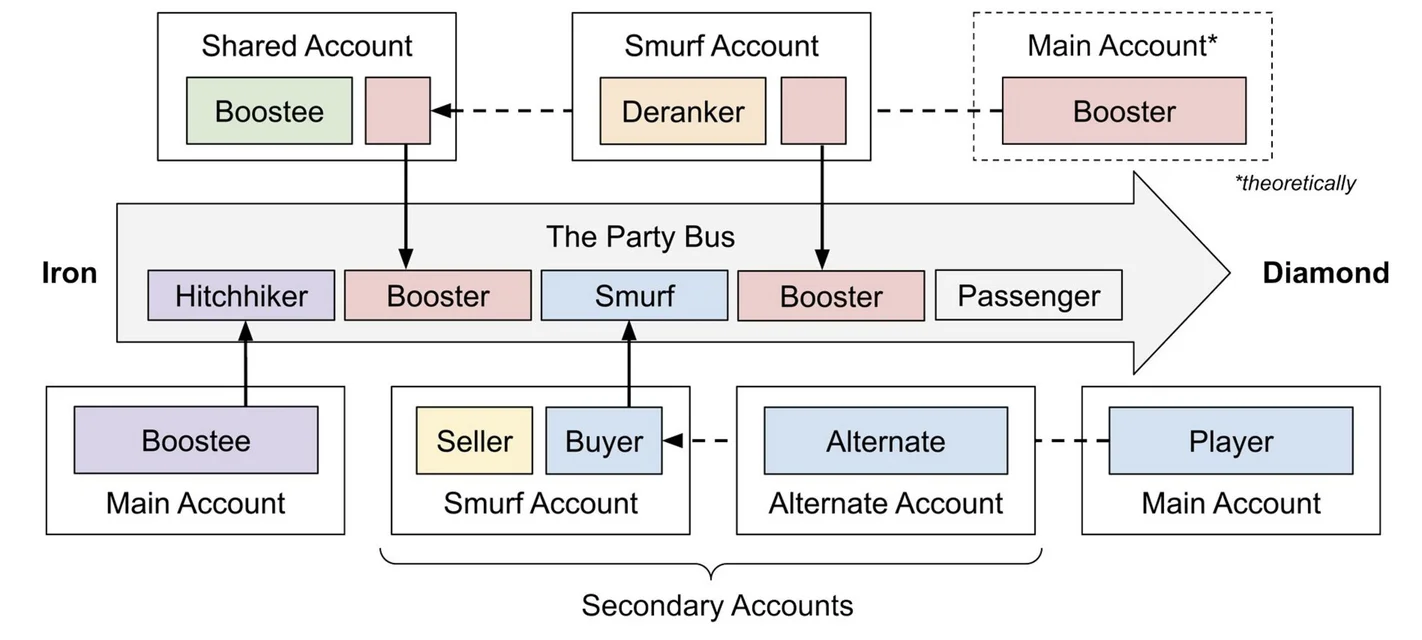
The system first launched privately on League of Legends in September 2025. After roughly a year of beta testing there, VALORANT has now adopted it as well, which Riot says effectively doubles its reach.
The core problem, as Riot lays it out, is that logging into someone else's account temporarily blinds the matchmaker to the pilot's true rating, dropping a strong player into lobbies full of weaker competition. From there, the pattern is easy for a classifier to spot: an account disappears from one rating, reappears somewhere else, and suddenly starts steamrolling everyone in sight.
The Future of Integrity
Quote From Riot To prevent what would otherwise see the internet itself slowly descend into a recursive LLM free-for-all, our trust anchors as a community must improve. For competitive games to remain competitive and for human spaces to remain human, we have to increase our pre-emptive “proof of life” posture on the endpoints that connect to our servers. Or more colloquially, we need to know that our game client is on real hardware, piloted by real flesh, connected to actual neurons (and that last one I added for safe measure).
That does ultimately mean that you can anticipate things like MFA restrictions or TPM 2.0 requirements on an expedited timeline, but it also means less bots, better matchmaking, and stickier punishments. By using Vanguard’s hardware attestation, we plan to keep our low(ish)-friction signup without sacrificing match quality or repeatedly re-exposing ourselves to bad actors. Stay tuned for more news on when these requirements will be necessary and at what ranks, but if you were to be so bold as to preempt the requirement, you can actually take advantage of Vanguard Pre-Check right now.
What happens when you get caught?
When Vanguard flags an account for gaining rank this way, Riot takes a set of escalating actions:
Boosted accounts: The ranked points or rewards the booster gained are revoked, returning the account to its original rating, along with a temporary suspension that grows with each offense - starting at three days and climbing all the way up to three centuries.
Purchased or ownerless accounts: If the offending account was bought or has no real owner (a "smurf"), it is banned outright, since deranked accounts have no value to the competitive ecosystem.
Repeat boosters: If boosting becomes a habit and the booster has a "main" account, Riot levies escalating suspensions on that main too.
Hitchhikers: Players who repeatedly party with smurfs or boosters get the same treatment and lose the undeserved rank - even if it was gained unknowingly.
So, just play ranked on your own account, partied only with other people who are also on their own accounts and you won't have a problem. What an insane concept to comprehend in the year 2026.
Quote From Riot Since late last year, we have actioned exactly 296,416 accounts for rank manipulation across both VALORANT or League of Legends, and we aren't even yet at full power. As we crank the voltage on rank removal in the coming months, it is our intent that all players be encouraged to utilize the time-honored tradition of getting good as their preferred way to rank up.
Why is Riot cracking down now?
Riot's reasoning comes down to fairness and the value of your time. The studio says it doesn't want the hours players pour into the game to feel wasted or cheapened by wins being offered for sale, arguing that hard-earned mastery is exactly what makes competitive games worth playing.
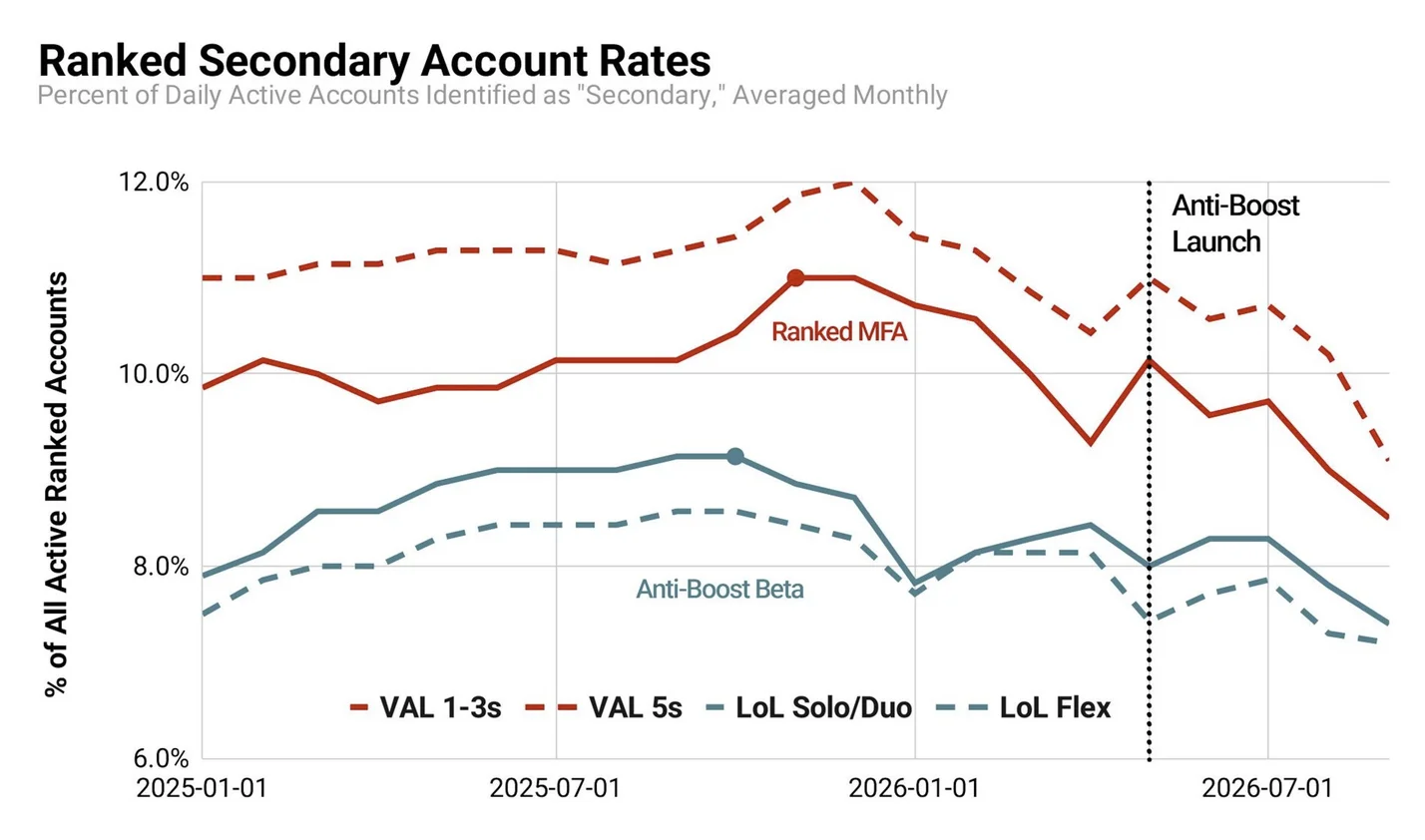
There's a scale problem, too. According to Riot, around 9% of daily active ranked accounts across League and VALORANT were being piloted by someone other than the true owner - a figure that includes shared and stolen accounts. Before Anti-Boost rolled out, that secondary-account rate was slowly climbing, in part because smurfing becomes a race to the bottom: as matches feel less fair, more players are tempted to buy accounts or boosts to level the playing field.
Why not just ban every secondary account?
Riot says a blanket ban isn't the answer, because not all secondary accounts are created equal. By the studio's estimate, around 50% are mostly harmless, and deleting all of them would hurt the game (and bury player support in tickets).
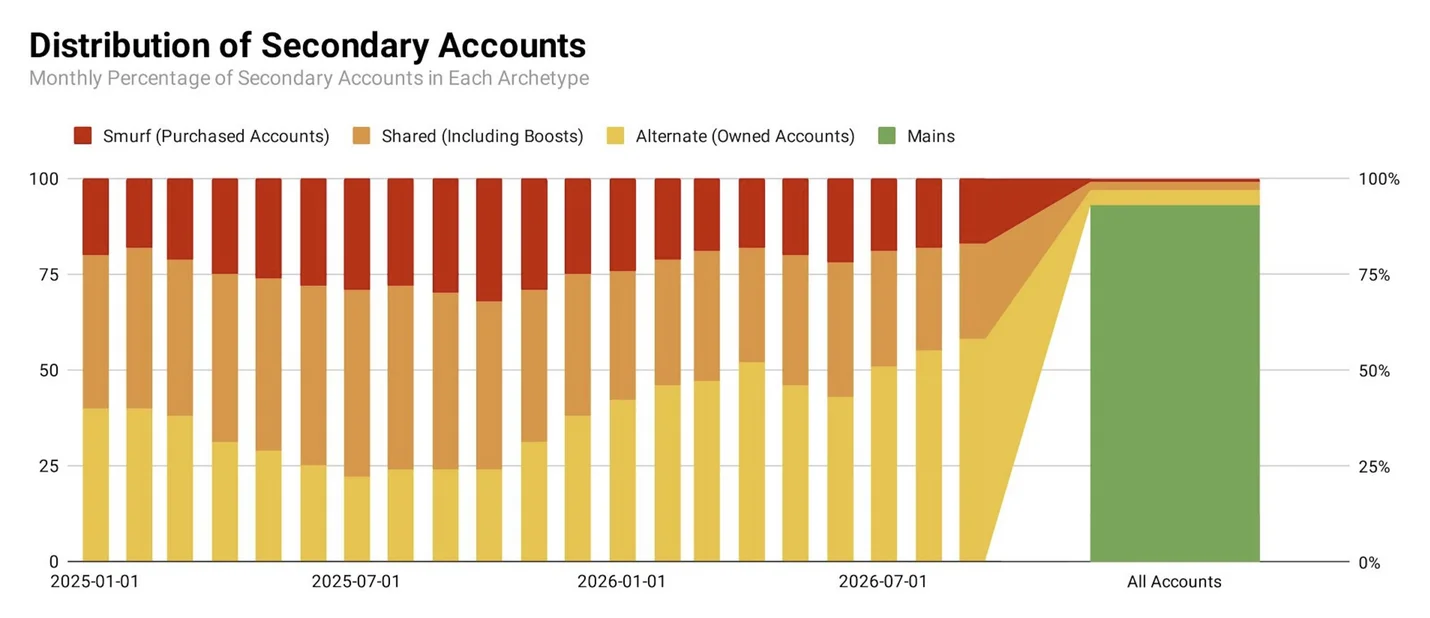
Instead, Anti-Boost deliberately avoids targeting unshared "alternate" accounts, focusing on account purchases (smurfs) and account sharing (boostees) as the main ways rank actually gets stolen. Riot lists several legitimate reasons players keep clean alternate accounts, including:
Practicing new strategies or new Champions and Agents in a competitive setting
Protecting a main account's personal-best rank while still getting practice at a similar level
"Team" accounts for practicing as a consistent group of five
Better anonymity, especially for public figures who get targeted by in-game trolling
"One Trick" accounts focused on a single strategy or role
Grinding out a high rank a second time
The bottom line from Riot: if you made the account, leveled it yourself, and never share it, it counts as a clean "alternate" - and it's not what Anti-Boost is hunting.
Riot also notes that VALORANT has shipped ranked multi-factor authentication (MFA) requirements for unowned or shared accounts as part of the broader effort.
Match Quality
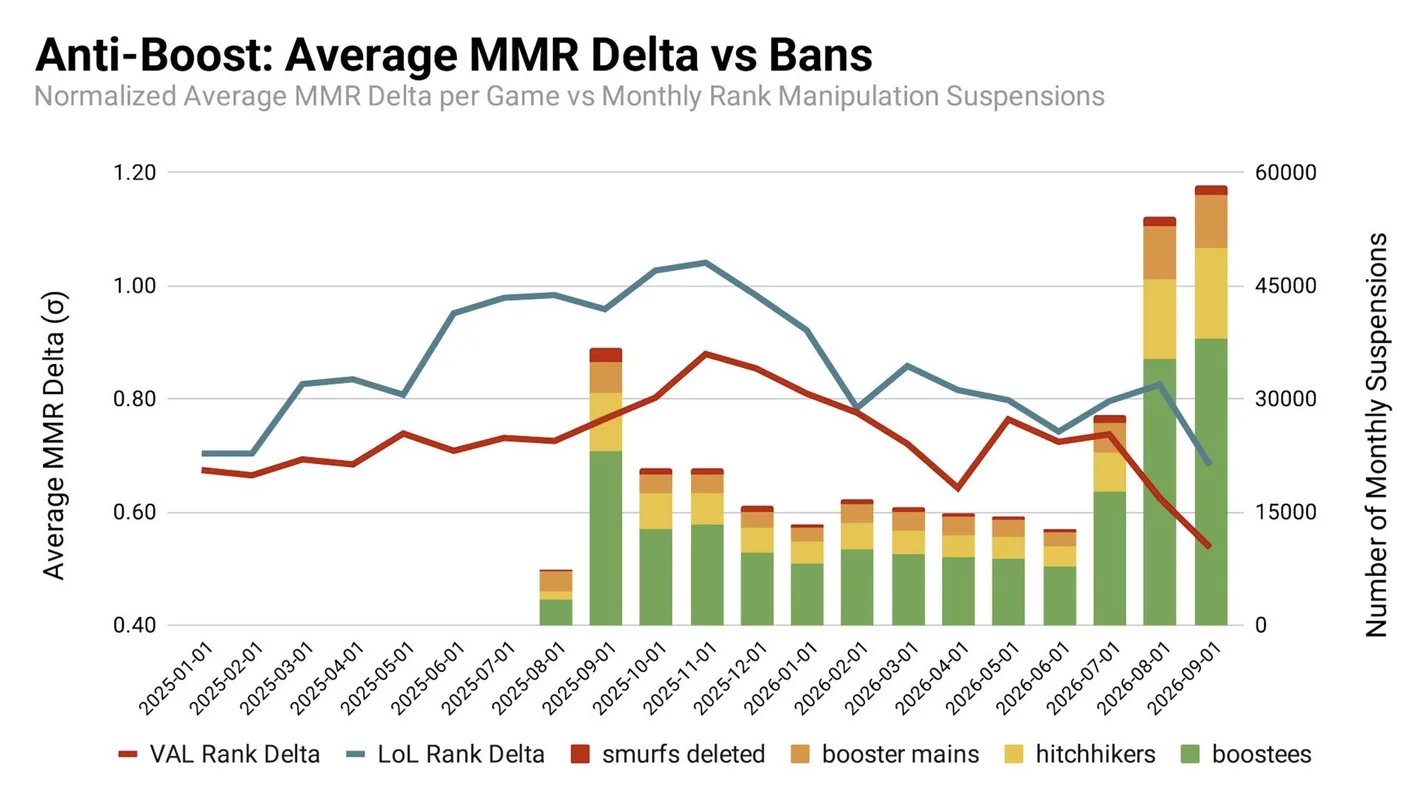
Quote From Riot Our last graph of the evening will be the most interesting, and you have the eight teenage weeks I spent at math camp to thank for that. The lines below, graphed on the left Y-axis, are the average of how many standard deviations away every player is from their highest account’s Matchmaking Rating at the time of each match. So, if a player is playing on their highest account (or on a similarly rated account), then their contributing score here would effectively be zero (or close to it). I’ll admit, even re-reading that explanation is hard, so let’s just think of these red and blue lines as a dirty estimator for match fairness.
And the bars graphed on the right axis are glorious, uncompromising justice, rendered here in 2D format based on what behavior the offending account was engaged in prior to its suspension. So, the good news is that Anti-Boost actually works. We’ve successfully reverted what would’ve otherwise been a worrying trend, and while boosting services are unlikely to just give up, at least their addressable market is shrinking.
But the tougher news is that bans alone can’t get us to the point where matches are as perfectly fair as we need them to be, and in a reality where a new account is just a prompt away, it isn’t enough for us to be exclusively reactive.
How do you feel about Riot's crackdown on boosting - a fair fight for ranked, or a headache for legit alt accounts? Let us know in the comments.



Leave a Comment