
Rarity is the oldest lever in card game design, and it is also the most misunderstood. A symbol in the corner of a card tells you what the print treatment was, and people routinely read it as a statement about value.
Those are not the same thing, and the gap between them is enormous. The clearest demonstration comes from looking at an entire rarity tier at once rather than at the cards from it that make the news.
Pokemon happens to be the easiest game to run that test on, because somebody has already indexed the whole scarce end of it.
Two Thousand Cards, and a Median of Thirty Dollars
A listing of the rarest Pokemon cards covers 2,134 cards drawn from the scarcest tiers the game has printed, including secret rares, gold stars, illustration rares and LEGENDs. These are the cards with the lowest pull rates in their respective sets.
The median value across all of them is $30.
The top of the same list is a Pikachu from Holon Phantoms at $114,000. That is a spread of nearly four thousand to one inside a single rarity category.
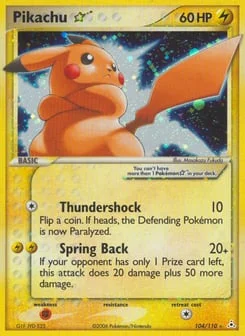
Half of the scarcest cards in the game are worth less than a boxed video game. Rarity, on its own, is not doing the work people assume it is.
Scarcity Only Pays When Somebody Wants It
The reason is unglamorous. A low pull rate limits supply, and nothing about it creates demand.
A secret rare of a Pokemon nobody cares about is scarce and cheap simultaneously, and there is no contradiction in that. The cards at the top of the list are the ones where scarcity happened to land on a character people were already chasing.
Yu-Gi-Oh players will find this immediately familiar. Ghost and starlight rares are hard to pull by design, and most of them are still affordable, because the rarity was applied to whatever was in the set rather than to whatever people wanted.
The Yu-Gi-Oh card listings show the same distribution once you sort a rarity tier by price. A short expensive head and a very long cheap tail.
Rarity Tiers Have Inflated Everywhere
The other thing a full list exposes is how many scarce tiers now exist. Bulbapedia's overview of rarity in the Pokemon TCG runs through a long list of treatments introduced over the years, well beyond the original three symbols.
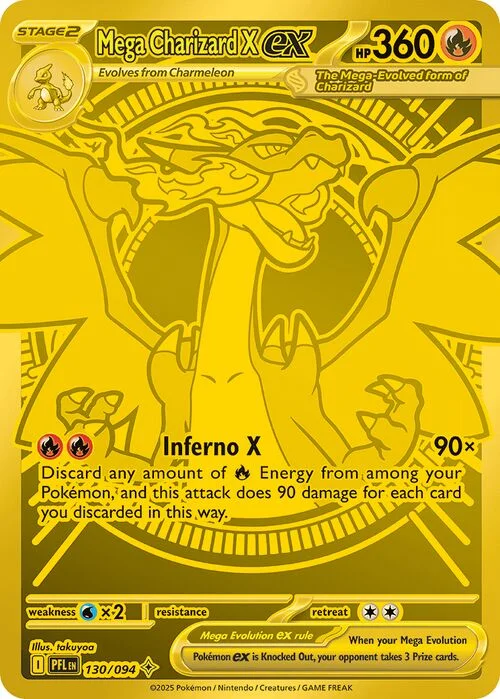
Each addition dilutes the tier below it. When a set contains secret rares, illustration rares, special illustration rares and hyper rares, being a secret rare stops signalling much on its own.
This is a design problem more than a collecting one. Rarity tiers exist to make opening packs feel good, and adding more of them works right up until the point where nobody can remember the order.
The collecting consequence is that a rarity symbol from 2024 and one from 2004 mean very different things. Comparing across eras on the symbol alone is close to meaningless.
What the Tier Has Actually Done
Taken as a group, these cards are up around 78% since 2021 and about 48% in the past year. That is a real move, and it is worth putting next to the median.
A 48% gain on a median of $30 is roughly ten dollars. The percentage is doing rhetorical work that the absolute number does not support.
Individual cards diverge wildly from the group. A Gengar LV.X from Arceus is up around 457% in the last year, which is the sort of figure that gets screenshotted and shared without the surrounding distribution.
That is the whole trap in one example. The outlier is real, the group average is real, and the two describe completely different experiences of owning cards from this tier.
How to Use a Rarity Symbol Properly
Treat it as a supply signal and nothing more. It tells you roughly how many exist and says nothing about who wants them.
Demand comes from the character, the artwork, the era and whether the card ever mattered competitively. Those are the variables that separate the head of the list from the tail, and none of them are printed on the card.
Condition then modifies everything, and on older scarce cards it modifies it heavily. A secret rare with a soft corner is a common card with an interesting symbol.
Final Thoughts
The scarcest cards in Pokemon are mostly cheap, and that is not a flaw in the market. It is what happens when a supply mechanic gets applied uniformly to a set where demand is distributed very unevenly.
Anyone building a collection around rarity symbols is optimising for the wrong variable. The cards that hold value are the ones people wanted first and that happened to be scarce second, which is a much harder thing to spot in a booster pack.

Leave a Comment