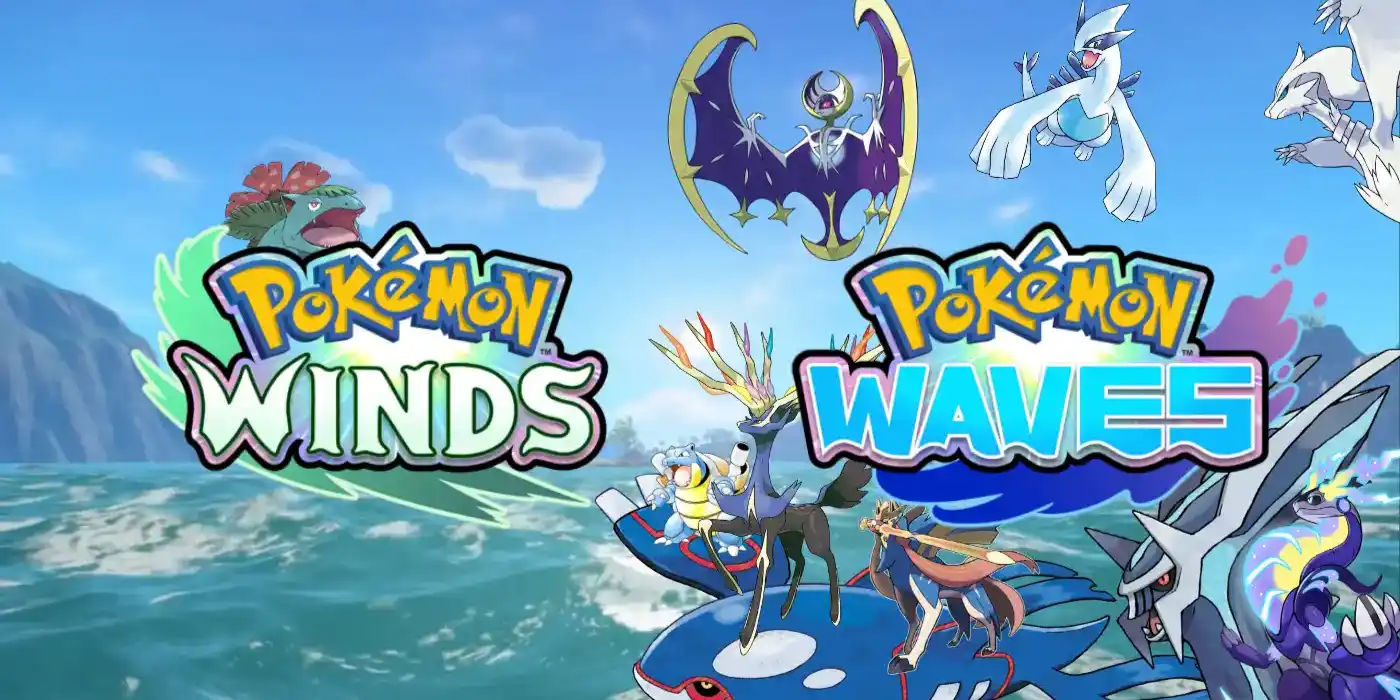
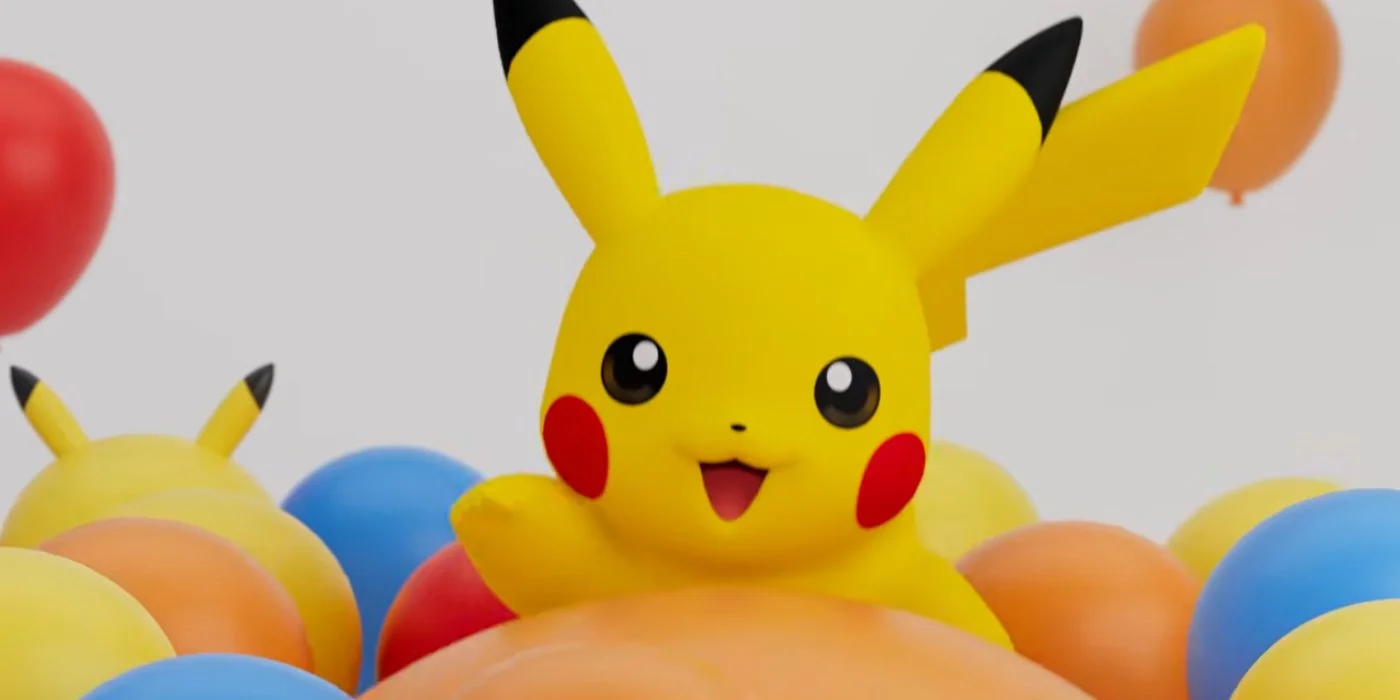
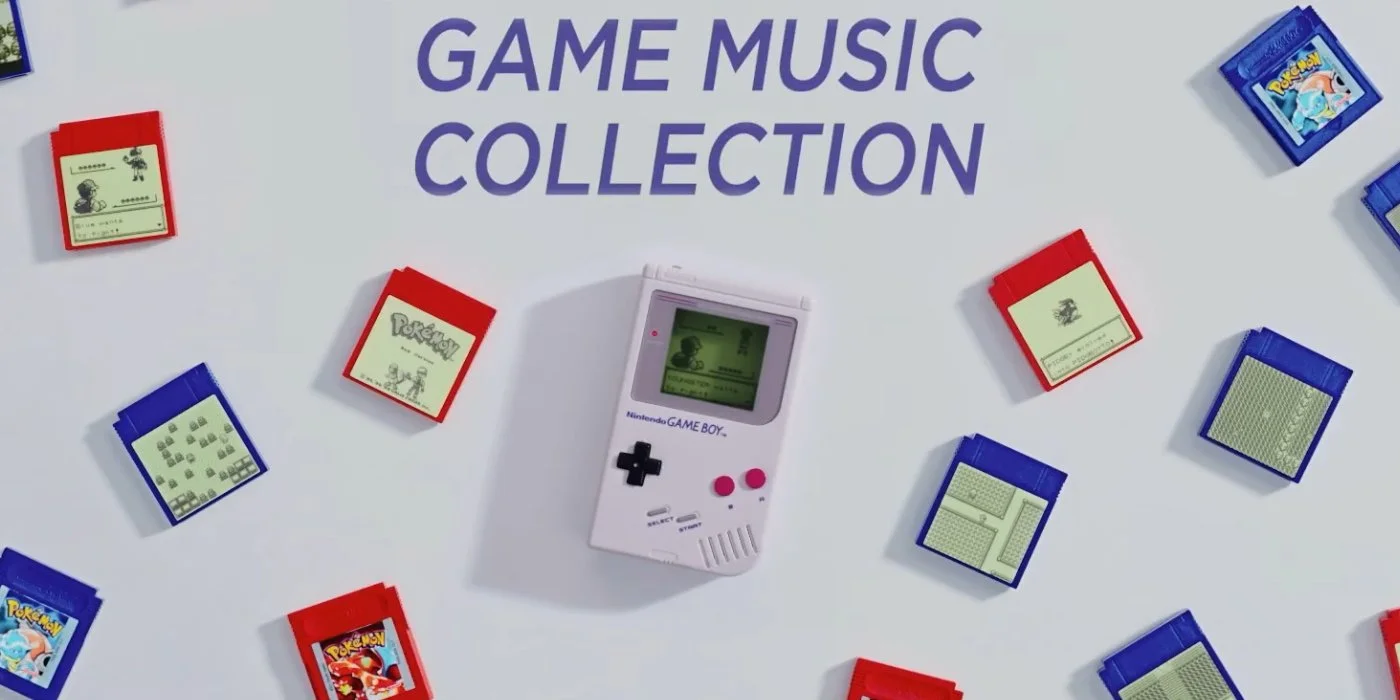
Happy (belated) 30th anniversary, Pokémon! Yesterday's Pokémon Present gave us a huge announcement, that nobody saw coming: the Game Boy Music Collection with over 45 Red and Blue tracks! Oh, and there's a new generation of Pokémon games coming next year, I guess.
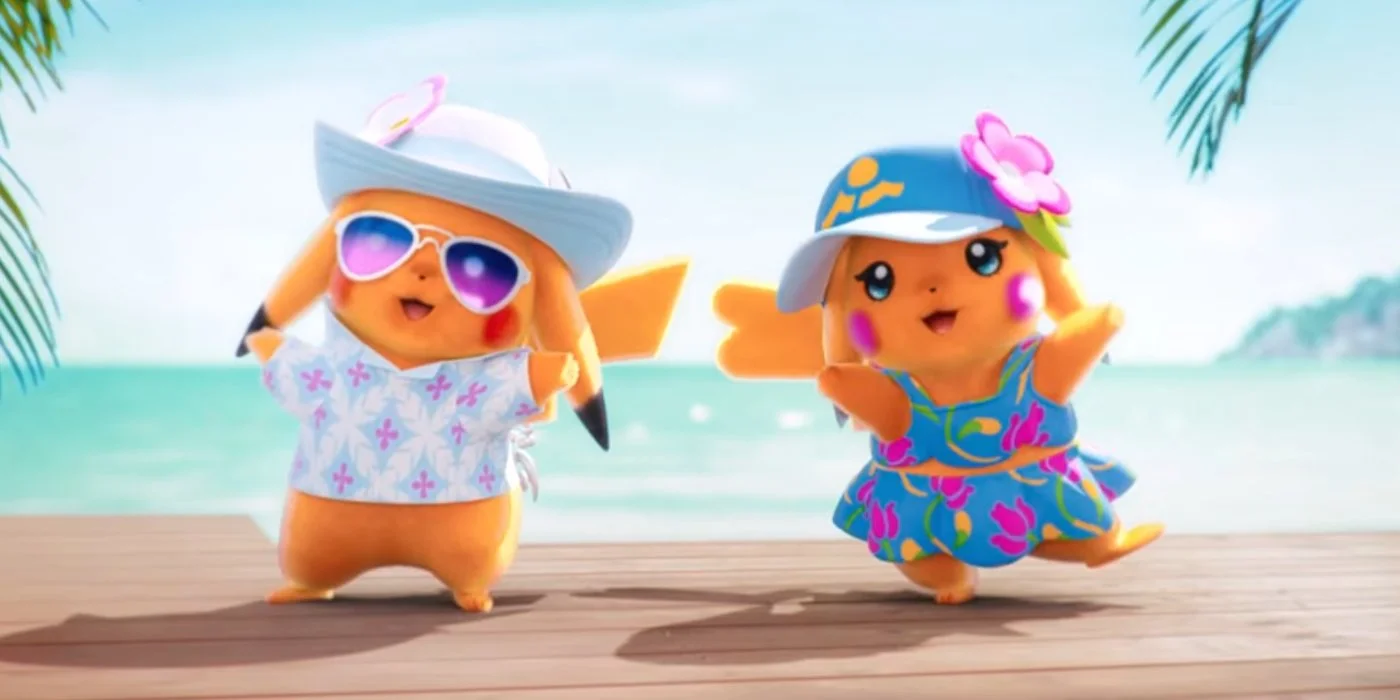
While we don't know much about the game yet aside from the starters and Pikachu's taste in clothing, there's something interesting we noticed about the logos: Winds is green. This might not seem like a big deal, but, for the past 30 years, Pokémon games have followed a Red vs Blue theme with all their mainline games.
Don't believe me? I can prove it! Let us take a trip down memory lane and take a look at each of the mainline games and see how the color coding has been consistent throughout the years, and how Game Freak is about to break this pattern after 3 decades.
What is Red and Blue?
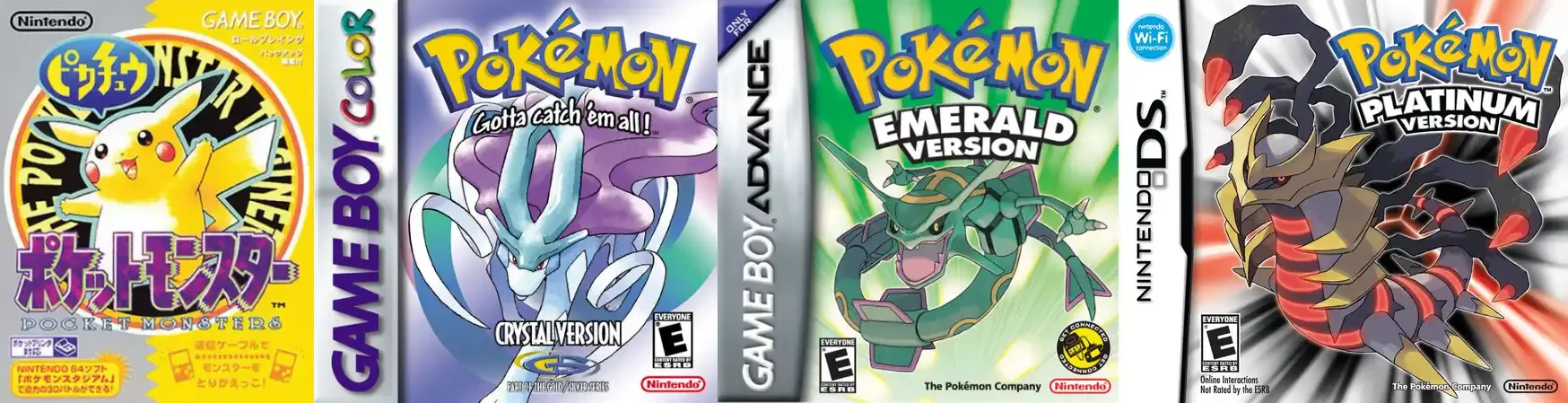
Before we begin, I should clarify something. The colors haven't literally been Red and Blue this whole time. However, they have been what I would consider to be different shades or derivates of the two colors.
For Red, I'll also consider Orange, since that's what Charizard is, despite his game being called "Red". I'll also consider Yellow if the Pokémon associated with it is a Fire type. That color is mostly used by Electric types, and electricity is a type of plasma, same as fire. Most of the yellow we'll see is in accents, anyway. Finally, I'll also consider various shades of red, like Scarlet, Garnet, Maroon, Pink etc.
Blue is a lot simpler, since there are less ambiguous shades used in the games. Stuff like Indigo, Violet, Purple etc. would fall here.
If you want to bring up the third versions of the games (called "upper" versions), there's no pattern. Yellow is... well, yellow, Crystal is Pink and a light shade of blue, Emerald brings back green, but then we lose it with Platinum's gray and gold, and the games stopped getting unified versions after. Some of the third legendaries (Rayquaza, Zygarde, Kyurem via his eyes) are green, but a lot of others (Giratina, Necrozma, Eternatus) don't, so once more there's no pattern.
Finally, I want to mention I won't look at just the name of the game. I'll also look at the logo and the mascot Pokémon used on the covers.
With that out of the way, let our journey begin!
Generation I

The first two games are Red and Blue. Case closed, next entry!
Actually, before we get to gen 2, there's something worth mentioning. The original Japanese release of the games was actually Red and Green. It's why the remakes are FireRed and LeafGreen, but the original Green version was very buggy, so they re-released it as Blue, and that's what make its way to the West.
Generation II
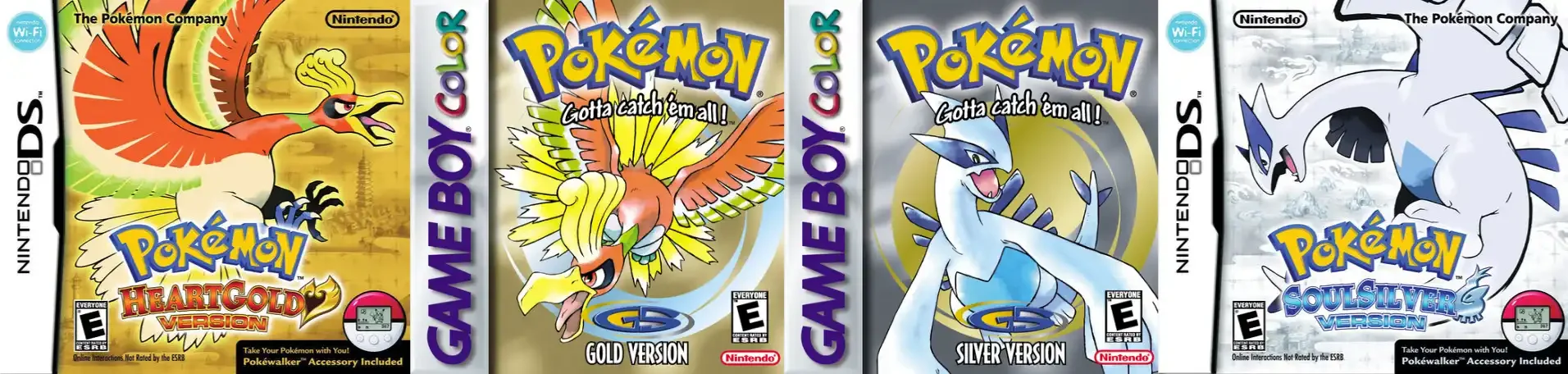
This is probably one of the weakest arguments for Red and Blue, but it's still there. Basically, Ho-Oh is orange with gold accents, so it fits the Red side. Meanwhile, Lugia has a number of blue accents, mainly around its eyes and on its back, with a lighter shade of blue on the belly.
Generation III
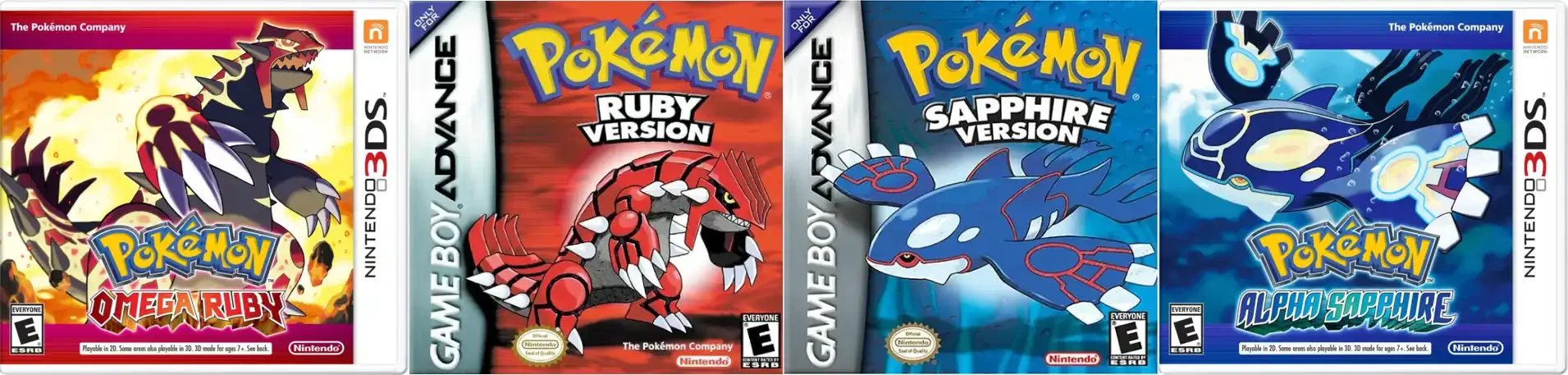
This one is another open and shut case. Groudon is extremely Red, while Kyogre is very Blue. The color association even extends to the two teams, Aqua and Magma. Those two are more red and blue than the original Red and Blue. Green even makes a return with the Emerald versions of the games.
Generation IV
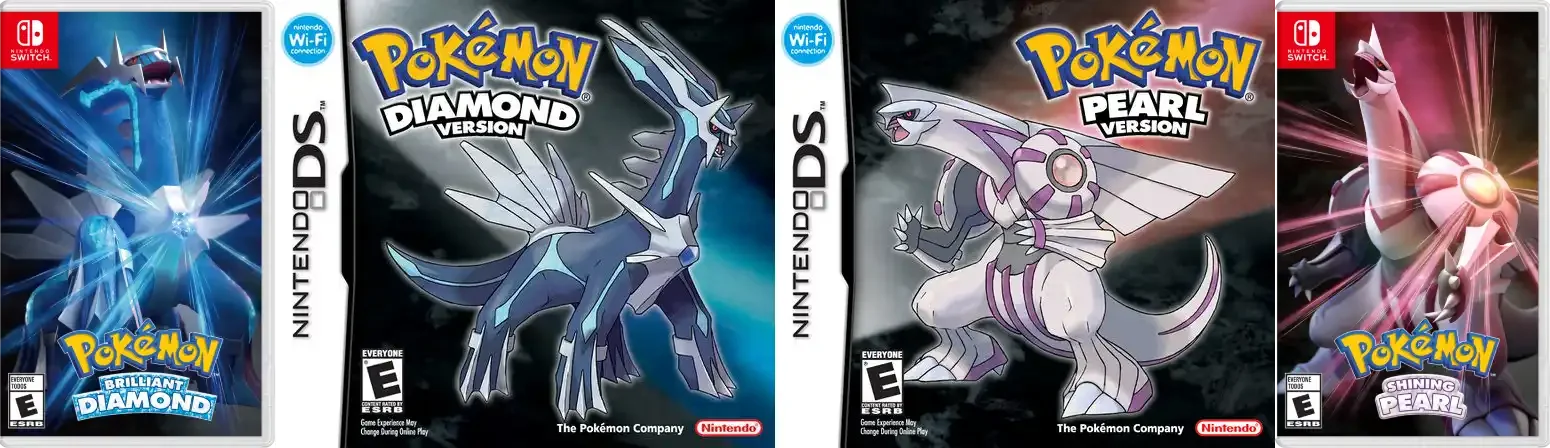
Half of this is very straightforward. Dialga is clearly blue. Palkia, on the other hand, is mostly white, and the lines on it are close to purple, so somewhere between Red and Blue. Where we really need to look is the gems: the diamond on Dialga's chest is very blue, while the pearl on Palkia's shoulder is a brighter shade of pink. The colors are a lot clearer in the BDSP remakes, as seen above.
Generation V
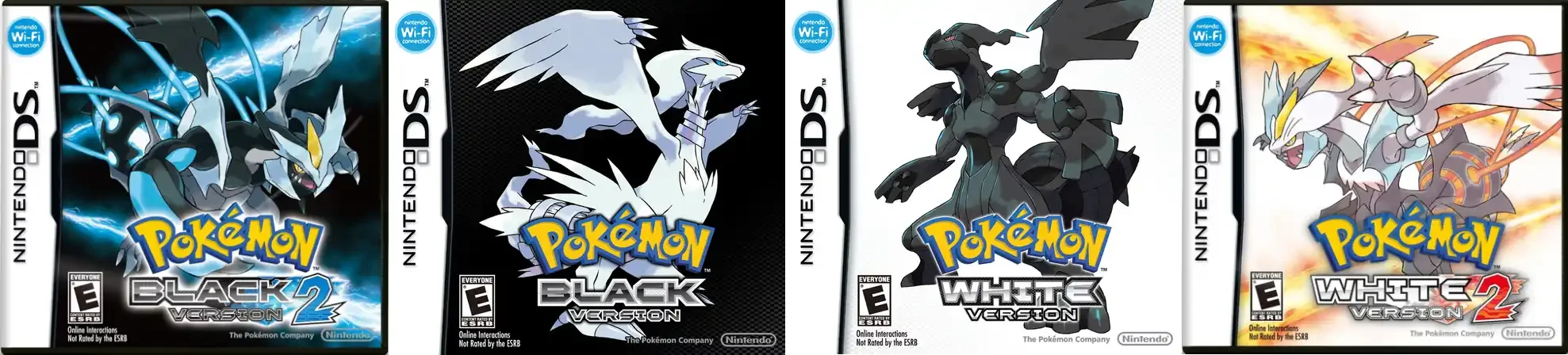
"Alright, Nirast, you smarty-pants, let's see you justify Black and White being Red or Blue". Oh, no, don't look at the main color of the mascot Pokémon. Look at their eyes. Reshiram's are blue, while Zekrom's are red (I suddenly feel the urge to play Yu-Gi-Oh). Black 2 and White 2 make this distinction even more apparent, with Kyurem Black sporting bright blue accents, while Kyurem White having pink ones.
Interestingly, the "teams" between the originals and the sequels swapped their main colors, but kept the Red/Blue. Black has Reshiram and Black Kyurem, who are both Blue. On the flip side, White has Zekrom and White Kyurem, who are both Red.
Generation VI
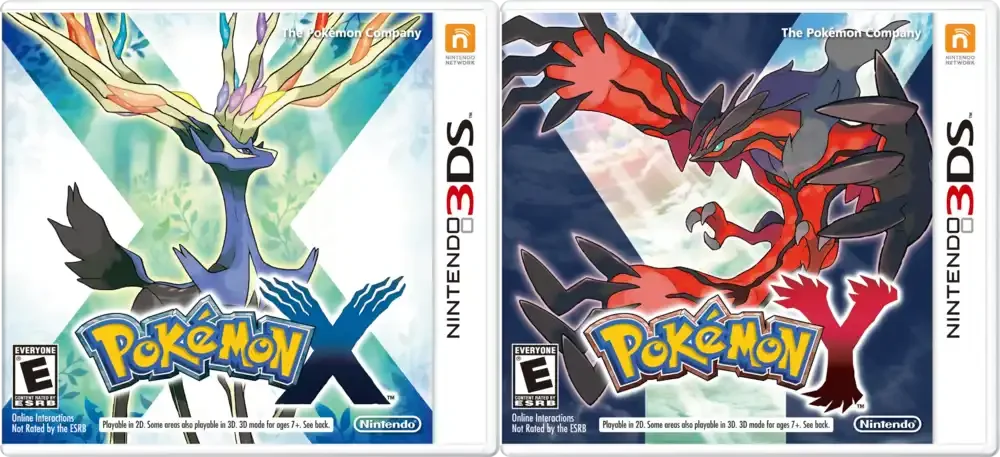
Another open and shut case, with both the logo for X and its mascot, Xerneas, being blue. Same story for Y and Yveltal, who are red.
Generation VII
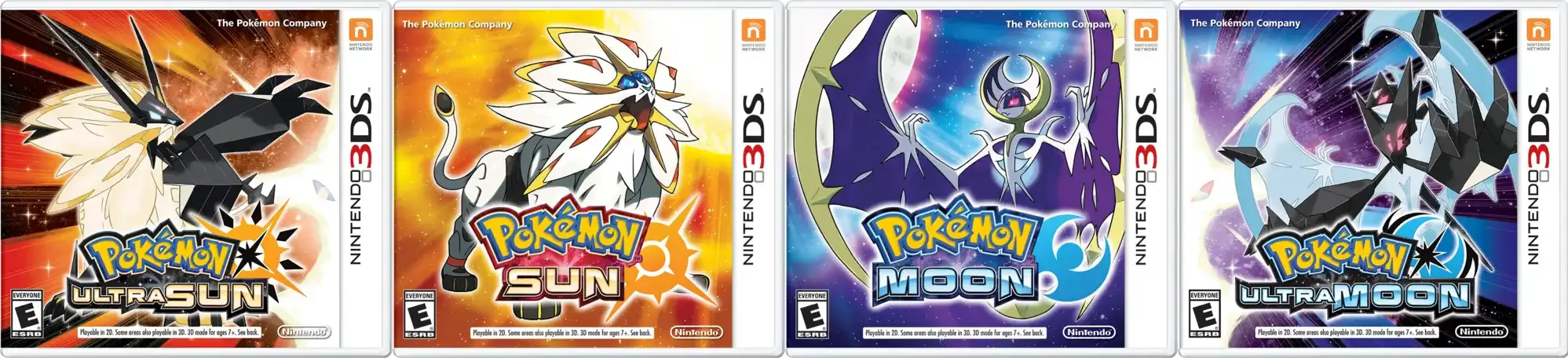
While Lunala is very clearly in Team Blue, we need to stretch things a bit for Solgaleo. He's kind of a combination of Palkia (mostly white) and Ho-Oh (gold accents), but I feel like the former is enough to land it in the Red. Ultra Sun and Ultra Moon support this classification with Necrozma's forms, with Dusk Make being a bright yellow, while Dawn Wings being a very light blue.
I'll admit, Sun and Moon is the one game where this theory breaks a little. The main reason I'm putting Solgaleo in Red is that he's the Sun Pokémon, and the sun is associated with heat, which is sometimes represented by red. This also makes it somewhat similar to Ho-Oh, who more firmly fits in Red. And if that doesn't convince you, Solgaleo has a lot of orange accents on his body, which, as established, is Team Red.
Generation VIII
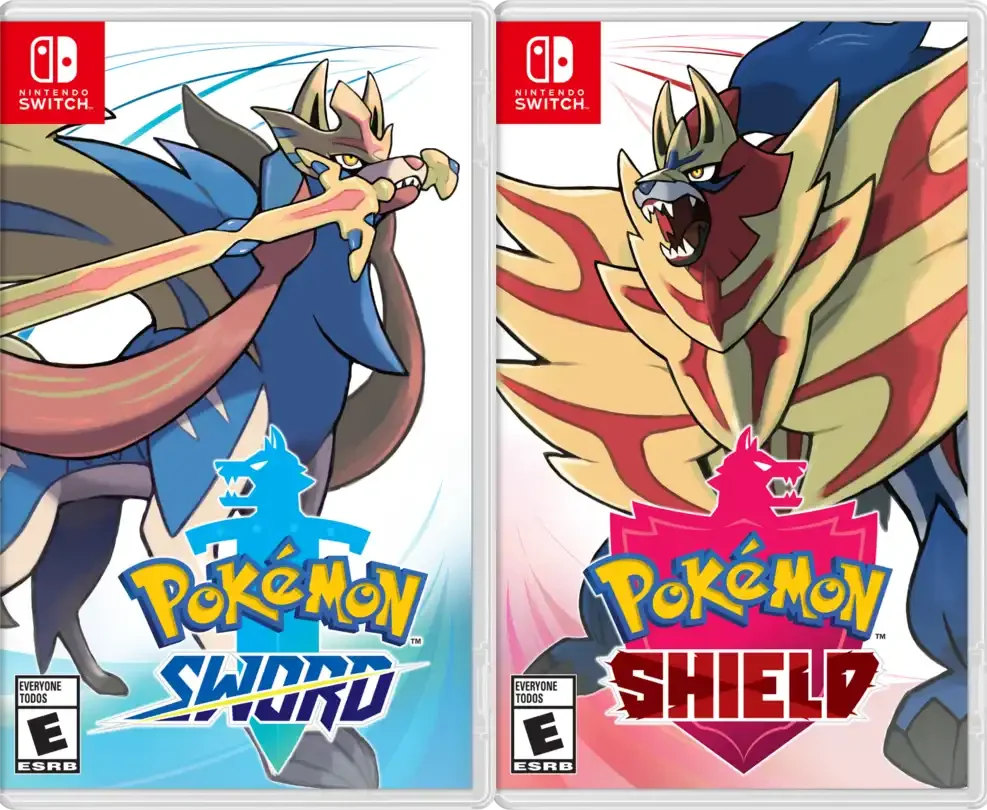
Sword and Shield are another open and shut case, mainly because of the logos. The former is Blue, while the latter is Red. If you want an even stronger argument, look at Zacian and Zamazenta on the cover, as they also fit their respective colors
Generation IX
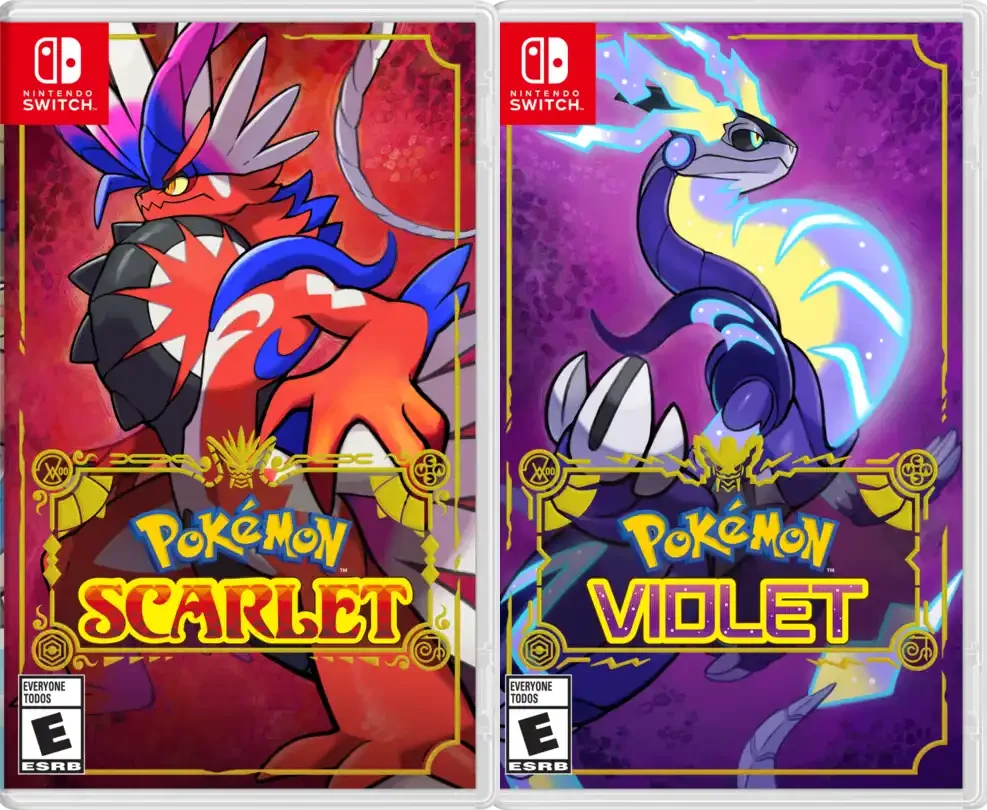
Last, but certainly not least, are Scarlet and Violet. Scarlet is a very strong shade of red, while Violet is a blue-toned color. Those shades are also the primary color for Koraidon and Miraidon, respectively. Open and shut case.
There's something interesting going one with this one, though. Starting in Ruby and Sapphire, all mainline games and their remakes have had the two legendaries facing each other, assuming you put the covers in the "official" order so to speak. Scarlet and Violet is the first one where the two face away from each other. I believe this is also the first game in the series where the two have no connection to each other, as opposed to previous games, where they were basically a packaged deal story-wise. It's possible this positioning is a reference to that lack of connection.
Generation X
And we're caught up with Winds and Waves. If you're willing to stretch the definition of what Red is for Gens 2 and 7, this will be the first time in over 30 years when the colors of the two mainline games are not Red and Blue or some variation thereof. Furthermore, this will be the first time Red isn't present at all, and the first time since the remakes of the Gen 1 games that Green has been a primary color for one of them.
Granted, we don't know what the mascots for the two look like just yet. It's entirely possible the Winds legendary will be blood-red, and Game Freak will make me look like a fool. Then again, this whole article was mostly an excuse to go over each of the mainline game for Pokémon's 30th anniversary, so we hope you enjoyed that.
What do you think of Pokémon's consistency when it comes to its colors? Do you agree with Gold and Sun being in Team Red? What do you think the mascot Pokémon for Winds and Wave will look like? Let us know in the comments below!



Leave a Comment