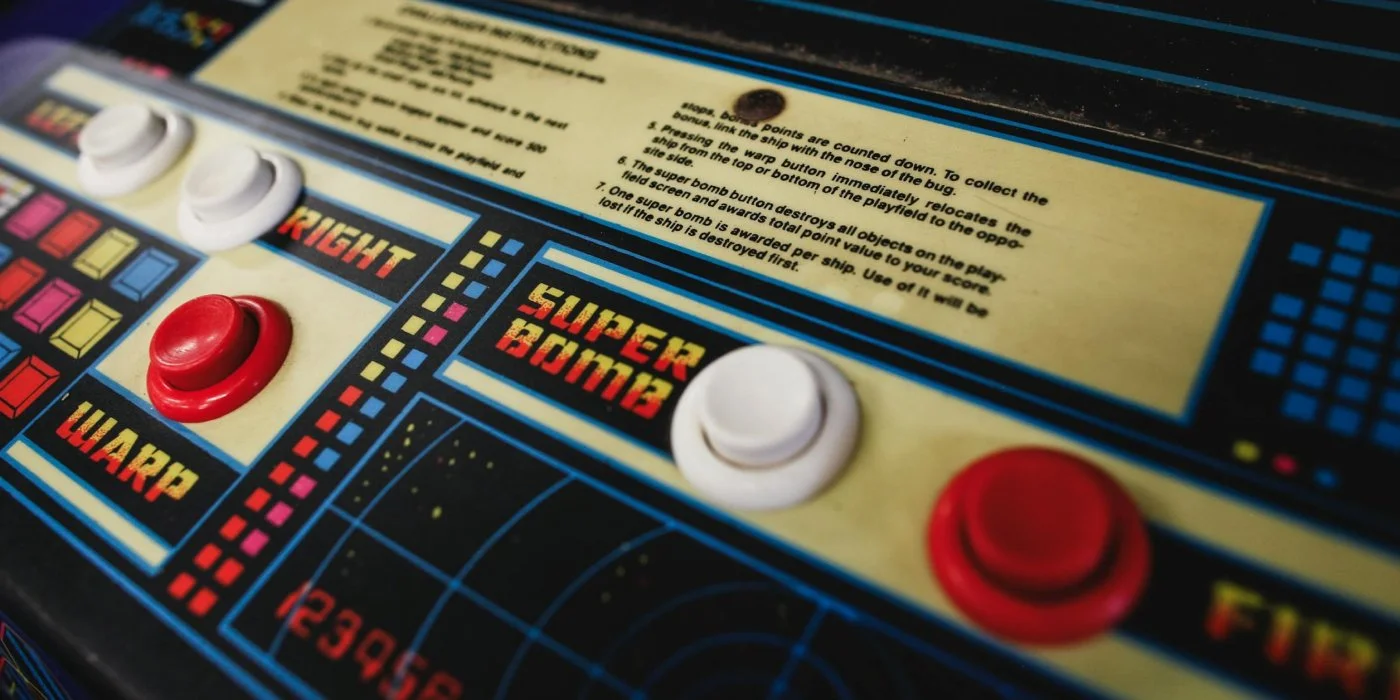
There is a reason old arcade games still make sense within seconds. You see the screen, understand the goal, press a button, and the game answers back immediately. No tutorial wall. No bloated menu. No forty-minute onboarding process. Just movement, feedback and another attempt. That was the magic of early arcade design. Games like Pac-Man, Galaga, Space Invaders and Donkey Kong did not need long explanations. They were built around clean loops: dodge, collect, shoot, climb, survive, repeat. The Strong National Museum of Play notes that Pac-Man, created by Toru Iwatani and released in 1980, became one of the most recognizable and successful arcade games of all time. Its genius was not complexity. It was personality wrapped around a simple, repeatable loop.
That same design instinct is everywhere again. You can see it in mobile games, indie roguelikes, browser games and crypto mini-games. The graphics are sharper now. The soundtracks are cleaner. The interfaces run on phones instead of arcade cabinets. But the core idea has not changed much: give the player a fast decision, show the result quickly, and make the next round feel close enough to try.
Out of Games has also kept a close eye on retro-inspired releases, including coverage of titles such as Old School Rally, a modern game built around the nostalgic pull of 90s arcade racing. That kind of coverage makes one thing clear: retro is not just an art style. It is a design language.
The Arcade Ancestry
The best arcade games were built for public spaces. That shaped everything. A cabinet had to catch your eye from across the room. The controls had to make sense quickly. The first few seconds had to tell you enough to keep going. If a game needed too much explanation, it lost the quarter. That pressure produced some of the cleanest mechanics in gaming history. Space Invaders gave players one core task: move, shoot, survive the advancing wave. Pac-Man turned maze navigation into a chase. Donkey Kong made climbing and timing feel dramatic. Galaga made pattern recognition feel heroic.

Modern crypto mini-games often borrow from the same playbook. Crash-style games, Mines-style formats, Plinko-inspired boards and dice mechanics all lean into short loops and immediate feedback. They are not trying to become hundred-hour RPGs. They are closer in spirit to arcade cabinets: simple to enter, quick to understand and built around repeated decisions. That is why they work so well online. The internet favors speed. Players drop in, interact, get a result and decide whether to continue.
Old School Mechanics vs. Modern Digital Reimagining
The link between arcade history and modern mini-games becomes clearer when you compare the design logic:
Arcade cabinet: Insert a quarter and get immediate play
Modern version: Connect a wallet or account and enter a fast digital sessionPac-Man loop: Move through a maze, react quickly, repeat
Modern version: Short rounds built around timing, probability and instant feedbackPlinko board: Watch a simple physical path create suspense
Modern version: Digital physics, bright visuals and transparent result trackingFruit machine: Symbols, reels and recognizable icons
Modern version: High-definition interfaces with retro art, audio cues and faster pacingHigh score table: Proof of performance and bragging rights
Modern version: On-chain records, provable fairness and visible transaction history
The point is not that every new game is copying the past. It is that the past solved a problem designers still care about: how do you make something instantly readable and satisfying?
The Digital Token Economy
The old arcade had its own economy. You walked in with coins or tokens, changed them at the counter, and spent them one session at a time. That system was physical, but the logic was simple. Crypto platforms have updated that idea for digital players. Instead of a pocket full of quarters, users move value through wallets and digital tokens. The cabinet becomes a browser window. The arcade floor becomes a platform. The token box becomes a payment layer.
The enduring appeal of these titles lies in their pure mechanics: the instant feedback loop that made the local arcade a social cornerstone. This same design philosophy is fueling the resurgence of simplified digital entertainment. For example, the variety of casino games on XTP often reflects familiar arcade ideas: quick rounds, bold visuals and immediate outcome-based play, modernizing the arcade experience for a generation that prefers digital tokens and decentralized transparency over physical cabinets and quarters. That is the bridge. Crypto is not only a payment method here. It is the new token system.
Neo-Retro Looks Better Than Ever
The funny thing about “8-bit” design in 2026 is that it often looks better than anything the 1980s could actually produce. Modern neo-retro games use the memory of 8-bit and 16-bit visuals rather than strict historical accuracy. Pixels are cleaner. Colors are richer. Animations are smoother. Synth-wave soundtracks add mood without needing a full orchestra.

It is retro filtered through high-definition screens.
That works because nostalgia is not really about copying the past exactly. It is about triggering the feeling of it. A purple grid. A glowing pixel font. A bouncing ball. A simple sound effect that lands at exactly the right moment. Veteran gamers recognize the reference. Younger players get the vibe even if they never touched a cabinet. That is why the aesthetic travels so well.
Provable Fairness Is the New High Score
In the arcade days, players trusted the machine because the machine was there in front of them. You could see the cabinet. You could watch someone else play. The rules felt physical, even if the code was still hidden. Online games have a harder trust problem. The machine is remote. The code sits somewhere else. The player sees the outcome, but not always the process.
That is where blockchain-based transparency changes the conversation. In provably fair systems, players can often verify that a result was generated properly and not quietly changed after the fact. It is not the same as seeing the gears inside an old cabinet, but it serves a similar purpose: it gives the player a reason to believe the system is not hiding the ball. In that sense, provable fairness has become a modern version of the high score board. It gives the experience a record, a point of reference and a way to check what happened.
Why Simple Loops Keep Winning
Gaming keeps becoming more advanced, but simple loops never really go away. People still like the clean satisfaction of pressing a button and seeing something happen. They still like quick decisions, readable outcomes and games that do not require a manual before the fun begins. That is why retro mechanics continue to survive every platform shift. Cabinets became consoles. Consoles became mobile apps. Browser games became crypto-powered platforms. The delivery method keeps changing, but the design logic stays familiar. The old arcade knew something modern gaming sometimes forgets: simple does not mean shallow. When the loop is good, players come back.

Leave a Comment