
Balancing greedy high-cost cards against cheap survival tools can decide whether you win or crash out in chaotic drafts and card game formats. Understanding the maths behind variance helps you make better decisions when every draw carries risk.
High-variance formats in modern trading card games test how well you adapt when predictability disappears. Success comes from managing resources, reading your deck's structure and making smart drafting decisions rather than simply hoping for favorable draws. Every choice can separate an unplayable opening hand from a convincing victory.
The Core Architecture of a High-Variance Deck
Building a deck in an unconstrained or chaotic environment means moving away from familiar constructed principles. In traditional formats, an even distribution of card costs helps you make consistent plays from one turn to the next.
High-variance formats disrupt that stability with random card pools, unpredictable opponent strategies and shifting resource mechanics. You cannot rely on the comfort of a standard curve.
Instead, many successful decks use a polarised distribution that concentrates cards at opposite ends of the mana curve. You want enough cheap tools to survive the opening turns and a selection of powerful finishers capable of winning games once they hit the board.
Mid-range cards can lose value when a format allows explosive and unpredictable turns. They may not provide enough early protection or enough late-game impact. Getting the balance right between cheap defensive options and expensive threats is one of the biggest factors in determining how consistently your deck performs.
Embracing the Chaos of the Jackpot Mentality
High-variance formats can tempt you to chase a single spectacular game-winning play rather than build small, reliable advantages. Much like buying a ticket through lottery australia gives someone access to global multi-million-dollar jackpots from their living room, drafting massive top-end threats creates a direct route to an overwhelming victory condition.
The trade-off is extreme mathematical variance. Draw the right card at the right moment and the payoff can be enormous. Miss your key threat and you may be left with a deck that cannot finish the game. You have to weigh the probability of drawing your win condition against the current meta's speed.
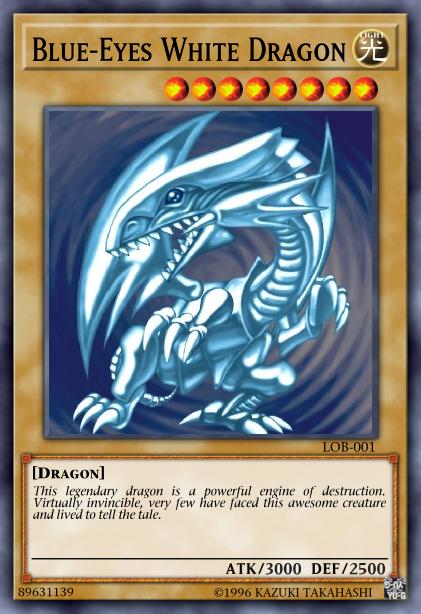
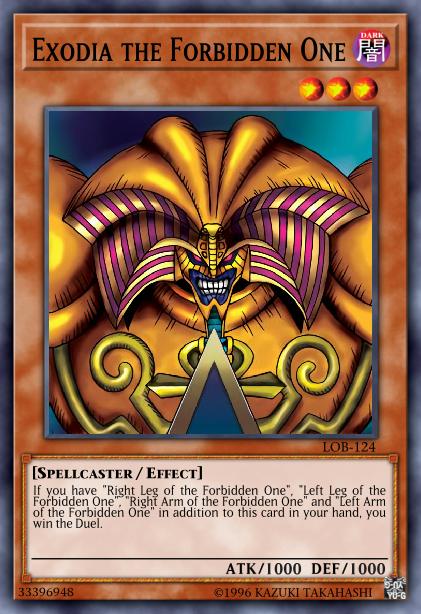
Choosing high-risk cards also forces you to make sacrifices elsewhere. If you load your deck with expensive mechanics, the remaining slots need to help you survive long enough to use them. Landing a huge combo may be satisfying, but the rest of the deck must carry the weight of those ambitious choices.
Designing the Early Game Safety Net
Reaching the late game requires a strong collection of low-cost cards that make every resource count. In chaotic environments, your opening turns should usually focus on survival and stabilization rather than forcing early pressure.
Cheap removal, defensive blockers and card-cycling mechanics give you the breathing room needed to reach your more powerful plays.
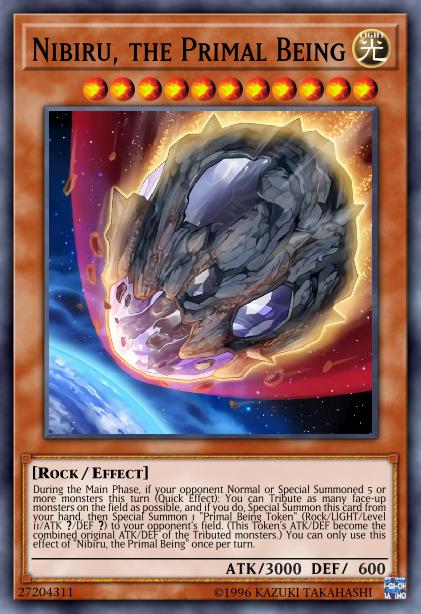
When evaluating inexpensive cards during a draft or deck-building session, prioritize options that remain useful throughout the match:
Modal Flexibility: Cards with a cheap early-game effect that can be upgraded or enhanced later in the game.
Resource Generation: Low-cost assets that replace themselves in your hand or create additional mana for future turns.
Slowing Mechanics: Disruption tools that force opponents to reduce their pace and prevent explosive openings.
These cards protect your early game without weakening your ability to draw powerful threats later. A carefully built safety net reduces the number of matches you lose before your strategy can develop.
Quantitative Evaluation of Risk and Reward
Every card you add carries a risk profile, whether you consciously calculate it or not. High-variance formats reward players who can assess probabilities and understand how often their ideal game plan will actually play out.
You need to know your chances of reaching important resource landmarks by critical turns. For example, if 20% of your deck costs six or more resources, you are accepting a meaningful chance of opening with cards you cannot use for several turns.
Opening-hand simulations can help expose these structural weaknesses. If an expensive card requires a perfect sequence across three previous turns before it becomes useful, its practical value may be much lower than its raw power suggests.
Your losses also deserve closer examination. Ask whether you were genuinely unlucky or whether the deck was built in a way that made bad outcomes too common. One poor draw proves very little. Repeated dead hands often point to a flawed mana curve.
Navigating the In-Game Pivot Points
Once play starts, your challenge shifts from deck construction to timing. You need to recognize the exact moment when defending is no longer enough and shift your resources towards closing out the game.
In high-variance formats, the entire board state can change in a single turn because of unexpected card interactions. Patience matters. Hold resources until your expensive threats can be deployed safely and resist committing minor cards when you suspect your opponent is waiting with a board-clearing spell.
When the opening finally appears, act decisively.
High-variance decks rarely want to fight long wars of attrition against balanced opponents. Your main advantage is the overwhelming power of the expensive end of your curve. Those cards are supposed to break stable board states and create opportunities your opponent cannot easily answer.

Leave a Comment