
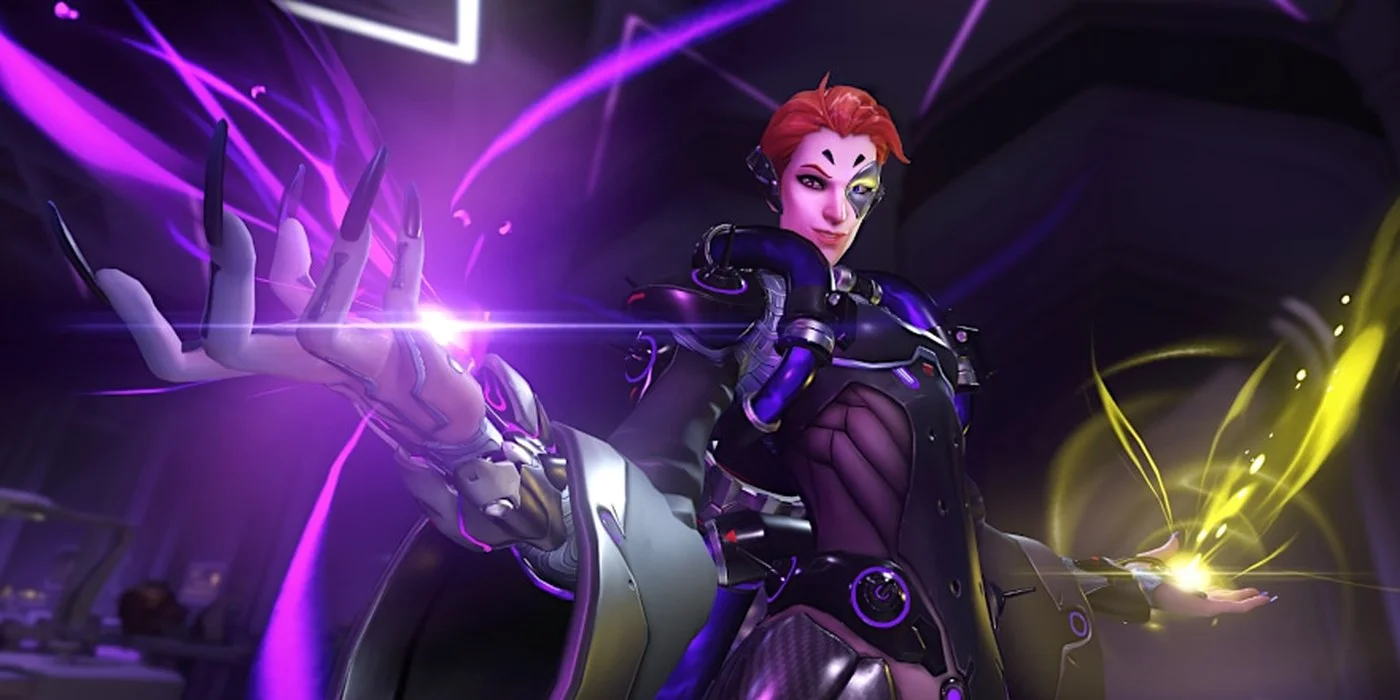
Overwatch 2 is bringing 6v6 back to the spotlight, with game director Aaron Keller announcing two new Quick Play Hacked experiments running over two weekends this month to tackle tank balance and match pacing. In his latest Director's Take, Keller laid out how the team is testing brand new 6v6 formats that could shape the future of the game - and yes, they want your help to do it.
Keller was quick to stress that these are genuinely experiments, not a done deal.
Why is Overwatch 2 experimenting with format again?
Rather than simply relitigating specific team sizes or past versions of the game, Keller says the team is asking a broader question: what if there was another way? In the latter half of Season 3, Overwatch 2 is running a few 6v6 experiments aimed at making matches more dynamic in Role Queue, improving the tank experience, and removing some of the volatility of team fights while addressing pain points with the current formats.
Quote From Aaron Keller You’ve told us the Tank role often plays too big of a factor in determining the outcome of a standard 5v5 match. Single Tanks feel that responsibility and can stress or counter swap on respawn, causing mismatches in team compositions. Tanks can also be fairly overpowered in 1v1 situations with other roles and that can be difficult for us to balance. With the potential of two active tanks per team, we see an opportunity to test different balance tuning that might soften these rough points.
Additionally, most matches in Overwatch are very fast and dynamic. This can be great! I think a lot of us enjoy the swift action and impact we can have…but that speed can also distort community perception of matchmaking and balancing issues. Stomps feel more frequent and steamrolls from early game ultimate economy and lost team fights can make matches feel unfair. Several factors in these experiments could offer more consistency when it comes to match fairness, perceived or otherwise.
Experimental modes like QPH and limited time events (like Junkenstein’s Lab) give us fantastic feedback and offer data we sometimes use to shape the future of Overwatch. As a great example, Pickable Passives in a 2024 Quick Play Hacked showed us the path to Perks and hinted at the community’s enthusiasm for choice before that system was added.
Before we move on to the details, there’s a very important caveat here: the result or success of these experiments doesn’t necessarily mean that we’re going to be changing the main format of the game. These findings could inspire us to tweak existing core modes or create new Arcade modes. Like with any good experiment, we won’t know the results until we complete all the steps.
How does Flex Queue work?
The first experiment, Flex Queue, runs from July 16-19 and tests a hybrid format sitting between Role Queue 2-2-2 and Open Queue. You'll queue into a flexible 1-3-2 team format where there's always at least 1 Tank, 3 Flex Damage dealers, and 2 Supports.
The twist is that any of the Damage dealers can choose to play a Tank hero - but only one at a time.
Quote From Aaron Blizzard If you start as Tracer and realize your team needs more bulk, you can come back as Zarya, but your Hanzo can't also swap to Reinhardt. You can swap back to Damage at any time and another Damage dealer can take over the Tank role. In practice, that means teams will either run 2 Tanks and 2 Damage dealers, or 1 Tank and 3 Damage dealers.
Here's what Team 4 finds exciting about Flex Queue:
It gets around the queue time issues of using Role Queue for 6v6, since the game no longer has to wait on 2 Tank players to form a match - and Damage remains the most popular role.
It's more dynamic than straight 2-2-2, with two valid team compositions available that can shift over the course of a match as different Damage dealers flex in and out.
It's more consistent than Open Queue, which can produce matches with zero tanks, four Damage heroes, or even six Damage dealers.
The biggest downside the team flags is the potential social pressure for Damage dealers to play Tank, though they're hoping that sharing the burden among three people, with more freedom to play different heroes, makes it feel acceptable.
How does Dynamic Queue work?
The second test, Dynamic Queue, runs from July 28 to August 3 and is also 6v6, folding in elements of the Flex Queue format. Here, the matchmaker tries to create a blend of Role Queue 2-2-2 matches and Flex Queue matches. It aims for 2-2-2, but based on how many people are queued for Tank - the current bottleneck - it will start matches in the Flex Queue format instead. That shift is a "release valve" for the 2-2-2 queue.
The upside is that Dynamic Queue should let a substantial number of matches run in what the team anticipates will be the most preferred format, 2-2-2, without a major impact on queue times. Keller frames it as a genuinely new kind of queue: if queueing for this version of Flex meant playing Damage 70% of the time with the other 30% offering a chance to swap to Tank, things could feel more fresh and fair. The biggest downside is a loss of consistency from match to match, which could reduce the competitive feel - something the team says it'll keep a close eye on.
What's happening with 6v6, 5v5, and Stadium?
Keller also shared some player count data, measured as of June 28. The team notes that players can be counted for every mode they play in a session and not all modes are listed, so these numbers won't add up to 100%. Daily player counts break down like this:
Unranked Role Queue 5v5: ~54% of daily players
Ranked Role Queue 5v5: ~37%
Unranked Open Queue 6v6: ~19%
Ranked Open Queue 6v6: ~8%
Unranked Mystery Heroes 6v6: ~4%
Stadium Ranked: ~3%
Stadium Unranked: ~3%
Quote From Aaron Keller Overall, 5v5 has maintained its majority and 6v6 continues to see an increase in popularity. Stadium, meanwhile, has settled into a dedicated, smaller audience. With this in mind, while we'll continue supporting Stadium with seasonal balance updates, rank resets, and rewards, we’re not planning on expanding Stadium with new Heroes or maps. Instead, we're taking what lessons we've gleaned from building it and applying those lessons (and those talented devs) to our future plans.
How can players help?
The most important part of these experiments is us, the players. The enjoyment we get out of Quick Play Hacked modes and limited time events tells the team where to focus in the future, and the most helpful thing you can do is simple: "play the experimental modes and go in with an open mind".
So which of these are you more curious about - the flexibility of Flex Queue, or the best-of-both-worlds approach of Dynamic Queue? Let us know in the comments, and be sure to jump in during those two weekends this month if you want your feedback to count.

![Everything Announced at BlizzCon's Opening Ceremony [ENDED]](https://youre.outof.games/media/v2/uploads/13/a3/13a3abdd717d47d99153028c4f1772b2/blizzcon-2026-key-art-thumb.webp)


Leave a Comment