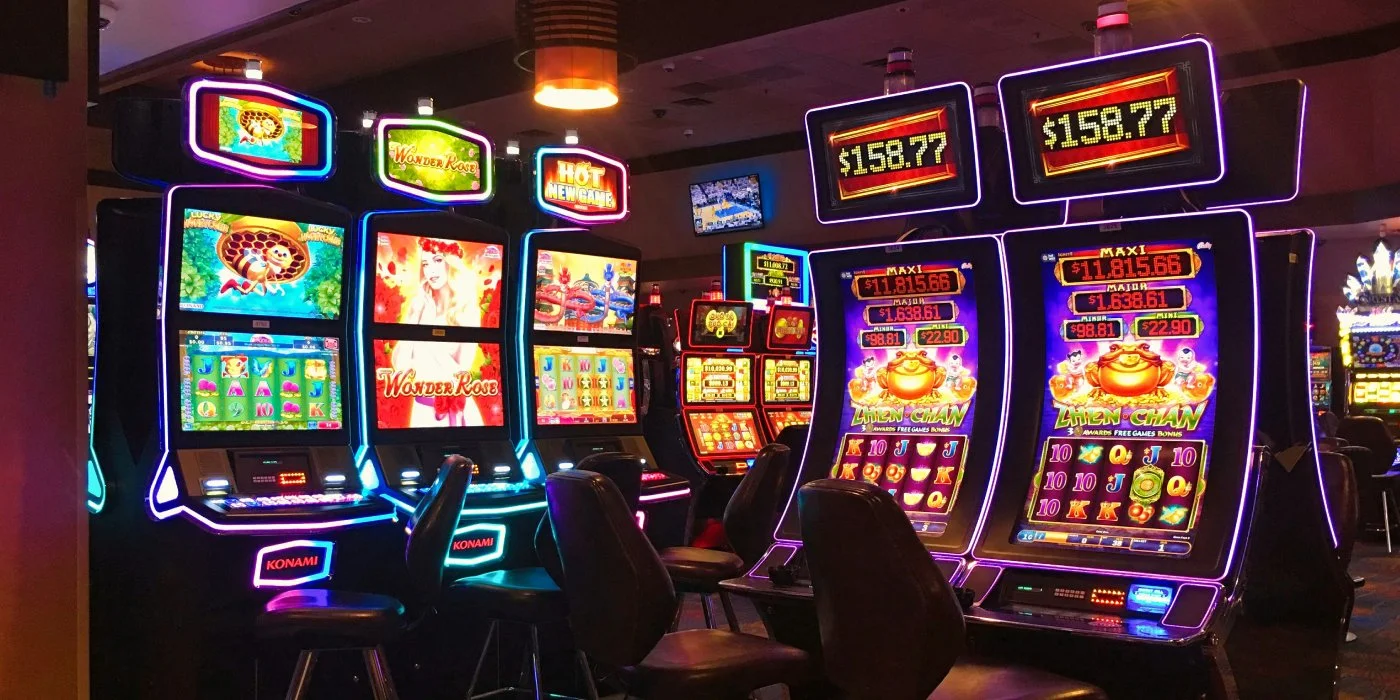
Nearly every article on this subject makes the same claim, and I took it on faith for years myself: slots copied Candy Crush. They did not, and the dates are not close. Candy Crush Saga launched on Facebook on 12 April 2012. By then cascading reels had been in commercial casino product for more than five years: IGT swore to the US Patent and Trademark Office that it first used the mark TUMBLING REELS on 23 October 2006 and put it into commerce on 15 January 2007.
The Real Ancestor Is Bejeweled, and the Industry Bought the License to Prove It
Against match-3 as a genre rather than Candy Crush as a title, the borrowing is real and the gap is enormous. Shariki, a Russian MS-DOS game from 1994, established the loop: match adjacent tiles, clear them, let gravity drop new ones in. Diamond Mine reached browsers in 2000, was renamed Bejeweled at Microsoft's request, and shipped as Bejeweled Deluxe in May 2001. Casino manufacturers picked the mechanic up years later.
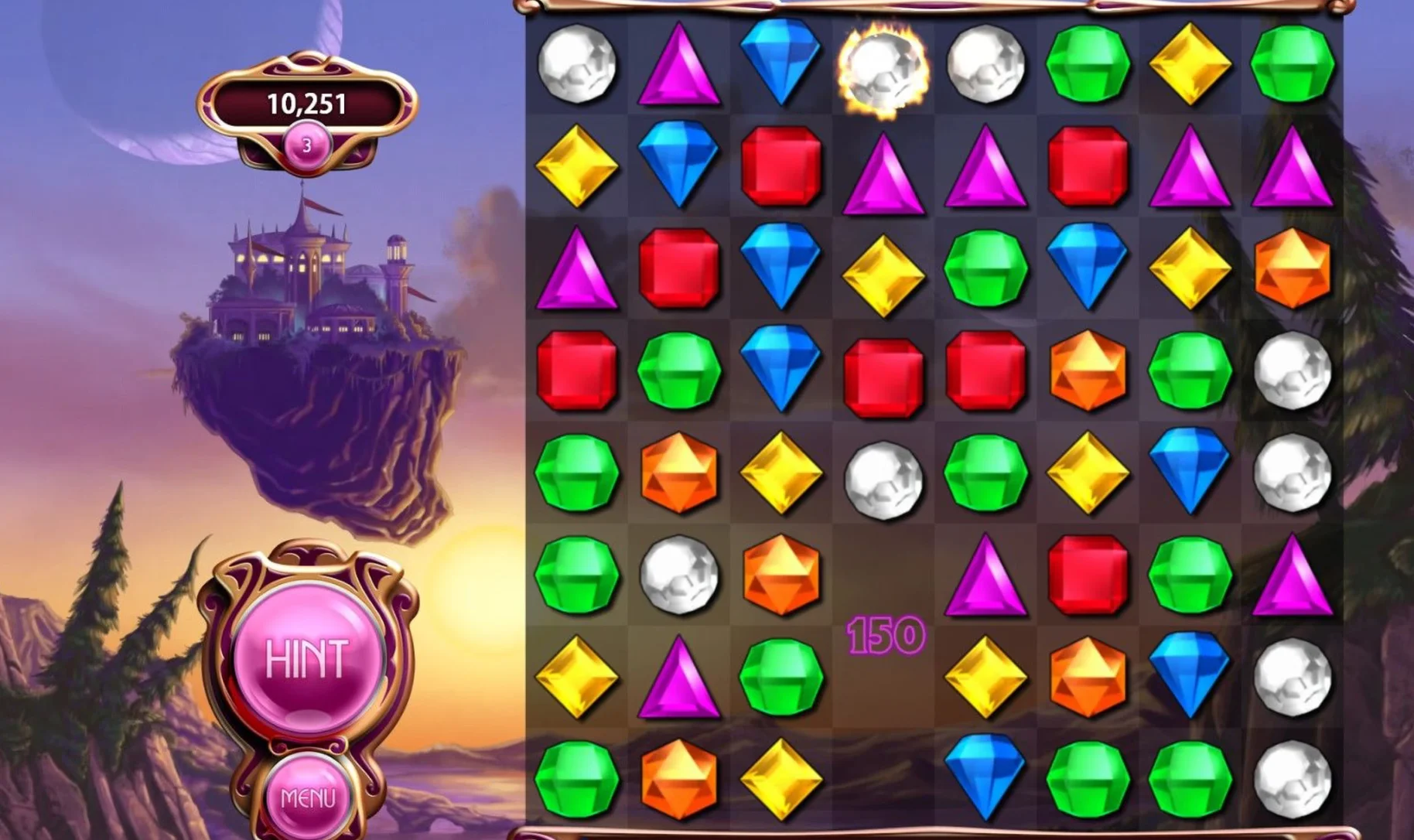
They did not hide it, either. In September 2012 Spielo International announced four slot titles built on licensed PopCap brands for G2E in Las Vegas: Zuma, two Plants vs. Zombies games, and Bejeweled itself. Spielo's chief executive Walter Bugno said the company had "worked closely with PopCap to stay true to the spirit of their brands". A casino manufacturer paying a video game studio to put its match-3 game on a casino floor is the argument, made by the industry about itself, in writing.
Licensing is also how mechanics travel sideways between suppliers. Big Time Gaming licenses Megaways to Red Tiger, Blueprint, Microgaming, Light & Wonder and IGT, so one particular studio's variable-reel-height design arrives wearing five companies' art. This software licensing model explains why the best UK slots often share identical reel architectures across competing lobbies.
Cascade, Cluster, and Who Owns Which Word
Tumbling Reels is IGT's, in commerce from January 2007. Rolling Reels belongs to the Microgaming lineage, first used in December 2015 over a feature that the studio had been shipping for years already. Avalanche is NetEnt's, marked with an unregistered trademark, introduced with Gonzo's Quest in 2010. Cascading Reels belongs to nobody: WMS applied for it in 2003, was refused, and abandoned the mark in 2007. One mechanic, four owners, no inventor.
Cluster pays is the more interesting one architecturally, and NetEnt was not first there either. Play'n GO's GEMiX shipped on 1 December 2014 on a seven-by-seven grid where "wins are achieved by getting 5 or more symbols in a connected cluster". Aloha! Cluster Pays followed in March 2016.
The distinction matters if you have ever written either. Payline evaluation is a fixed-path test: walk a set number of predetermined coordinate sequences, check for consecutive matches. Cluster evaluation is a graph problem, running connected-component labeling over adjacent same-symbol cells and paying any component above a threshold. Same algorithm class a match-3 puzzle runs, and it is why cluster games must cascade: take out a component and you leave holes, and holes need gravity.
Progression Is Rarer Than the Marketing Suggests
Level meters and unlockable stages turn up constantly in slot copy. Persistence between sessions almost never does. GEMiX has worlds: clear three patterns and you advance from the Miner's world to the Princess', each with different wild behavior. Yggdrasil's Vikings Go Berzerk, from November 2016, gives each Viking a rage meter that fills on wins and triggers a Berzerk free-spins mode. Neither studio claims either survives you closing the tab. Set against Titan Quest II adding a full Spirit mastery tree in early access, the difference is not depth of design. It is that one of them remembers you.
The clear exception is Castle Builder II, from Rabcat via Microgaming, unveiled at ICE in February 2017. Its press material talked about "unlocking content and continuous progression" across fifteen kingdoms and seventy-five castles. Bonus rounds that borrow whole genres are more common. Betsoft's Max Quest: Wrath of Ra, from November 2018, replaced the spin button with a crosshair and paylines with bullets, matchmaking six players into a shooting gallery. The aiming is theater. The payout is random arithmetic.
The Constraint Video Games Do Not Have
Under the British remote technical standards, an online slot may not let a player press one button and receive several outcomes. It may not shorten the wait for an outcome, which kills turbo, quick spin and slam stop. It must leave at least two and a half seconds before the next cycle can begin. It may not play a celebration for a return equal to or less than the stake. It may not let a player run two games at once. Separately, under regulations made in February 2025, it may not accept a stake above £5 per game cycle, or £2 from 18 to 24-year-olds.
Every one of those is standard vocabulary in video game design. Fast-forward, skip, hold-to-repeat, batch actions, idle and auto-battle, and celebratory feedback on a net-negative result are all legal and routine craft in games. The autoplay ban arrived for slots in October 2021 and was widened across all online gaming products on 17 January 2025.
So the borrowing has a hard edge. A slot studio can take the grid, the cascade, the particle work and the adaptive audio. It cannot take the pacing tools, which a regulator removed from one product category and left in every other.
What the Convergence Produced
The two industries shared an algorithm and, by the autumn of 2012, a game engine. Unity announced a multi-year partnership with IGT on 1 October, two days before Spielo unveiled its Bejeweled slot at G2E.
Web slot front ends are staffed by hiring for PixiJS and Phaser, the same 2D WebGL renderers behind much of browser gaming. The people building them are browser game developers. What separates the output is a rulebook about how fast a thing may resolve and whether it may make a noise when you have not won anything. A stranger brief than most developers get handed, and it has produced a genre that looks like a puzzle game, is built like a browser game, and is engineered around a list of things it may not do.
Leave a Comment