
Holy collectible card games, Batman! We have someone here who wants to learn how to play DC Dual Force, a CCG featuring your favorite heroes, villains and everything in between. In this batguide you'll learn about the different types of cards, how they're played, and what you need to do to win the game. Let's get into it! Up, up, and away!
Win Condition
In order to win a game of DC Dual Force, you must defeat all your opponent's Leaders (more on them later). Each player starts the game with two leaders in play, but there are ways to gain more, and you must defeat those as well.
Cards
There are 3 types of cards in DC Dual Force: the aforementioned Leaders, Recruits and Spells.
Recruits
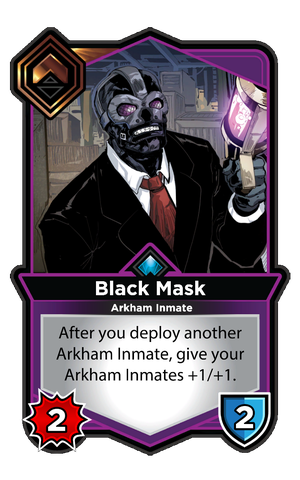
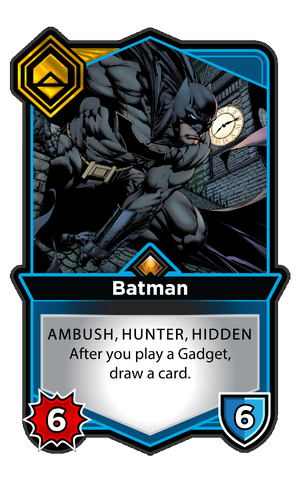
We'll actually start things off with Recruits, as they show elements present on the other types of cards.
At the bottom of the Recruit you'll find the card's Power in the left corner and it's Health in the right. We'll get into how they work later. The big white spot above it the card's text box, explaining its abilities. Above that is the card's name, then it's rarity cost, and the artwork occupying most of the card.
In the upper-left corner is the cost. This one's quite different from other card games, so we'll save it for later.
Actions

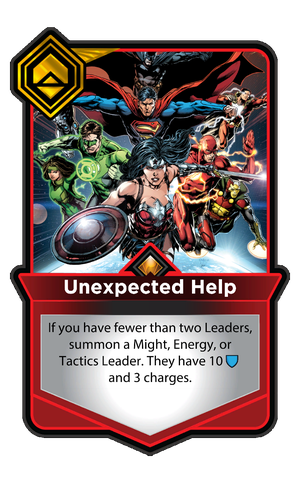
The last type of card are Action cards. Those have no Power or Health, and do not stick around when played, instead having instantaneous effect that happen as soon as they're played.
Leaders
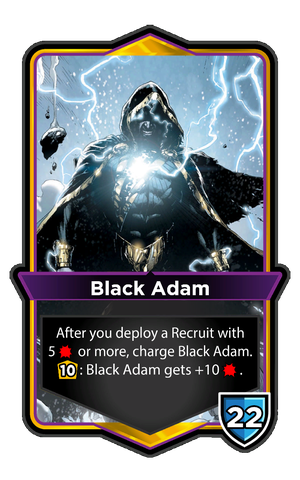
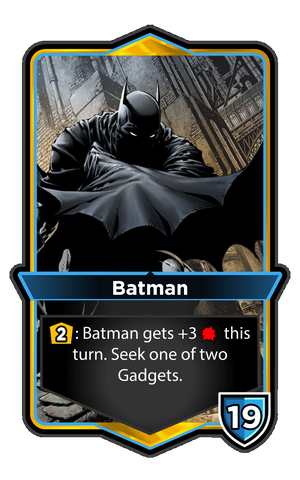
Leaders don't go into your deck, instead starting the game already on the board. As such, they have no cost, and they also lack Power, though most can gain some temporarily during the game. They all have a Health value, which tends to be on the larger side.
Every Leader has a Charge Ability. At the start of your turn, each of your Leaders will gain a Charge. If you have enough Charges, you can activate the charge ability, though you'll only be able to do that once each turn.
Do note that the same character can be both a Leader and a Recruit. So can have Batman as the man in charge, and then add two mote Batmans (Batmen?) into your deck.
Some Leaders can gain permanent Power, as is the case with Black Adam above. However, that Power is NOT available during your opponent's turn, so that leader will deal no damage when it is attacked by an enemy. Keep that in mind when playing.
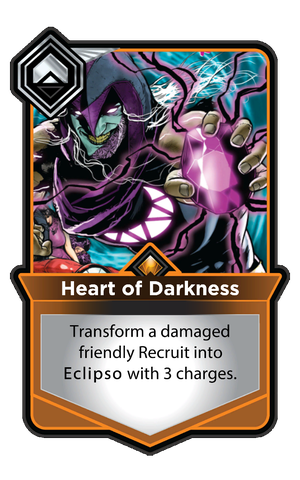
Finally, there are cards that can create new Leaders or transform Recruits into Leaders. If that happens, you'll need to kill those as well to win the game.
Cost
As mentioned earlier, cost works a little differently than most other card games. A Dual Force card card can have one of four costs: Free, Bronze, Silver, and Gold.
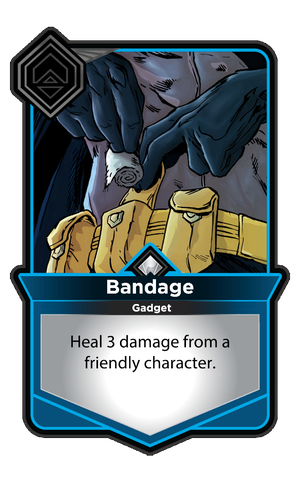
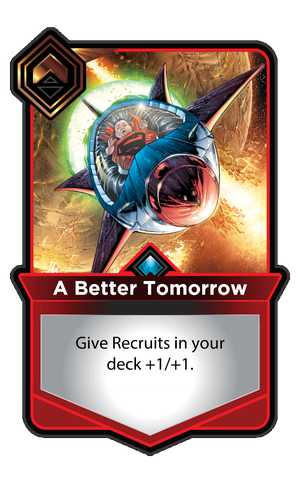

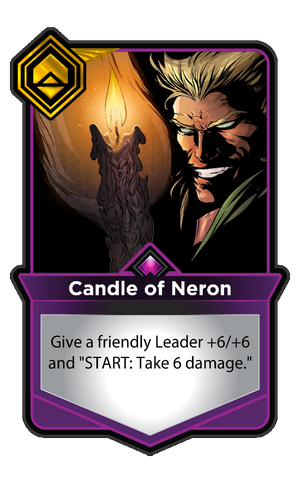
You pay these costs with resources, which refresh each turn. The way resources work for each player is as such (turns counted for each player individually):
- Turn 1: One Bronze resource.
- Turn 2: Two Bronze resources.
- Turn 3: A Silver resource and a Bronze resource.
- Turn 4: Two Silver resources.
- Turn 5+: A Gold resource and a Silver resource.
You never get to have two Gold resources, unless a card specifies otherwise. You can pay for cards with a higher resource (eg. Play a Bronze card by spending a Gold resource), and the game will always use the cheapest resource that can pay for the card (if you want to play a Bronze card and have a Silver and a Gold resource, you'll use the Silver).
Some cards can generate additional resources above your maximum of 2, like Hal Jordan or Green Lantern Power Battery. In this case, a new resource will appear in another spot on the board that will NOT be refilled next turn.
Board and Combat
The board in Dual Force is a 3x4 grid. You'll be able to play cards on the lower half of the board, while the opponent will play on the upper half. Each corner of the board will be occupied by a leader, yours on the bottom and your opponent's on top. The resources are the hexagons in the middle of each player's side of the board.
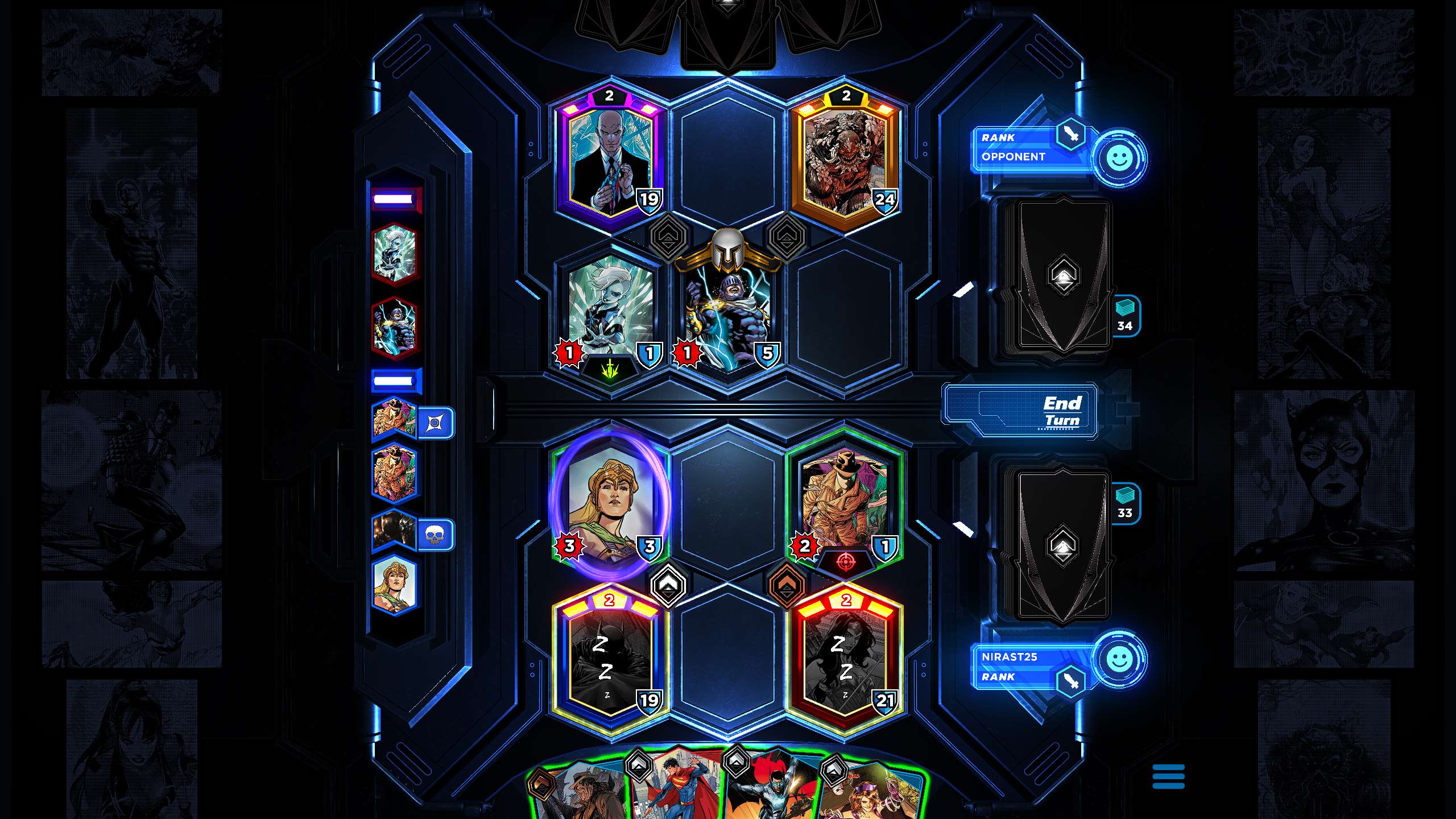
A typical board in the middle of the game
Combat is pretty much identical to Hearthstone. You drag one of your cards over one of your opponent's , and they fight. When cards battle, each recruit will deal damage to it's opponent's Health equal to the recruit's Power, and the damage happens simultaneously. This is a system similar to most modern digital CCGs, like Hearthstone and Legends of Runeterra.
You can attack any card in any row, but you can't attack a card if there's another one in front of it. This is how you'll protect your cards, by placing another one in front of it to use as a human shield stop your opponent from dealing damage.
Deckbuilding
Your deck is made up of 40 cards, excluding your Leaders, with up to 2 copies per card. Each card can fall into one of five categories: Might, Energy, Tactics, Anarchy, and Tyranny. We’ll get into detail about each of them in a dedicated guide down the line.
What Leaders you pick will determine what cards you can put into your deck. You must have EXACTLY 20 cards corresponding to each Leader. For instance, if your Leaders are Superman and Batman, you must have 20 Might cards and 20 Tactics cards in your deck.
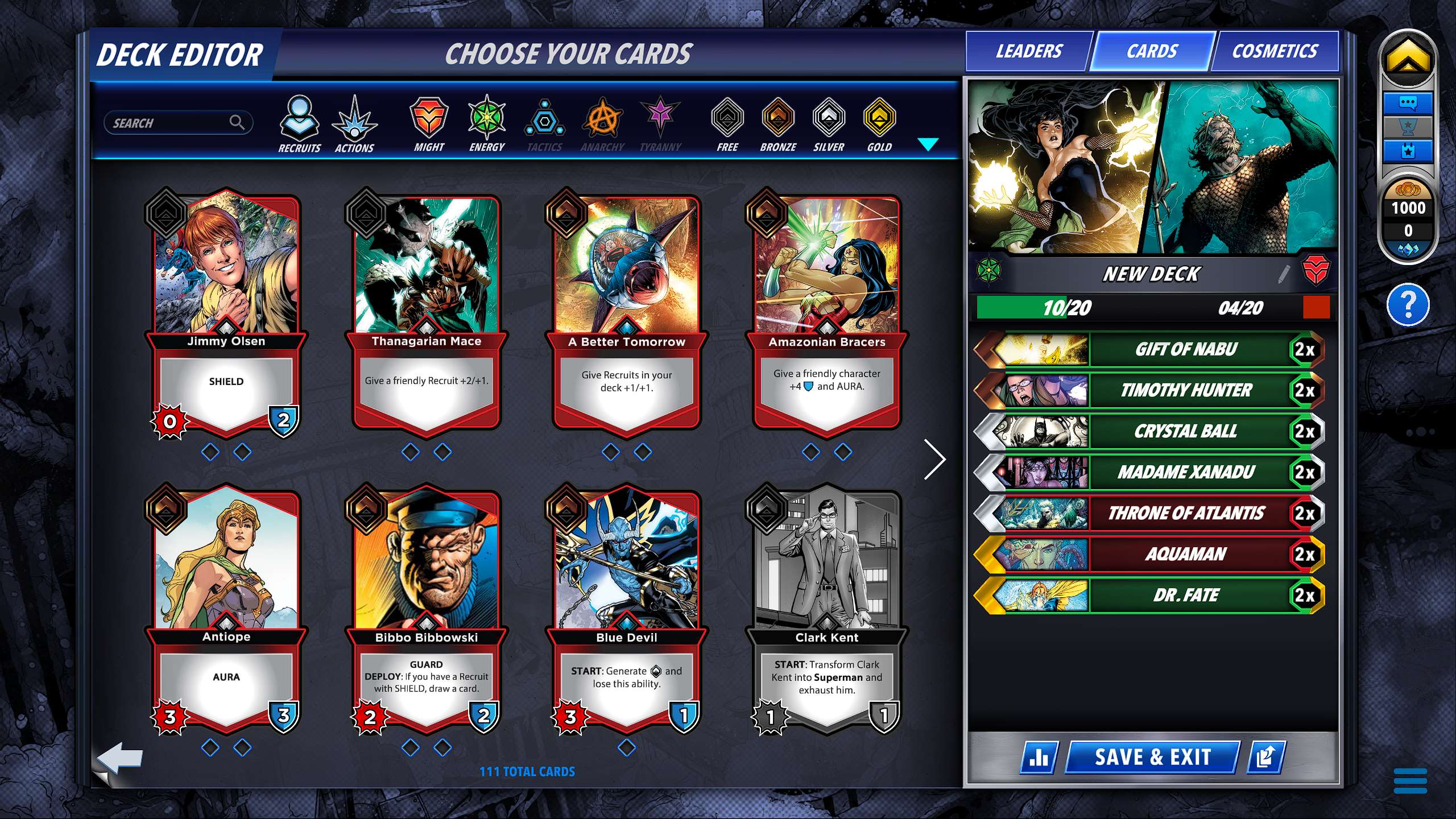
The collection manager in the middle of building a deck.
About_Author
Just a guy with opinions video games who decided to share it with everyone against their will :P. I specifically like single-player games and card games, though usually not what's most popular at the moment.
More_DC Dual Force_Guides
How Standard Rotations Work in Hearthstone - Year of the Scarab

Leave a Comment