
What Does Corrupted Mean in Path of Exile 2?
Corrupted in Path of Exile 2 means an item is permanently locked from crafting. Here's what corruption does, how Vaal Orbs work, and when to risk it.
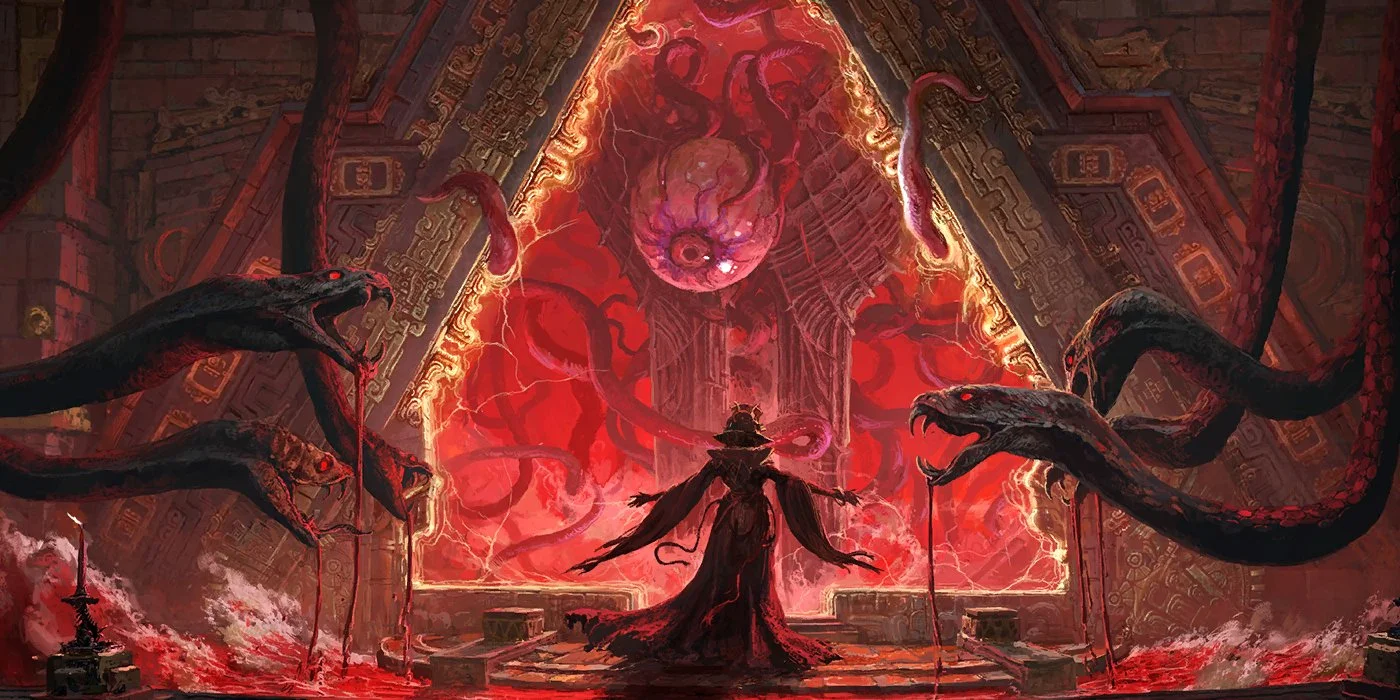
In Path of Exile 2, "corrupted" means an item has been permanently locked. Once an item is corrupted, you can't reforge it or change its modifiers anymore, and most crafting currency simply won't work on it. It's a one-way door. You'll know an item is corrupted because it gets a red Corrupted tag at the bottom of its stats. The trade-off is that corrupting can also roll powerful bonuses you can't get any other way, so it's a high-risk, high-reward gamble.
What Corruption Actually Does
Corruption is a special permanent state on an item. "Corrupted" is a special item modifier highlighted with a red tag at the bottom of its stats block, and once corrupted, the changes cannot be reversed and items cannot be modified again. That's the core of it.
Practically, here's what you lose access to once an item is corrupted:
You cannot reforge corrupt items or use Exalted and Chaos Orbs on them.
You can't reforge or otherwise re-roll its modifiers.
Most standard crafting currency simply won't apply.
The one big exception worth knowing: the only exceptions are corrupt gems that can be leveled using uncut gems of a higher base level. So a corrupted gem isn't frozen forever, you just can't add quality to it anymore.
How Items Become Corrupted
The main way you'll corrupt something on purpose is with a Vaal Orb. You can also run into corruption naturally: map bosses within areas generated by corrupted maps are also corrupted, and corrupted bosses can drop corrupted items, Vaal skill gems, or Vaal Fragments. There's also a Corruption Altar in the Vaal Ruins in Act 2 that lets you apply a single-use Vaal Orb effect on an item, once per character.
What a Vaal Orb Does
Using a Vaal Orb on a piece of gear corrupts it and applies one of four possible outcomes, with each outcome having an equal chance of occurring. It only ever rolls one outcome, never a combination. On regular gear the four buckets break down like this:
Nothing changes except the item becomes corrupted. No change (except the item becomes Corrupted), roughly a 25% chance.
A Chaos-like reroll of the item's modifiers. This applies an effect similar to a Chaos Orb to the item once, twice or three times; unlike a Chaos Orb, this can apply to magic items, and this effect usually ruins the item.
A corrupted enchantment gets added. This adds a special enchantment to the item, which is often a very good outcome, and the possible enchantments vary for different item slots, such as helmet enchants like +1-3% maximum fire resistance or +1 to all minion skill gem levels.
A unique "beyond the limit" effect. This pushes the item beyond normal limits in a different way, adding an additional rune socket on armor and martial weapons that can pass the socket limit, while on caster weapons it adds or removes up to 10% quality at random.
One important note: unlike an Orb of Chance, the Vaal Orb cannot delete an item out of existence. But it can absolutely tank an item's value, like reducing a unique affix to below its minimum value or permanently lowering a gem's level by 1. Vaaling rare items in particular tends to go poorly, so think before you gamble.
Corrupting Skill Gems
Vaal Orbs work on skill gems too, and the main reasons to use a Vaal Orb on a skill gem are to aim for a 5-link or 6-link without using a Greater or Perfect Jeweller's Orb, or to get a level 21 gem. Possible gem outcomes include modifying the level of a skill gem, either increasing or decreasing it by 1, and a gem's quality can also be altered. Remember, corrupted skill and spirit gems can still be leveled up after being Vaaled, but you cannot add quality to them anymore.
Can You Corrupt Twice? (Double Corruption)
You can't Vaal the same item twice. A standard Vaal Orb only works on a non-corrupted item, and once an item is corrupted, normal currency can no longer touch it; double corruption is done with the Architect's Orb, which corrupts an already-corrupted item and is a flat 50/50 gamble: half the time it adds a second corruption enchantment, half the time it destroys the item outright. Reserve the Architect's Orb for an item where a second enchant genuinely doubles its market value, and where you've accepted you might lose it.

Crystallised Corruption is another item you can use, but this time on skill gems. It has a 50% chance to add a second gem corruption, and if it fails? Goodbye gem it is destroyed!

When Should You Corrupt Something?
Corruption is end-game min-maxing, not something to spam on every drop. A few practical rules:
Corrupt cheap or replaceable items first. Don't Vaal your best gear hoping for a miracle, especially rares, since rare items generally don't Vaal all that well.
Have a backup ready. Outcomes are completely random, so line up spare gems or gear before you gamble high-value stuff.
Use it for specific targets. Going for a level 21 gem, an extra socket, or a strong slot enchant is when corruption earns its keep.
If you hate the "nothing happens" result, use an Omen of Corruption to eliminate that outcome for most items.
Corruption Outcomes
Non-unique equipment
No change.
Reroll up to three modifiers into new modifiers.
Adds a special Vaal enchantment to the item.
Adds an item socket to armour, ignoring socket limits.
For jewellery, no change. (This outcome is not removed by Omen of Corruption.)
The item cannot have more sockets than the amount of space the item takes up.
If the item is socketed with Cadigan's Epiphany, the item cannot gain an augment socket via corruption.
Unique equipment
No change.
Applies a modifier magnitude multiplier of 0.78x to 1.22x (in 0.01 increments) before rounding to explicit modifiers. Applies before quality effects.
The resulting values are rounded to the nearest whole number, rather than always being rounded down like most decimal values in the game. However, testing suggests the game may use truncation with a +0.5 shift instead of standard rounding. This appears to bias internally negative stats (like 10% Reduced Dexterity) toward zero, preventing some expected values from appearing while making others more common. A formula of trunc(value + 0.5) may explain this behavior. [1]
Adds a special Vaal enchantment to the item.
Adds an item socket to weapons (including sceptres) and armour, ignoring socket limits.
For jewellery, no change. (This outcome is not removed by Omen of Corruption.)
The item cannot have more sockets than the amount of space the item takes up.
If the item is socketed with Cadigan's Epiphany, the item cannot gain an augment socket via corruption.
Gems
No change.
Permanently add or subtract one gem level. This is retained when upgrading the gem level using an uncut gem. Max level gems can exceed their normal maximum this way, but cannot go below Level 1.
Add or remove a socket.
±10% to Quality, up to 23%.
charms
±10% to Quality, up to 23%.
Non-unique jewels
No change.
Reroll up to three explicit modifiers.
Adds a special Vaal enchantment to the item.
Adds or removes an explicit modifier. This outcome ignores the normal limit of 2 prefixes and 2 suffixes for rare jewels. This upgrades a normal or magic jewel's rarity if they are already at their affix limit.[2]
Unique jewels
No change.
Adds a special Vaal enchantment to the item.
Applies a modifier magnitude multiplier of 0.78x to 1.22x (in 0.01 increments) before rounding to explicit modifiers. Applies before quality effects.
No change. (This outcome is not removed by Omen of Corruption.)
Waystones
No change.
Increase or lower the Waystone's Tier by 1, randomizing its modifiers.
Note: this is the primary way to obtain a Waystone (Tier 15).
Prevent prefixes from being removed, then reforge the item, removing all suffixes and adding the same number of prefix modifiers, ignoring modifier limit (or vice versa with suffix lock/prefix reforge).
Prevent prefixes and suffixes from being removed, then reforge the item, adding between 0 and 4 random number of additional modifiers, having up to 8 modifiers.
Essence imprisoned monsters
No change.
Essence monsters are freed immediately
Add an additional random essence
Reroll all essences, transforming them into the same tier of essences
Upgrade an essences to their next tier, or upgrade perfect essences into a random Corrupted Essence.
Tablets
Tablets can be corrupted using an Ancient Infuser only.
Add a random tablet modifier, bypassing its default modifier limit.
Add up to 10 additional uses.
Transform the tablet into a random type of tablet, rerolling all of its modifiers.
Destroy the tablet.
Strongboxes
Using a Vaal Orb on a strongbox will corrupt all items that drop from the strongbox, if possible. Corruption will not change the affixes on the strongbox.
The Bottom Line
Corrupted means locked in. The item is what it is now, for better or worse, and standard crafting is off the table. Treat every Vaal Orb like a coin flip with real stakes: great when it hits an enchant or extra socket, painful when it bricks your gear. Corrupt the stuff you can afford to lose, and only risk your good items once you've got a backup plan.
About_Author

Robert "Fluxflashor" Veitch is the founder of Out of Games. With over a decade of experience in gaming content, and being done with the exhaustion of corporate nonsense, he wanted to do something different with a focus on the community in this online world that tries so hard to just make everyone just another number. Robert is currently playing whatever interesting game shows up next. He can be contacted via direct messages.
More_Path of Exile 2_Guides

Why Is Path of Exile 2 Stuttering? Fixes That Work

How to Juice the Untainted Paradise Map in Path of Exile 2
How to Get More Spirit in Path of Exile 2
Latest_Path of Exile 2_Guides
Why Is Path of Exile 2 Stuttering? Fixes That Work
How to Juice the Untainted Paradise Map in Path of Exile 2
How to Get More Spirit in Path of Exile 2
// join_the_conversation
Sign in to share your thoughts, vote on comments, and connect with the community.
Comments
// no_comments_found
Be the first to share your thoughts!
Leave a Comment