
Guide to Climate, Weather, and Temperature in RollerCoaster Tycoon 1 & 2
Guide to Climate, Weather, and Temperature in RollerCoaster Tycoon 1 and 2.
Climate, weather, and temperature, are gameplay mechanics founds in all games.
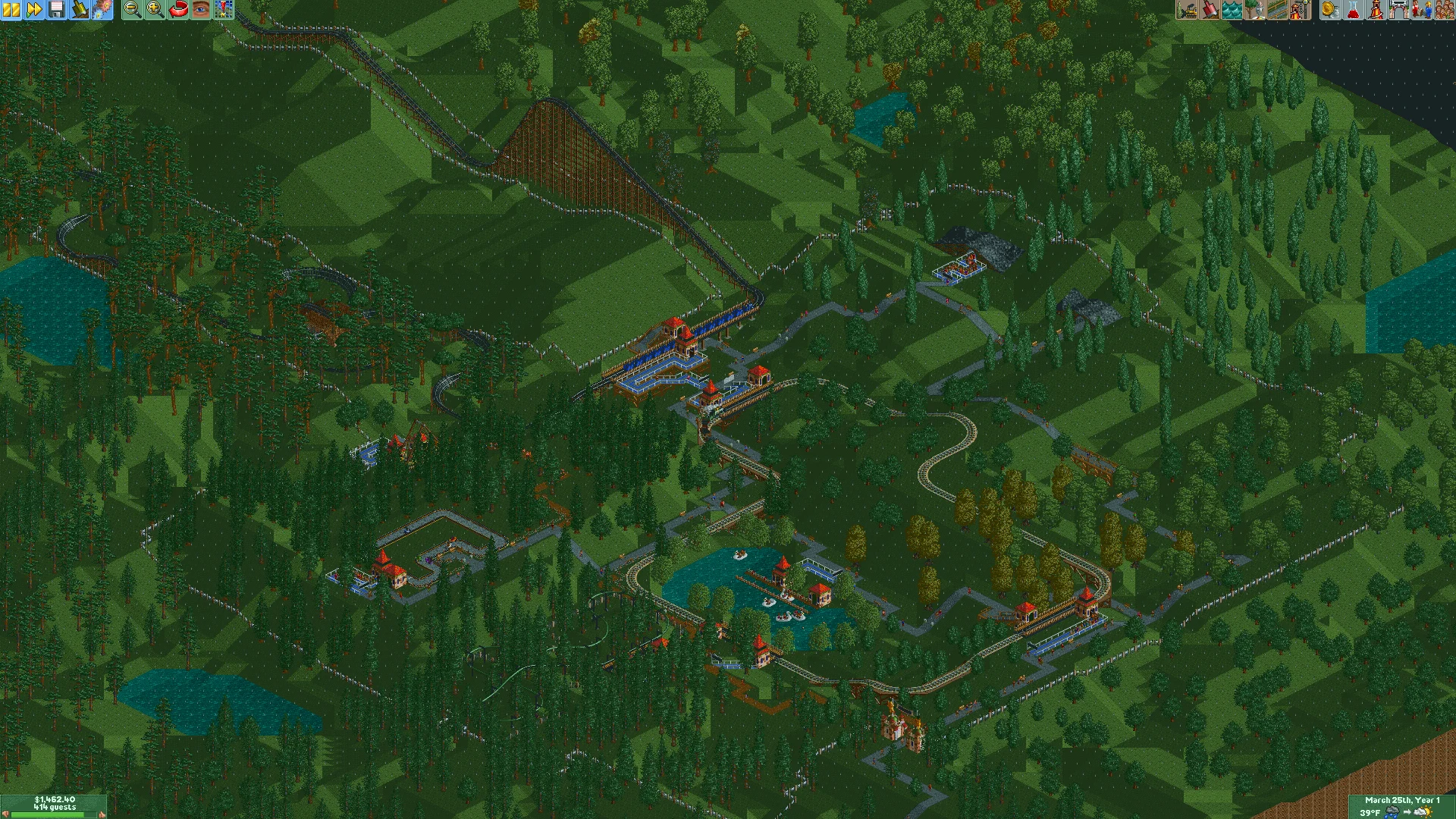 (Katie's World, a Cool and Wet park, during a rainstorm)
Climate
Every park in the game is assigned to one of four climate types:
Warm
Cool and Wet
Hot and Dry
Cold
Each climate has an effect on the park's weather and temperature ranges. There's no way to view what climate a park is assigned to while selecting or playing one, but you will be able to see it if you load the scenario file in the Scenario Editor.
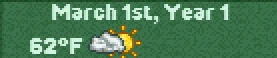
You can also tell what climate a park is assigned to by checking its temperature as soon as it starts. Parks with the Warm or Hot and Dry climates will always start with a temperature of 17C (62F). Parks with the Cool and Wet climate will always start with a temperature of 13C (55F). Cold parks will always start with a temperature of 9C (48F).
You can always see the park's current temperature and weather in the bottom-right corner of the screen.
Weather And Temperature Changes
As times rolls by, your park's weather will change. Under normal circumstances, you can experience once of six different weather effects in the game:
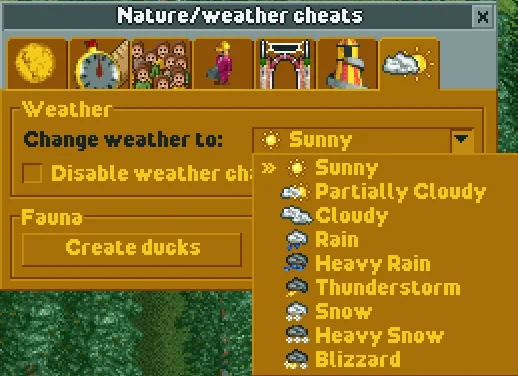
Sunny
Partially Cloudy
Cloudy
Rain
Heavy Rain
Thunderstorm
OpenRCT2 also adds Snow, Heavy Snow, and Blizzard to the game. For nearly all purposes, these are effectively just the three stages of rainy weather reskinned, but while Heavy Snow and Blizzard count as rain, Snow does not. It's not possible to experience either Snow type without using cheats, but you can use these cheats to change the weather to any type at any time and even freeze the weather changes.
Each climate affects how likely a certain weather type can occur within a given month. Below are the lists of every month's base temperature and possible weathers in all climates.
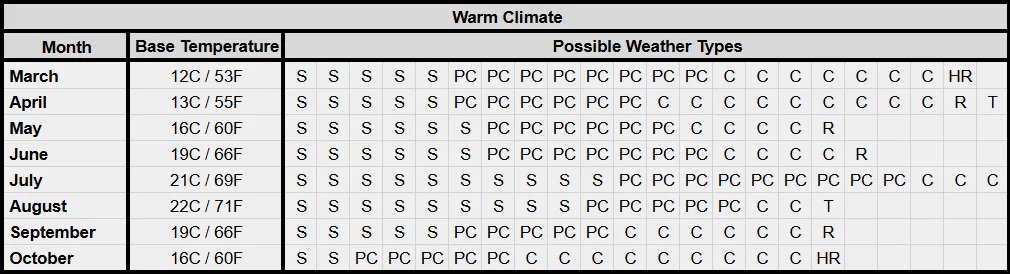
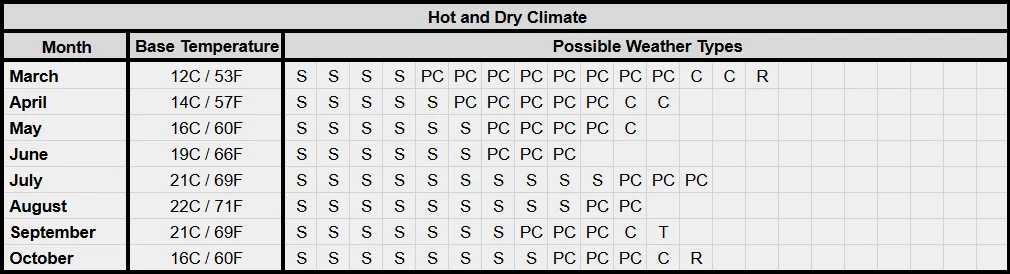
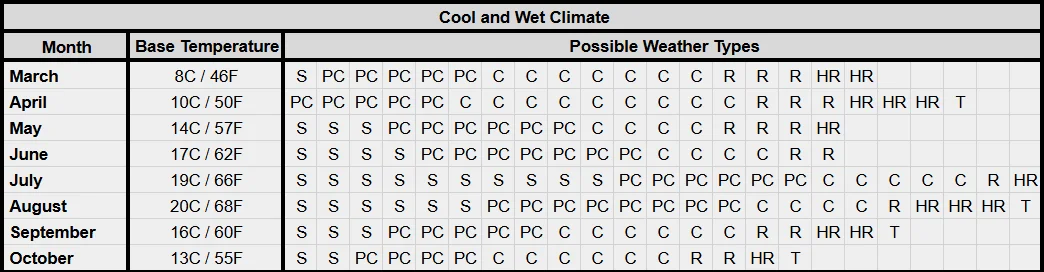
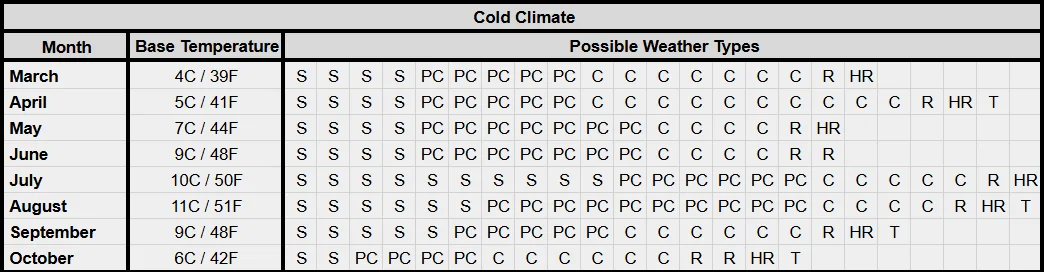
Each type of weather also has a temperature modifier value attached to it, and whenever a weather type changes to another weather type, it will change the temperature to reflect the change in the temperature modifier.
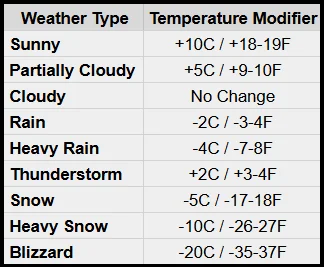
To determine what temperature should currently be active, the game takes the base temperature of the current month and applies the temperature modifier value associated with the current weather type. March in the Warm climate has a base temperature of 12C, which means that the temperature will be 17C if it's Partially Cloudy, or 22C if it's Sunny after adding the temperature modifiers of those weather types.
Without using cheats, the lowest possible temperature is 0C/32F, which occurs during Heavy Rain in March on the Cold climate. The Highest possible temperature is 32C/90F, which occurs while it's Sunny in August on either the Warm or Hot And Dry climates.
When you start a new scenario, the weather will always be Partially Cloudy. Whenever a weather type is chosen by the game (including at the start of a scenario), the game will choose a new weather type 24 seconds later from within the list of applicable weather types in the month of the climate of the park.
For example, 5 out of 21 possible weather options in March on a Warm climate correlate to Sunny weather. This means that whenever the game goes through the weather changing cycle in March, it will have a 5/21 (or roughly 24% chance) of picking Sunny to be the next weather type. Certain whether types are not prerequisites for other weather types to be chosen, so it can choose Thunderstorm even if it's currently Sunny (and vice-versa).
If it happens to pick a different weather type than the one currently active, the game will display an arrow pointing to the new weather type to communicate that the weather will change. Another 24 seconds later, the weather will update to the previously selected type.
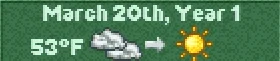
When this happens, the game will run a cycle to update the temperature by increasing or decreasing it by 1C every 3.2 seconds until it reaches the appropriate new temperature. After this is done, the darkness effect on the screen (from transitioning into or out of a rainstorm) will update by 1 level every 3.2 seconds if necessary. The weather cycle timer is not running while the temperature and darkness effect levels are updating, resulting in some weather effects being prolonged because of how long the game might take to arrive at the new temperature and darkness effect level. When this is done, the weather cycle timer starts over again.
If you force the weather to change using cheats in OpenRCT2, the weather and corresponding temperature value will change instantaneously and the weather cycle timer will restart.
Ride Sheltering
While it's raining, guests will refuse to ride on rides that aren't considered by the game to be "Sheltered", which will be reflected by the guest thought "I'm not going on [ride name] while it's raining". A ride is considered "Sheltered" if at least 3/8 (37.5%) of the ride track is underground or beneath path tiles or scenery items that are at least one full tile large, or if the ride or vehicle on the ride is tagged as such by the game.
Note that the track length requirement is based strictly on the distance that the ride is sheltered and not the amount of time the vehicle spends on the sheltered sections of the track.
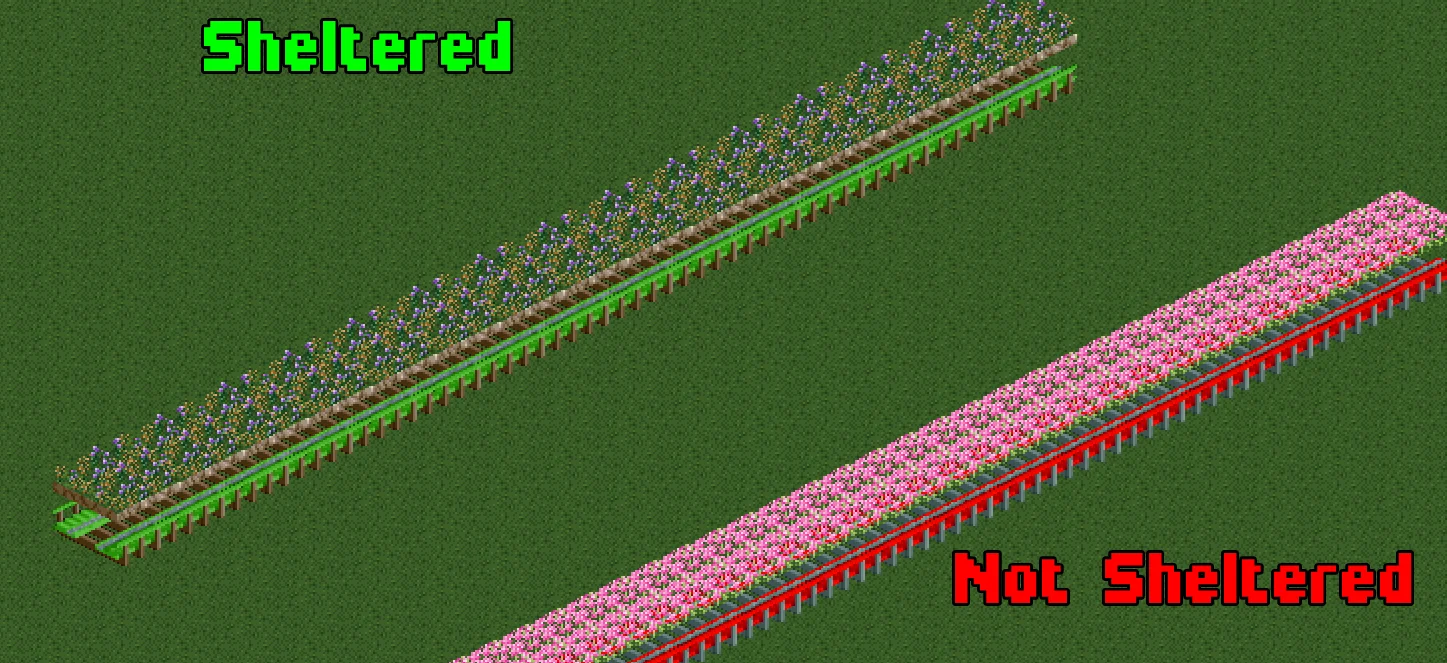
Whether or not scenery tiles count towards sheltering the ride is determined by the side of the object. Only objects that are at least one full tile in size will count towards the sheltering requirement. Below you can see a green coaster track covered by full-tile flowers, and a red coaster track covered by quarter-tile flowers. As a result of this quirk, the game will considered the green coaster to be sheltered by the scenery, where the red coaster is not sheltered even though they both look like they should have the same amount of rain coverage.
Some rides are considered to be sheltered by default. The rules for this are generally quite intuitive. If a ride itself or the vehicles they use are covered, they are considered sheltered rides. The Bumper Cars for example are sheltered as the ride features a roof, whereas the Flying Saucers aren't because it has no roof.
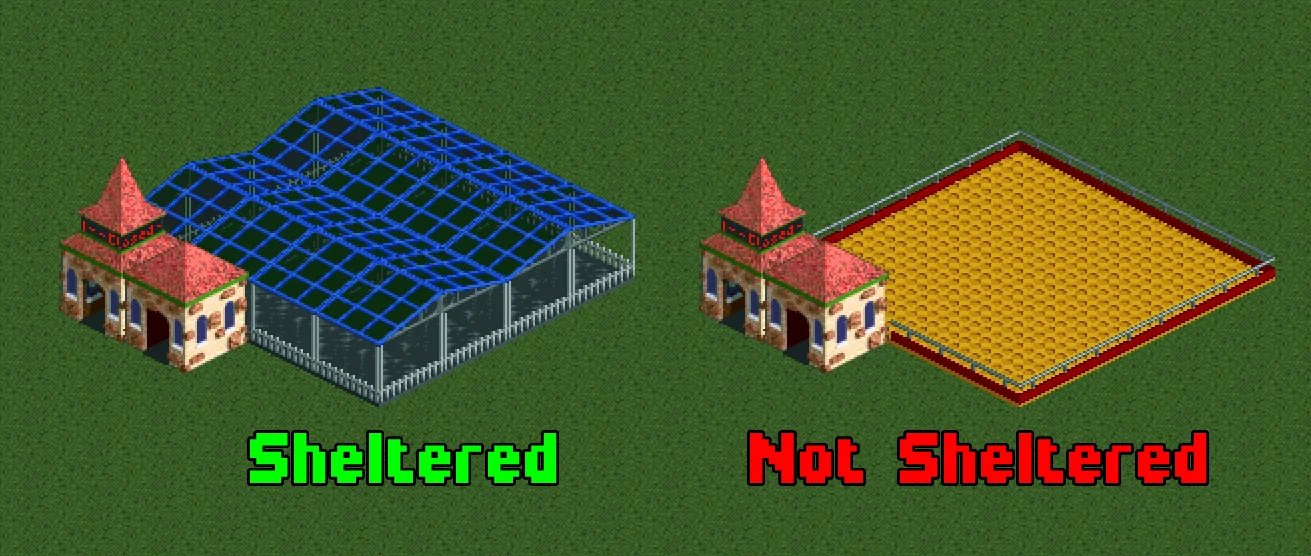
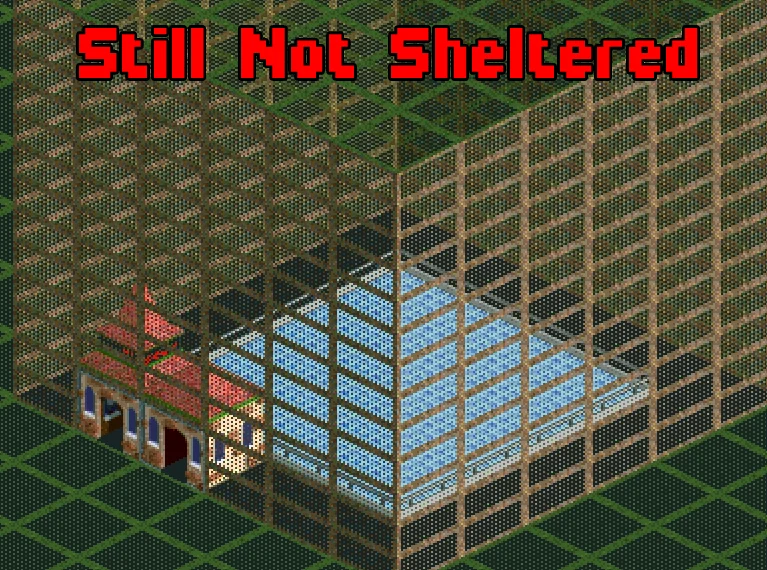
This underground rule for tracked rides sadly does not apply for flat rides. If a flat ride is unsheltered, it will still be considered unsheltered, and thus will still be shunned by guests during a rainstorm, even if the ride is entirely underground.
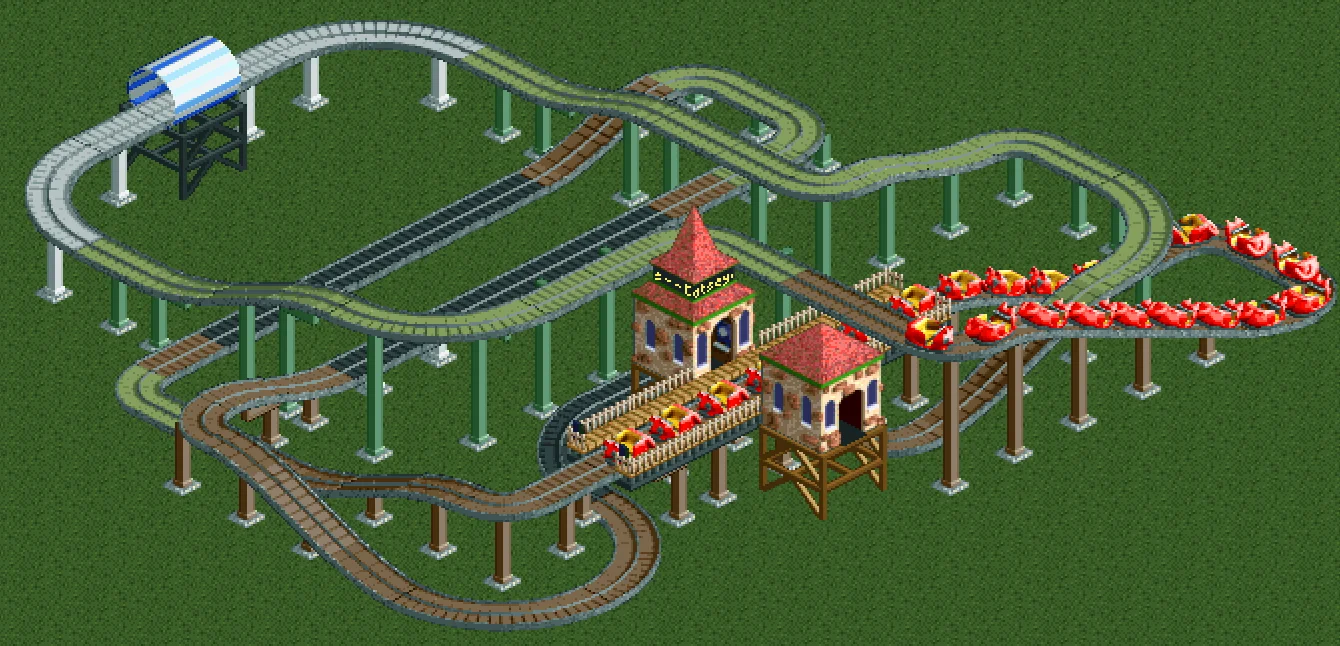
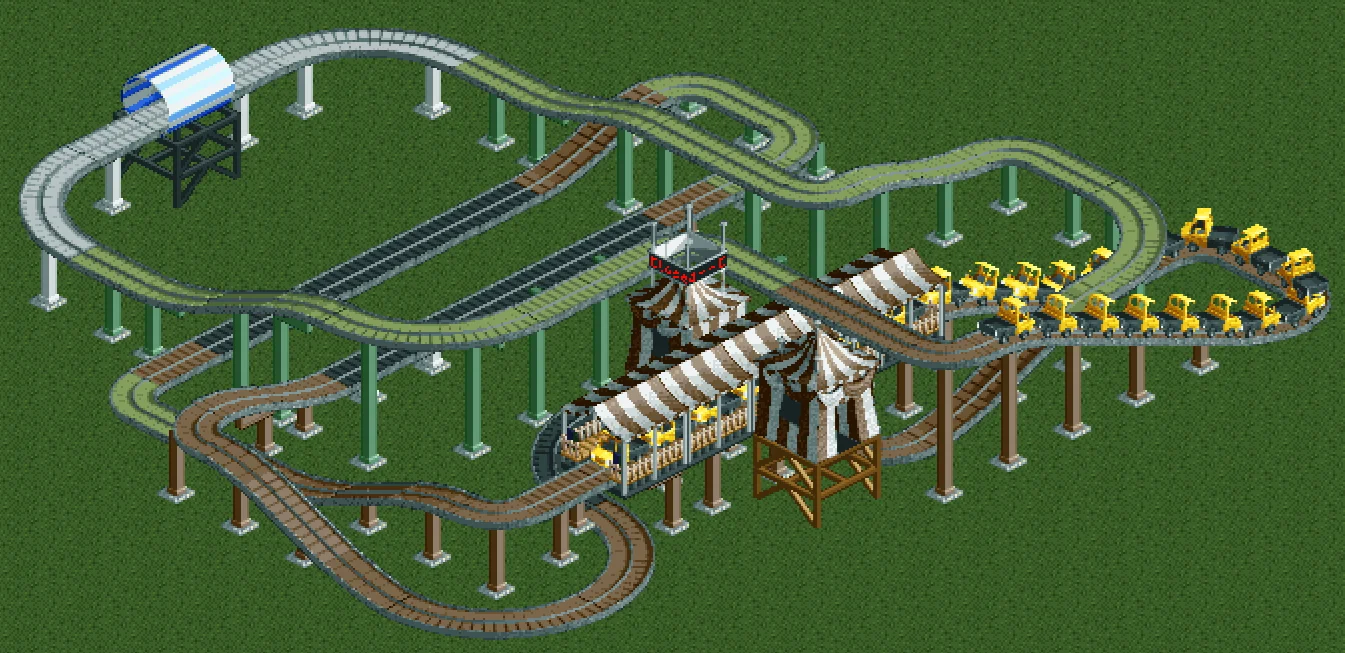
Additionally, certain vehicle types can render rides to be sheltered or unsheltered. Once again, this is quite intuitive to understand. If the vehicle has a roof, the game will generally consider it to be sheltered. An example of this interaction can be seen on the Car Ride since there are vehicle types on the ride that are considered sheltered or not sheltered. Cheshire Cats for instance are not sheltered vehicles, meaning that the ride will only be considered sheltered if at least 3/8 of the track is considered sheltered.
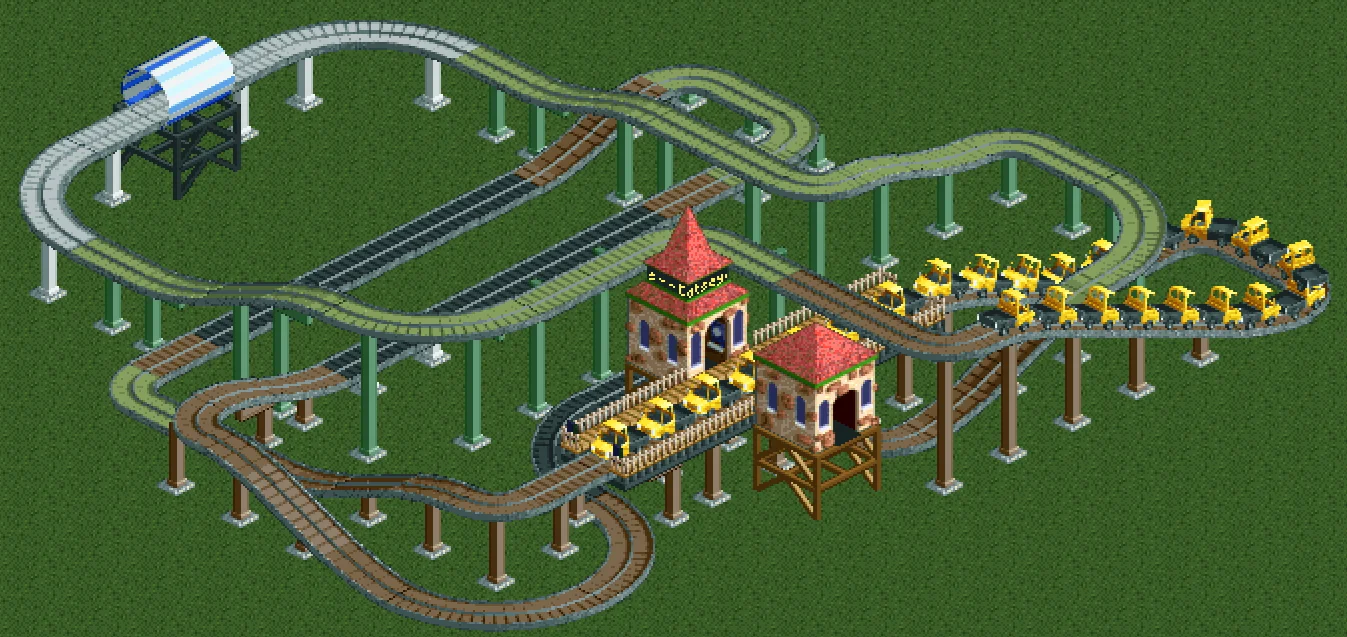
If we change the ride to use Pickup Trucks instead, the vehicles are now considered sheltered because they have a roof, rendering the entire ride sheltered (and thus, guests will ride it in a rainstorm) even if none of the track is.
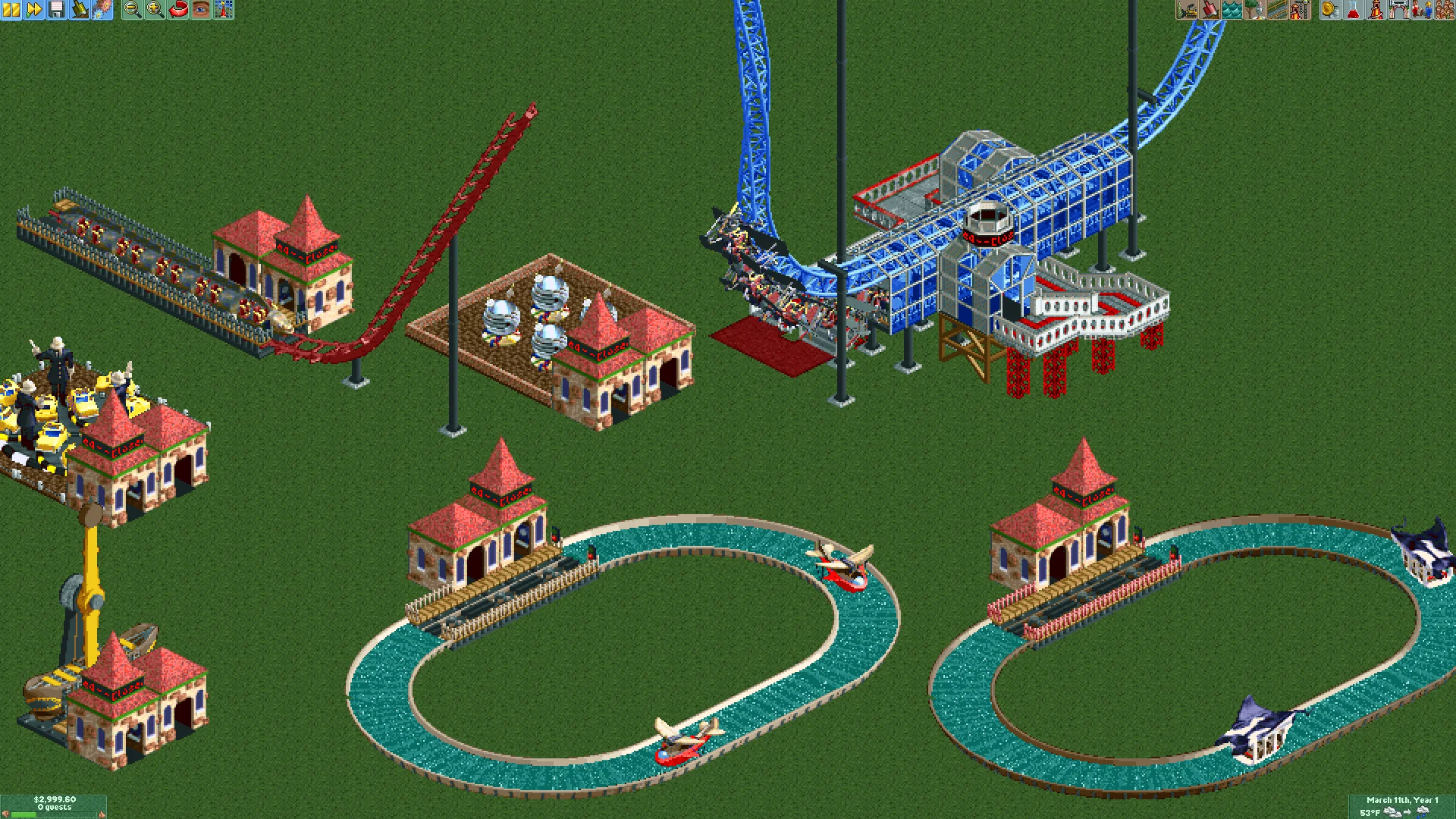
In spite of this, there are some exceptions to this. The following vehicles are not considered sheltered even though they appear to have a functional roof:
Barnstorming Trains on the Inverted Impulse Coaster
Conger Eel Trains on the Corkscrew Coaster
Flying Boats and Manta Ray Boats on the Water Coaster
Italian Police Ride variant of the Twist
Swinging Inverter Ship (both variations)
Time Machine variant of the Space Rings
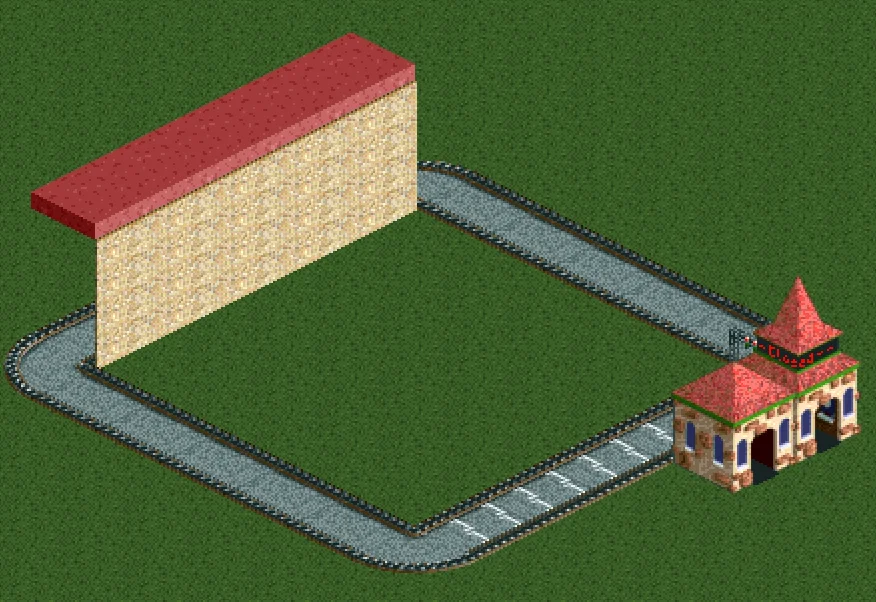
The coverings over the station platforms you get by changing the station style are not considered shelter, meaning that they won't contribute to the percentage of sheltered track.
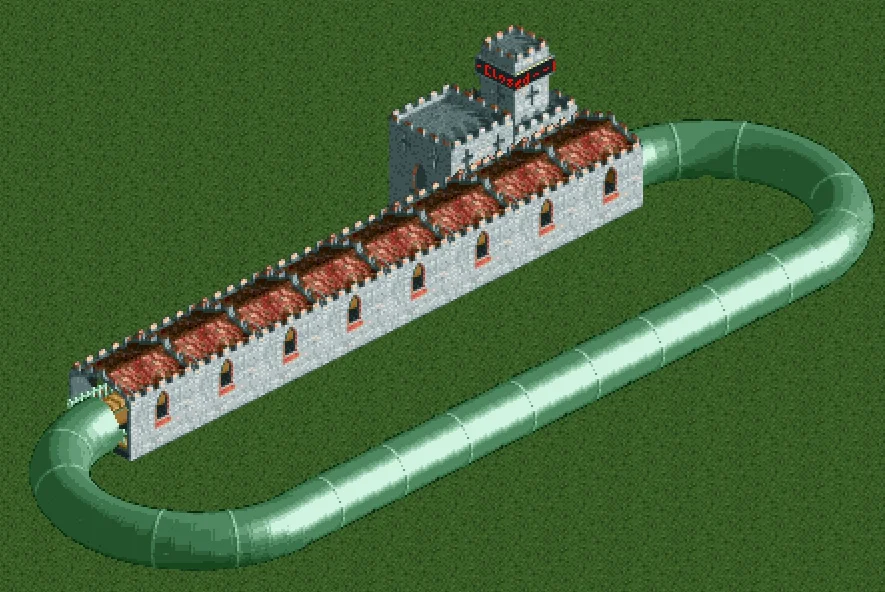
The enclosed tube track on the Dinghy Slide is also not considered to be sheltered. This means that even if you have a Dinghy Slide with the entire track enclosed and the station covered by picking a different station style, the game will still consider the entire track to be unsheltered.
There is also very quirky behavior with rides that perform multiple laps of the same track. The track length itself is only counted once, but the amount of sheltered track is counted per lap, meaning that the more laps your track performs, the less of the track needs to be covered for the ride to be sheltered.
This Go-Kart track has a total of 24 track pieces, of which only 5 of them are covered. Normally, this results in only 21% of the track being covered. However, since the track does 3 laps, the game registers the track as having 15 covered track pieces instead of only 5, while the track length is unchanged. This quirk measures that the track has 15 out of 24 track pieces covered, or 5/8 (62.5%) of the track covered in spite of its appearance.
(The walls are not needed. They are present in the image above to be able to visualize the position of the blocks easier)
In Hot and Dry parks, you can get away with not rainproofing the rides since rainstorms in that climate are quite rare. In Cold or Cool and Wet parks where rain is much more frequent, it may be worthwhile to spend the extra money to rainproof the rides (through scenery or underground building) to ensure that they will still have ridership when it rains.
Other Effects of Weather
Most aspects of the effects of weather are quite well known, but there are also some very obscure elements of it too.
Guests do not care if it's cloudy, and the effects of rain do not change based on the intensity of the rainfall. This means that for all practical purposes, there are really only two types of weather in the game: Raining or not raining.
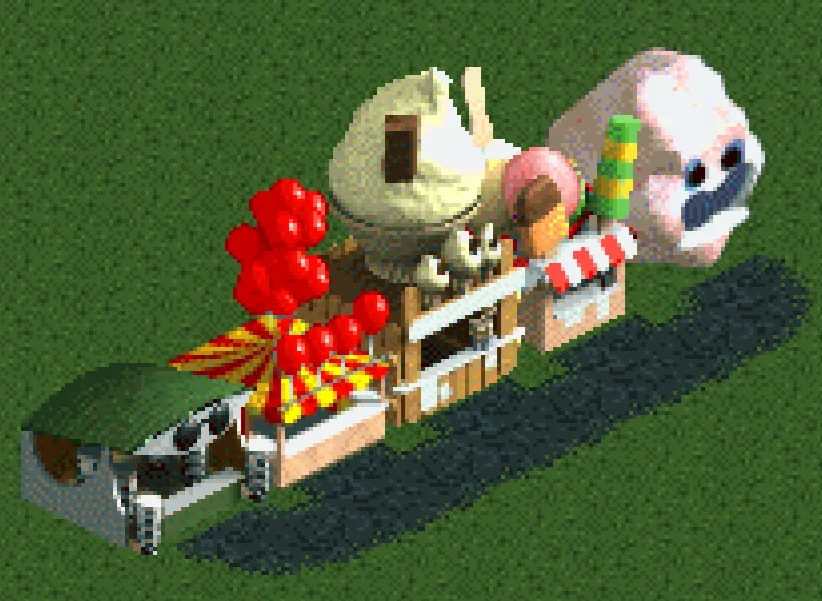
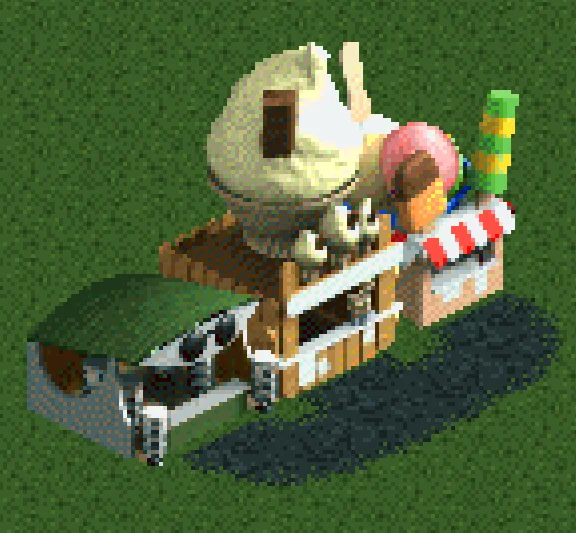
Some stalls are affected by whether or not it's raining. Guests will never buy the following items if it's currently raining no matter how cheap you make them, and even if the stall and the path the guests buy the item from is sheltered:
Balloons
Cotton Candy
Ice Cream
Sunglasses
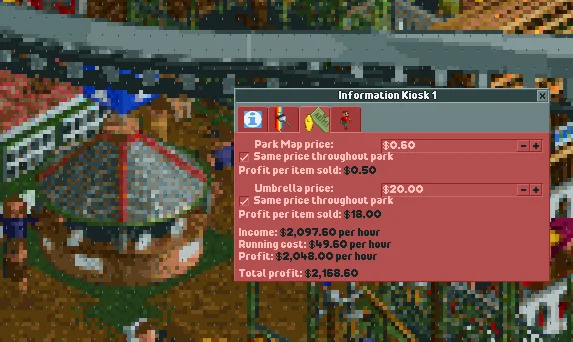
On the other end of the spectrum, one of the most well known exploits in the game is that people will buy umbrellas at any price while it's raining. By default, the maximum amount of money guests will pay to buy an umbrella is $5. However, while it's raining, they will pay any price provided they can afford it. Under normal circumstances, the maximum amount you can charge for them is $20, however if you use cheats to charge more than this, they will be willing to pay whatever you set the price to in order to buy an umbrella during a rainstorm.
Rainstorms will also affect the likelihood of certain breakdowns. Katie's World is a Cool and Wet park from the original set of RCT1 scenarios, and the pre-built Mine Train Coaster, The Storm, is infamous for its crashing potential due to the fact that the scenario rains quite frequently the the track is not designed to be safe in the event of a Breaks Failure ocurring.
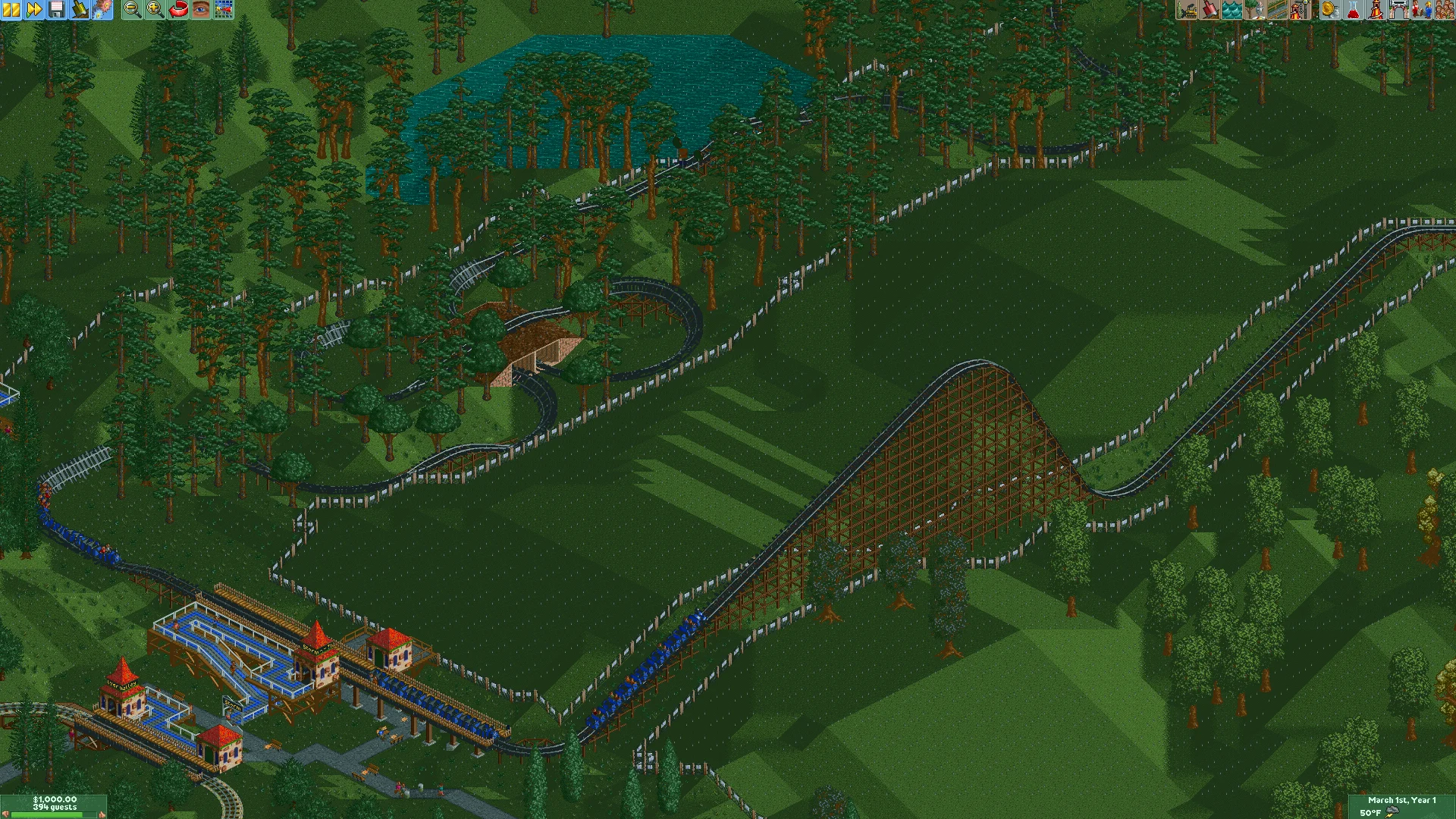
The Mine Train Coaster has the following 5 breakdown types available, which is the most common combination of available breakdowns per ride type in the game:
Safety Cutout
Restraints Stuck Closed
Restraints Stuck Open
Vehicle Malfunction
Brakes Failure
These breakdowns have an internal breakdown value of 25, 12, 10, 6, and 3 respectively. Added up, this is a total of 56. This means that whenever the Mine Train Coaster breaks down, there is a 3/56, or about a 5.4% chance, that the breakdown will be a Breaks Failure.
While it's raining, the value of 3 on the Brakes Failure increases to 20 instead, meaning that the chance increases from 3/56 to 20/73, or about a 27.4% chance, that the chosen breakdown will be a Breaks Failure. This does not make breakdowns more likely, but it instead simple makes the Breaks Failure about 5 times as likely to be selected in the event that a breakdown does occur in the rain.
Effects of Temperature
While it's well understood that the weather has an effect on running your park (even if some of those effects are not known by most people), what's less obvious is the temperature. It's easy to dismiss the temperature as purely a flavor mechanic, but temperature in fact does have some mechanical significance.
There are three different temperature ranges in the game. If the weather is 11C (51F) or lower, the weather is considered "Cold". If it's between 12C (53F) and 20C (68F), it is considered "Medium". If it's 21C (70F) or higher, it's considered "Hot". The primary effect these temperature ranges have is how much they are willing to pay for certain items in stalls. Hot items will sell for more money while it's "Cold", and cold items will sell for more money while it's "Hot". Some items will always sell for the same price no matter the temperature.
Ice Cream and Sunglasses will also never be purchased if the weather is "Cold", no matter how cheap you make them.
Below are tables for the minimum price every stall item in the game can be sold at per temperature range. There are other factors that can increase the price that guests are willing to pay, but it will never go below the prices in these charts.
.webp)
.webp)
.webp)
If the temperature is "Hot", guests will also become thirstier faster.
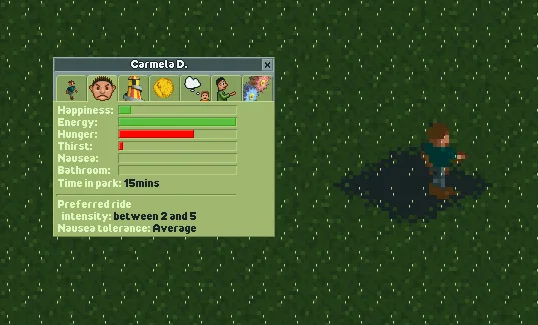
To test this, I isolated a guest and watched how quickly their Thirst meter rose. Over the span of two months in Blizzard weather, the guest's Thirst rose up very slowly
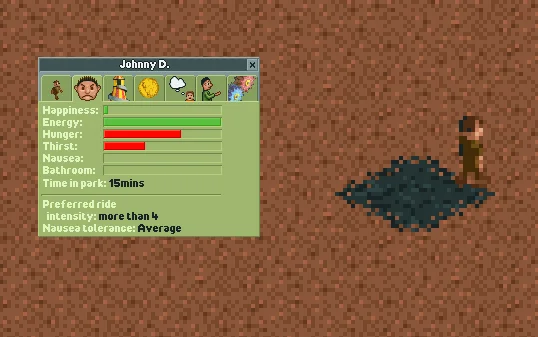
If I run the same test with the temperature always within the "Hot" range within those two months, the guest's Thirst increases much faster.
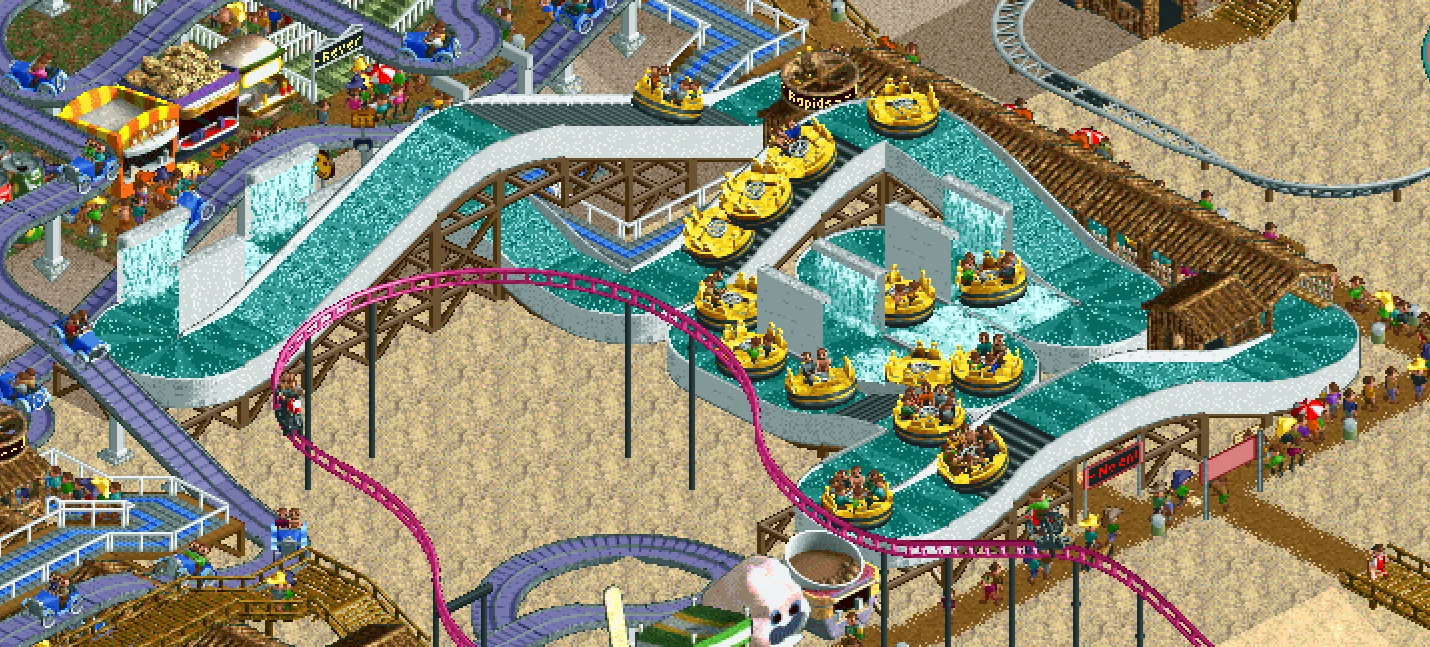
There is also a common belief that Water Rides will be more popular in high temperatures. This is unfortunately not true. There are no rides in the game that change in popularity based on the temperature.
About_Author

Demonxz95 is the main "fan creation guy" on Out of Games, specializing in showcasing fan-made content from the Hearthstone community, with the occasionally unrelated article on the side. His love for card games started with Yu-Gi-Oh when he was a child and has since seen a resurgence with Hearthstone and MTG.
He can be reached through a PM on the site or on our Discord server.
More_Gameplay_Guides

Guide to Awards in RollerCoaster Tycoon 1 & 2
Latest_RollerCoaster Tycoon 2_Guides
Guide to Food and Drink Stalls in RollerCoaster Tycoon 1 and 2
Guide to Awards in RollerCoaster Tycoon 1 & 2
Guide to Building a Bobsled Coaster in RollerCoaster Tycoon 1 & 2
// join_the_conversation
Sign in to share your thoughts, vote on comments, and connect with the community.
Comments
// no_comments_found
Be the first to share your thoughts!
Leave a Comment