Over time, there are lots of questions we ask ourselves. Should I preorder a PS5? Are narwhals real? Why do we never find grape flavored ice cream? Who is Derpcorn? Should I get this new expansion? Should I Stay or Should I Go?
Today on Hearthstone Hypothesis, we won’t be trying to answer either of these questions though. Instead, we'll be answering a question that I'm sure has been on the back of everyone’s mind at some point: Why is randomness so prominent in the game?
It’s no secret that randomness has such a strong presence in the game. Play one match right now, and you’ll probably end up seeing about a dozen cards in that match alone with some random effects in it, whether or not they specifically have the word "random" on them. Look at some deck lists on this site and count how many cards with random effects you see in them. Point is, it's everywhere, and it's quite a heated topic for debate in the Hearthstone community.
Now, all card games inherently have some form of randomosity in them. You don't know what order your deck is in, and you won’t know what cards you'll draw until you draw them. Sometimes you don't draw the card you need at the right time. Creating a card game without any randomness is practically impossible. This isn't just a TCG thing either. Look at Uno, Go Fish, or Blackjack, and it's the same deal there. Even outside of the game itself, the coin flip to decide who goes first is random. What cards you open in what pack is random.
Sometimes card effects themselves are random. For example, MTG and Yu-Gi-Oh have several explicitly random effects (barring card draw effects), but Hearthstone seems to embrace it as a large part of the game. Why is that?
The first thing I’d like to mention before we delve deeper into answering this question is that randomness is not an inherently bad thing. In fact, in many ways, it’s actually needed for the game to function. Without randomness, we would just draw the exact same cards in the exact order every single game. Not only is this monotonous and not fun, but it also makes it impossible to win if you’re in a losing state. Randomness makes game more unpredictable and fresh, as well as allowing less experienced players to get some wins. As much as skill should be involved in TCGs, if less experienced players couldn’t get any wins, they would stop playing the game and never learn anything. Despite popular belief, randomness is not completely antanomic with skill. In fact, randomness breeds skill. You’ve got to figure out what’s the best you can do with the cards you have right now at any given time. Randomness has some element of strategy to it.
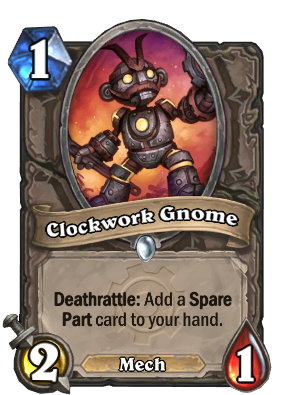
Suppose you have a Clockwork Gnome on the field, you know that you'll get a Spare Part when it dies. Although you won't know which one until you get it, and there are some you'd rather have than others, you need to plan for whichever one you get. You may really want that Emergency Coolant to Freeze a problematic minion, or you want Finicky Cloakfield to protect something you want to keep alive. If you end up getting Time Rewinder instead, sure it’s not what you wanted or what’s useful right now, but you can still plan for a way to use it.
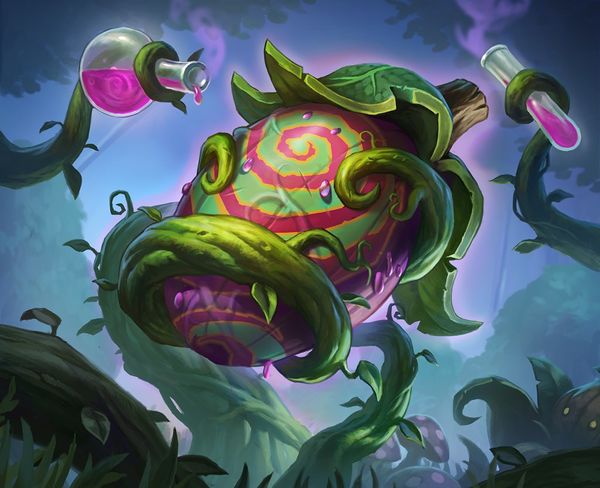
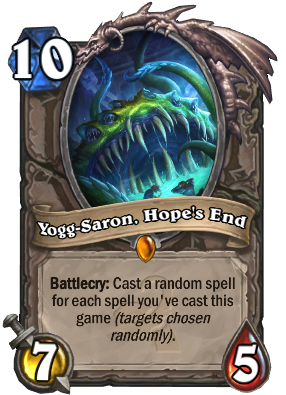
Even the absolute RNG mascot, Yogg-Saron, Hope's End isn’t completely without some form of strategic planning. There are lots of spells that draw cards, clear boards, summon minions, and a myriad of other things. With this in mind, you can assemble some sort of plan and try to game the RNG in your favor. Over the years, less random variations of Yogg, like Tess Greymane or Shudderwock, made this process a little bit easier.
That said, it’s nothing new that the discussion about how much randomness in this game is… is often very heated to say the least.
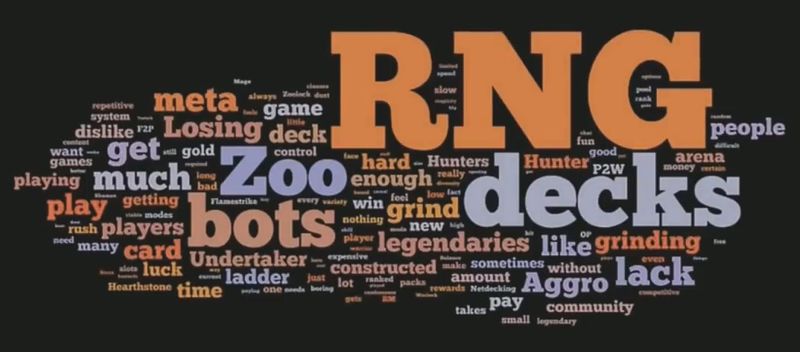
A survey around BlizzCon 2014 indicated what the worst part of Hearthstone is "RNG", specifically topped out over everything else.
No matter how much randomness a game has, it will always cause at least a little frustration to someone, but this randomness is often a necessary evil. Basically every instance of Arcane Missiles ever played has provoked this to some degree. But with how much randomness Hearthstone has, you can see why people complain about it a lot. Despite how much one may complain about randomness in Hearthstone, members of Team 5 themselves defend the random aspect, citing that it’s healthy for the game, and it’s what gives the game part of its charm.
Quote From Ben Brode "You know actually I think the randomness can increase the skill required to play a game. If you imagine a game of Hearthstone except you ordered all the cards in your deck, then you could learn every game you play your 1 drop, you play your 2 drop, your 3 drop, your 4 drop, etc...but because it's random, the order you get your cards, you often see game situations that you've seen before or that no one's ever seen before. Really great players can figure out what to do in new situations better than other players. And so cards that increase randomness into the game state actually can increase the amount of skill required to solve novel game states. So I think randomness adds exciting new stories and suspense and it can make the game more skillful if you do it right."
Quote From Jason Chayes "For us [RNG] is a very important part of the game and I think it’s very important for the health of the game as well. … I feel like it’s the nature of the game to make interesting and involving stories … on a day to day basis. We don’t want to lose RNG, it’s part of what makes Hearthstone, Hearthstone."
Meanwhile, randomness will produce a lot of highly memorable moments (be it positive or negative) for either player. Sometimes people will cite that there are "two sides to every RNG". Regardless of how botched the grammar is there, it essentially means that the person who got lucky feels great that luck was on their side, but the person who got unlucky feels bad when it wasn’t on theirs. This is true, but also by virtue of the way the human mind works, pretty much unavoidable.
As to why Hearthstone has as much randomness as it does, I believe it amounts to 3 main points.
1. It Produces Some Memorable Madness
As we've discussed, Hearthstone’s randomness will cause moments where you’ll remember the amazing luck you got. You may remember that one specific time where Yogg-Saron cleared your opponent’s entire board, played a bunch of Secrets for you, summoned a bunch of guys or even buffed them considerably. Or you may remember the time where the first spell cast was Cataclysm.
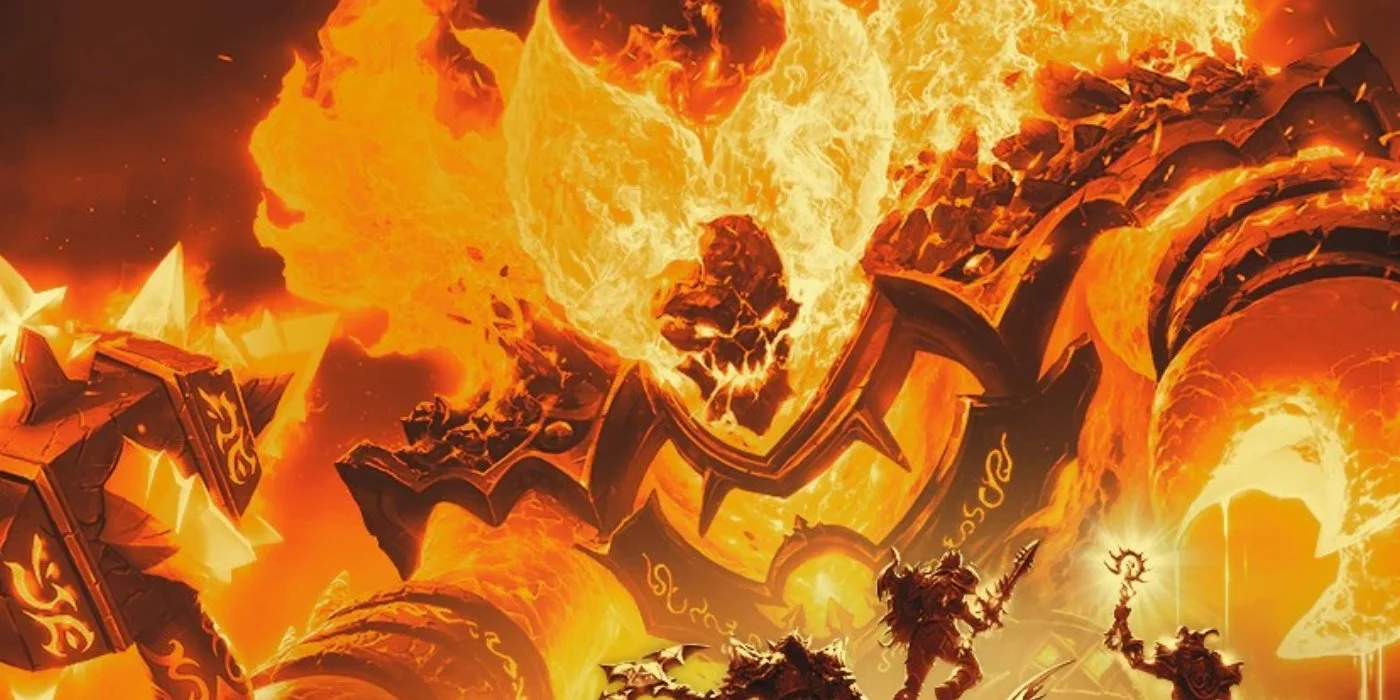
But what do you know, these crazy moments are the reason for some people to play the game in a first place.Trolden and Daily Hearthstone Funny Moments have channels that are both basically dedicated to this, and people love watching them as evident by the nearly 500 videos from Trolden’s series, and nearly 1300 videos from DHFM’s. How often do you play Burgle Rogue and generate a bunch of Legendaries that you shouldn’t have any business using because you aren’t that class? If you’ve seen videos where Ragnaros the Firelord hits the opponent’s face for lethal despite them controlling 7 minions, that stuff gets views. That and also having a whole board full of them is madness incarnate.
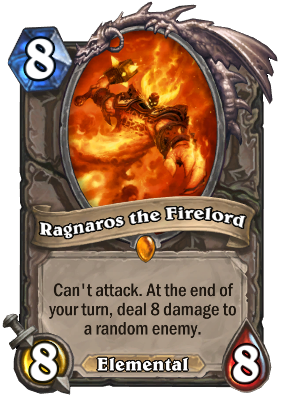
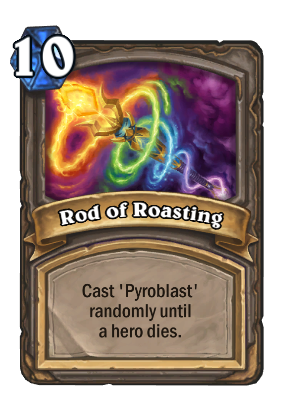
In Dungeon Run, the Rod of Roasting is basically built around this concept. One way or another, one of us dies. In Monster Hunt, the Ricochet Shot basically follows the same idea, only not as cool.
Then, of course, is the legend of Hearthstone himself, Yogg-Saron. People everywhere love Yogg-Saron and consider him as their favorite Hearthstone card, and even if you’re not particularly fond of all the randomosity, it’s not difficult to see why. Streamers (and everyone else) play Yogg even if they have lethal, call it BM or not, but thats just how much they love Yogg. Yogg is life!
Some people will say that it takes skill away from the game, and makes the whole game seem like a joke, but no matter what side you are on regarding the RNG debate, one thing you can’t deny is that it gets views. Whilst the constant randomness might be a hard pill for competitive players to swallow, it has some appeal to the casual market, which is ultimately where lots of Hearthstone’s player base comes from.
2. It Circumnavigates Some Hearthstone Design Flaws
If you’ve played other TCGs, you’ll know that Hearthstone has several design choices that differentiate from the typical TCG formula. Notably, the fact that there’s no visible graveyard, any cards that let you choose more than one target, or any optional Battlecries, among several others. Hearthstone by design is made to be a mechanically simple game that’s quick and easy to learn, which is one of Hearthstone’s biggest selling points. Every card you play is just 'click and go', which helps with the fluidity of the game. This design, however, creates some problematic areas.
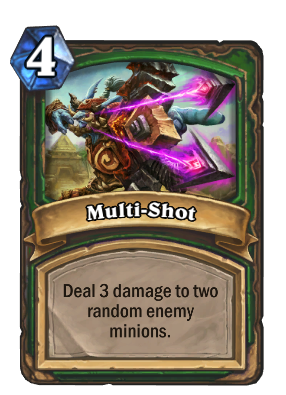
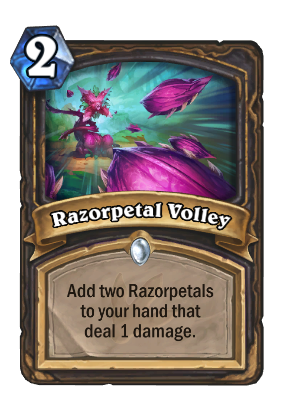
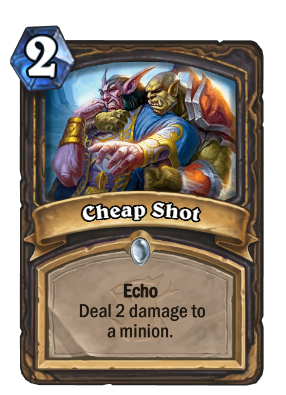
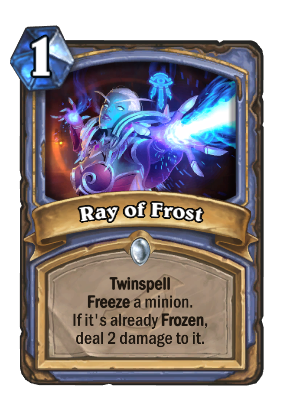
Because every card you play can only have a maximum of one selectable target, Team 5 has to resort to some workaround methods in order to makesome effects work. As far as targeting multiple minions go, making the targets random is one way to do it. Multi-Shot targets up to two minions, but with multi-targeting not being a thing, it chooses them at random instead. Another existing method is through card generation. Razorpetal Volley can’t target two minions at once, so instead, it generates two Razorpetal cards, which allow you to target two different things separately (or the same thing if you want to). Echo and Twinspell have also been ways to work around this as seen on Cheap Shot or Ray of Frost.
Discarding also uses this exact same idea. In other card games, you usually get to choose what you discard, and you also must have the appropriate amount of cards in your hand to discard to play them. Not in Hearthstone though. In Hearthstone, almost every discard effect is random, and you can play them even if you have an otherwise empty hand (essentially negating the discard drawback).
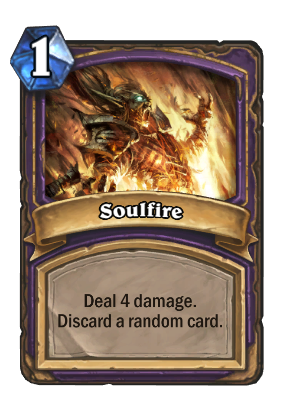
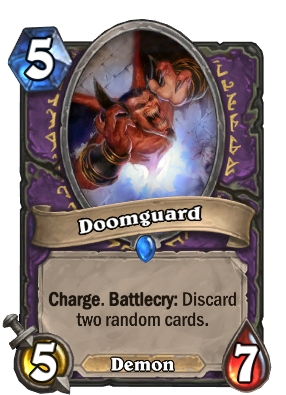
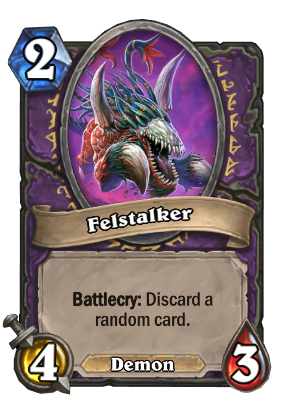
If you look at Soulfire, you’re already targeting one thing to deal 4 damage to it, and as we discussed in the previous paragraph, cards can only target one thing, so the discard would need to be random. Doomguard has a similar problem to another issue. Since it discards two things, and you can’t target two things, making them random works around this. However, if you look at Felstalker (RIP Succubus), you may think "well that only discards one thing and does nothing else, so that should be able to be targeted, right?" - As much as I’m inclined to agree with you, unfortunately this needs to be random too. You cannot select cards in your hand for any purpose other than playing them. We can only speculate about why was this design choice made. To keep the user interface, i.e. selecting cards from hand, clean? Or keeping a unified concept for how discard cards work in Hearthstone? Who knows.
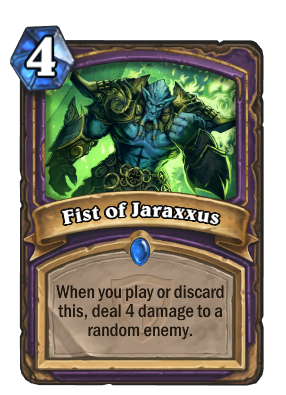
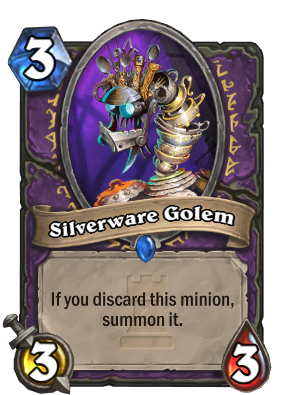
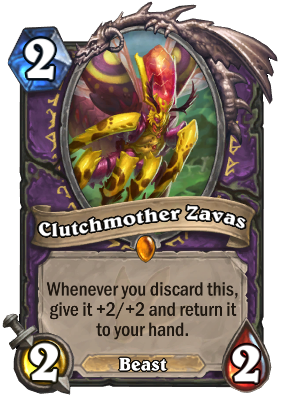
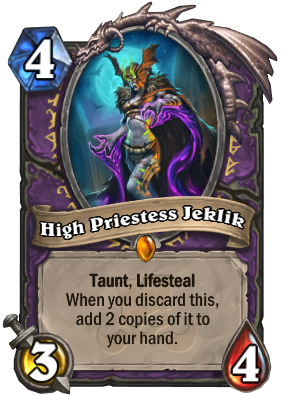
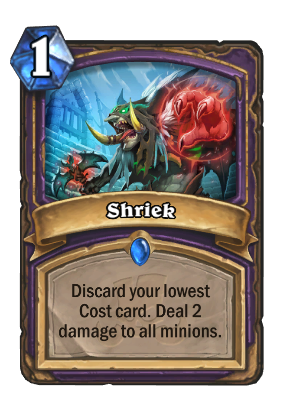
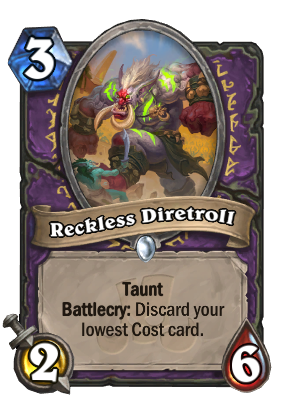
Other than making the discarding random, Team 5 has worked around this problem by making discarding cards have some benefit, for example when they themselves get discarded. Such cards include Fist of Jaraxxus, Silverware Golem, Clutchmother Zavas, and High Priestess Jeklik. While useful, they unfortunately add a further degree of frustration to the discarding randomness when your cards that discard cards end up not discarding the cards you want to have discarded. It seems Team 5 realized that the random discard simply does not provide a good enough gameplay environment, and tried a compromise with Shriek and Reckless Diretroll in Rastakhan’s Rumble. Instead of fully random discard, these cards provide a semi-random one, giving you some control over which card is going to get discarded.
Discard however is not the only mechanic to fall victim to this limitation. I'm talking about hand-buffs. Remember the Grimy Goons in Mean Streets of Gadgetzan? Maybe you do because they were a failure, or maybe you don’t because they were a failure. If anything, it felt like Pirates were more of a gang than the Grimy Goons ever were.
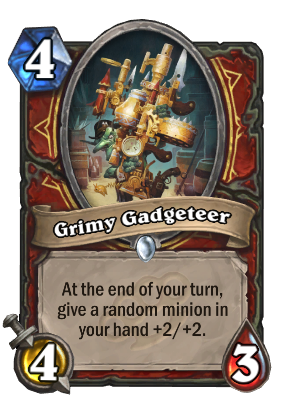
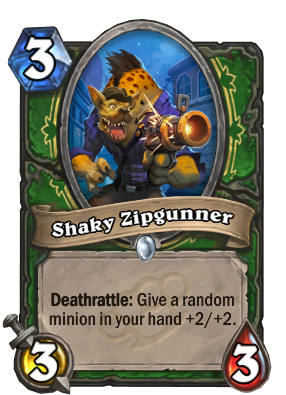
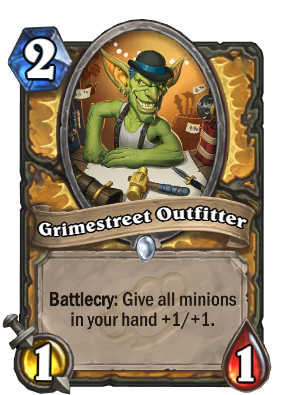
The hand-buffing mechanic failed for a number of reasons. The biggest one being similar to Discard mechanic - the randomness. Because you could'nt easilly control on which minion would the buff land, it would often buff a minion that you didn’t particularly care to be buffed. Did you want your Grimy Gadgeteer to buff your Alley Armorsmith or your Fight Promoter? Too bad, it buffed your Don Han'Cho instead. Even though Shaky Zipgunner has an extremely powerful stat distribution, total of 5/5 for 3 mana, and a 2/2 buff is nothing to scoff at, the fact that it's random (which as a Deathrattle minion, couldn't have been designed differently anyway) and delayed, hinders it. The only Grimy Goons class to have some success with hand-buffing (albeit still not that much) was Paladin because it buffed all minions in your hand instead of just one (except for Grimscale Chum), but it still suffered the other issues the mechanic had which include requiring you to hold your minions for a long time, and not being able to run too many non-minion cards.
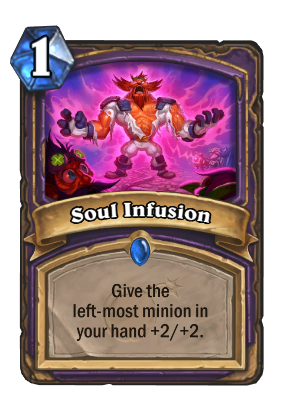
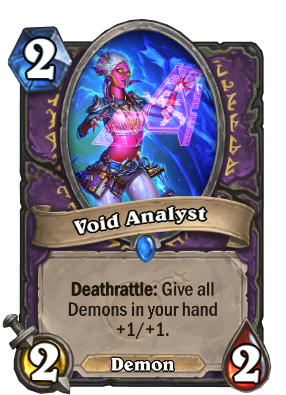
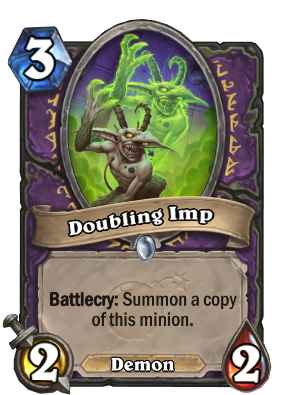
Hand-buffing would later be introduced to Warlock in The Boomsday Project with cards like Soul Infusion, Void Analyst, and, indirectly, Doubling Imp. Soul Infusion circumvents the random nature of handbuffing by always buffing the left-most minion in your hand, and it ended up working out rather well. Being able to buff a specific minion like Doubling Imp in your hand proved to be much easier to accomplish than the old Grimy Goon’s way.
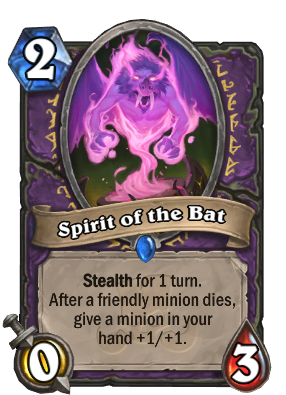
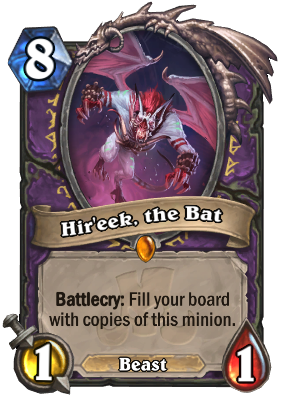
Unfortunately in Rastakhan's Rumble, they ended up going back to full random hand-buffing with Spirit of the Bat and its corresponding loa, Hir'eek. I don’t think we need to mention how big of a flop Hir'eek was. The fact that Spirit of the Bat encourages you to run a lot of minions, therefore lowering the chances of it buffing Hir'eek himself certainly didn’t help. As Warlock received no hand-buff cards in either Rise of Shadows or Saviors of Uldum, this mechanic appears to be either deciduous or retired for Warlock for the time being.
3. It Takes Advantage of the Game's Digital Form
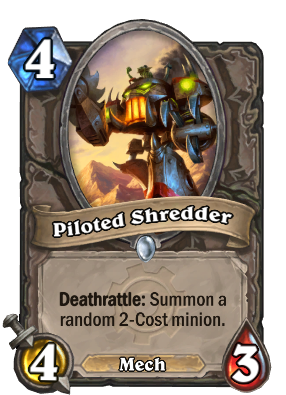
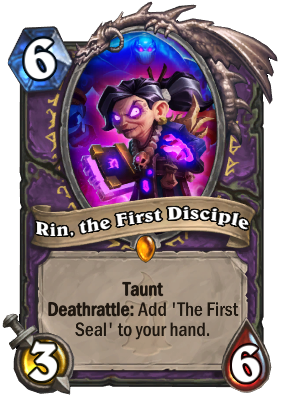
Being a digital card game, Hearthstone is capable of a huge number of things that wouldn’t be possible for a paper TCG. Random minion summons for one thing. The ever so famous Piloted Shredder couldn’t be possible in a paper TCG or anything even close, and this goes for basically every card that has a random minion summon of some sort. Token summoning exists in paper variants of likes of MTG or Yu-Gi-Oh, but all the tokens are extremely simplistic, and it also gets a little bit awkward if you don’t have a copy of the token with you. Sure, you could make Rin, the First Disciple in a paper card game, but lose one of the 11 tokens that comes with it, and the whole card falls apart. In Hearthstone, that’s not a problem.
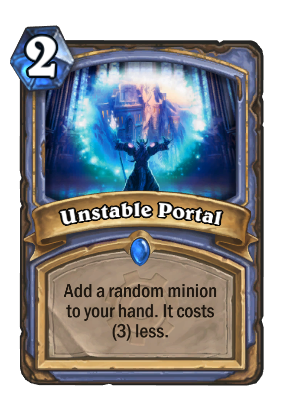
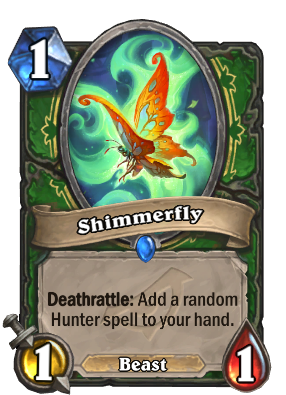
Random card generation as a whole in fact is all the exact same deal. Trying to play Unstable Portal, Shimmerfly or anything like that couldn’t be possible in paper TCGs. Where are you getting all these cards from? Discover cards are basically the same, it's just a semi-controlled RNG, but RNG nonetheless.
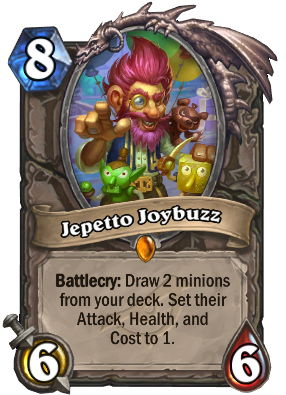
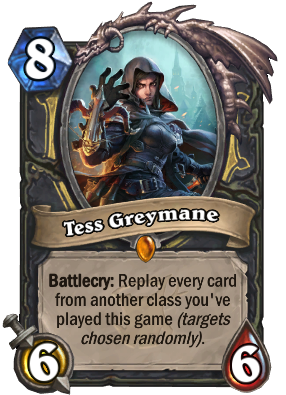
Then there’re cards like Jepetto Joybuzz, which could hypothetically be possible in a paper TCG, although if you play it, you’d simply just choose to draw all of your combo pieces. In Hearthstone, the randomness forces your deck to be built around it, making this effect more streamlined and balanced for the game. This isn’t considering the fact that if it were on paper, you’d be able to look at your entire deck, and you’d have to remember which cards you drew and remember those are 1/1s that cost 1. Something like Tess Greymane could also be theoretically possible on paper, but this comes with problems of what order you would resolve it in, and always picking the best option for the current card. Digital format makes this mechanic much easier to design for.
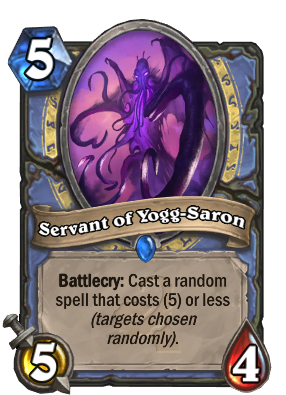
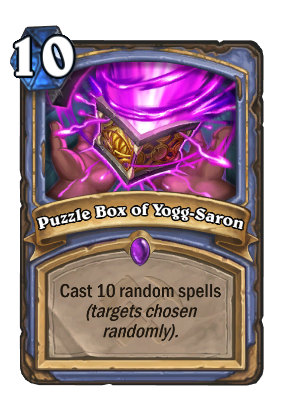
Actually, while we’re talking about Tess, all secondhand spellcasting effects basically apply as well. Yogg-Saron, his servant, his puzzle box, or anything else of this caliber.
These are the 3 key things that I believe is why randomness is such a huge part of the game. It produces some memorable moments, circumvents Hearthstone design flaws, and takes advantage of the game's digital form. Without it, Hearthstone would be a completely different game.
Why do you believe Hearthstone has a lot of randomness? Let us know in the comments, and I'll see you next time.